Is AI Coming for Your Job? What the Experts Actually Say
Is AI Coming for Your Job? What the Experts Actually Say
The honest answer is that the people thinking hardest about this genuinely disagree: most of the loudest voices argue AI will create more work and make humans more valuable, while a credible counter-camp warns that real disruption is already hitting specific sectors right now.
If you follow tech and business creators, you have heard this question on repeat: is AI going to take your job? It is tempting to want a single, clean verdict. But when you line up what the most thoughtful commentators are saying, you find a real debate, not a consensus. Below, we lay out the camps as fairly as we can, including the dissent, so you can think about it for yourself.
Will AI create or destroy jobs?
This is the question everyone is circling, and it is worth being precise about what is being claimed.
One camp argues the framing itself is flawed. In this view, asking "which jobs will AI automate?" treats the economy as a fixed pie of tasks to be divided between humans and machines. History, they suggest, rarely works that way. New technology tends to lower the cost of doing things, and lower costs tend to expand demand, which can create new categories of work that did not exist before.
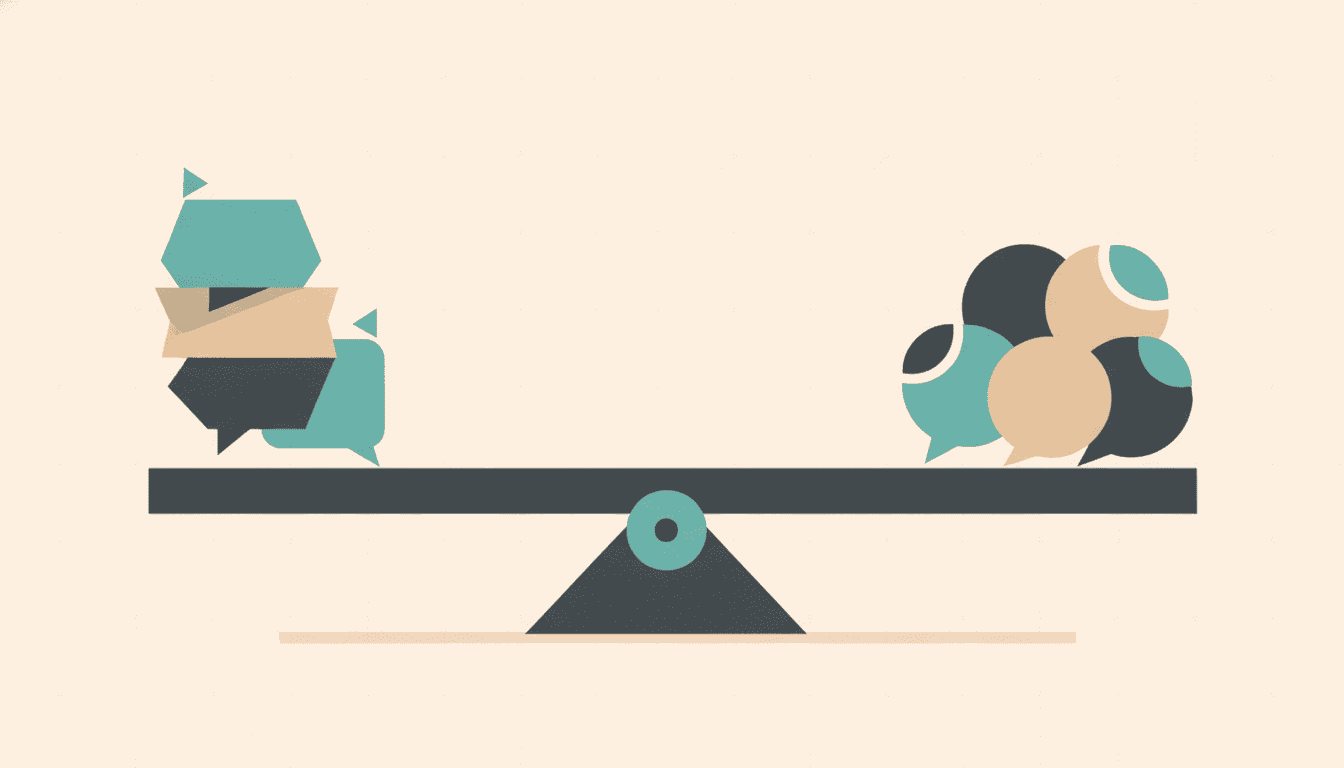
The other camp does not dispute that this could happen eventually. Their concern is timing. They argue that whatever the long-run equilibrium looks like, the transition is already producing real losses for real people in specific industries, and that waving those losses away with optimistic economic theory is its own kind of mistake.
Both of these can be partly true at once, which is exactly why the debate stays unresolved.
What's the case for optimism?
The optimist camp is the larger one among the creators we follow, though they emphasize different mechanisms.
David Friedberg, on the All-In podcast, argues that AI is fundamentally a productivity and revenue engine, and that more productivity tends to lead to more hiring rather than fewer jobs. As the cost of producing output falls, his read is that businesses do more and grow, which can pull more human work in alongside the automation rather than simply displacing it.
His co-host David Sacks makes a complementary case, and reaches for the Jevons paradox to make it: when a resource becomes dramatically cheaper to use, people often consume far more of it, not less. Applied to AI, Sacks argues that as the cost of intelligence and output falls, demand rises and more opportunities open up for knowledge workers. He also points out that AI does not just create brand-new roles, it enhances existing ones, pointing to fields like radiology where AI assists rather than simply replaces the professional. In this telling, knowledge workers paired with capable tools become more valuable, not less.
Lenny Rachitsky, of Lenny's Podcast, pushes back on the anxiety from a different angle. He suggests the displacement panic is overly simplistic, and that the popular exercise of listing "automatable jobs" largely misses the point. He also raises a demographic argument: as populations in many countries decline, AI-driven economic growth could make the remaining human workers more valuable rather than redundant. On the layoffs people point to today, his read is that current corporate cuts reflect broader economic conditions more than they reflect AI swapping in for staff.
Benedict Evans frames the whole thing at the level of technological eras. He argues AI is as significant as the internet and the smartphone were, which means it will genuinely automate some jobs while opening up new opportunities that are hard to predict in advance. His practical takeaway leans toward engagement rather than resistance: treat it as a platform shift to learn and build on.
Taken together, the optimist case is less "nothing will change" and more "change has historically expanded the pie, so adapt rather than brace for collapse."
What's the counter-argument?
The most important thing to understand about this debate is that the skeptical side is not made of cranks. It deserves a fair hearing.
Scott Galloway, of the Prof G show, is the clearest counter-voice. His argument is that real, immediate disruption is already here. He contends that AI tools have already contributed to meaningful losses in certain sectors, and that the comfortable long-run optimism risks dismissing near-term pain that is landing on actual workers today. His point is not that AI will end all work forever, it is that telling someone whose role is being squeezed right now to relax because the economy will rebalance in a decade is cold comfort and possibly bad advice.
Anish Raman, a LinkedIn executive whose thinking Galloway has surfaced, adds a sharper edge to the practical implication. The argument here is that workers cannot assume safety, and that even roles that look secure today may not stay that way. The prescription is to innovate and adapt continuously rather than to bet on any single job description holding its value.
The tension between the camps is real. The optimists are mostly reasoning from how technological shifts have played out over long horizons. The skeptics are mostly reasoning from what is visible on the ground right now. Neither has a crystal ball, and both are making forecasts rather than reporting settled fact.
Where the camps line up
Here is a simple map of who is saying what. These are paraphrased summaries of the creators' recent public commentary, not direct quotations.
| Creator (show/platform) | Position on AI and jobs |
|---|---|
| David Friedberg (All-In) | Optimist. AI boosts productivity and revenue, which tends to drive more hiring as businesses do more and grow. |
| David Sacks (All-In) | Optimist. Invokes the Jevons paradox (falling costs raise demand); AI creates new roles and enhances existing ones (e.g., radiology); knowledge workers become more valuable. |
| Lenny Rachitsky (Lenny's Podcast) | Optimist/skeptical of the panic. Job-displacement fear is too simplistic; declining populations plus AI growth make humans more valuable; today's cuts reflect the economy more than AI. |
| Benedict Evans | Measured optimist. AI is a platform shift on the scale of the internet and mobile; it automates some jobs and creates new opportunity; engage rather than resist. |
| Scott Galloway (Prof G) | Counter-voice. Real, immediate disruption is already here; AI has driven losses in some sectors; do not dismiss near-term pain. |
| Anish Raman (LinkedIn, via Galloway) | Counter-voice. Workers must keep innovating and adapting; some seemingly secure roles may not stay safe. |
What should you actually do?
You will notice the practical advice converges more than the predictions do, which is telling.
Almost everyone in this conversation, optimist and skeptic alike, lands on some version of "adapt actively." Evans frames it as engaging with the platform shift. Raman frames it as continuous innovation. Even the optimists who think the pie will grow are not saying you should sit still and wait for it.
A reasonable way to hold both camps at once: take the optimists seriously about the long run and the skeptics seriously about the near term. Build fluency with these tools now, stay alert to how your field is changing, and avoid assuming your current role is permanently safe. None of that requires believing one side has won the argument, because it has not.
This is not investment or career guidance, and nobody quoted here can tell you what your particular situation demands. These are competing forecasts from smart people who disagree.
FAQ
Do the experts agree on whether AI will kill jobs? No. The larger camp, including Friedberg, Sacks, Lenny Rachitsky, and Benedict Evans, argues AI is more likely to expand work and raise the value of human labor over time. Scott Galloway and Anish Raman counter that disruption is already causing real losses now. It is a genuine disagreement, not a settled question.
What is the Jevons paradox and why does it come up? Sacks uses it to argue that when something becomes much cheaper, people often use far more of it. Applied to AI, the claim is that cheaper intelligence could increase demand for AI-driven output, potentially pulling in more human work rather than eliminating it. It is an argument, not a guarantee.
Is the optimistic view just wishful thinking? The skeptics would say it risks underweighting present-day harm, and that is a fair critique. The optimists are mostly reasoning from long-run patterns in how past technologies played out. Both are forecasts. The most honest position is to weigh both rather than pick a side prematurely.
Following a debate like this without losing the thread
Debates like this are scattered across podcasts, newsletters, and clips, and the most interesting part is rarely a single take. It is the tension between them, where the optimists' Jevons-paradox argument rubs against Galloway's "it is already happening" warning. That contrast is hard to hold in your head when the takes arrive weeks apart.
Adviserry consolidates the newsletters and YouTube creators you already follow into one searchable archive and surfaces patterns across them, so when several voices touch the same question you can see where they agree, where they clash, and what you actually think. It is a calmer way to follow a live argument than chasing clips.
See the shareable version: the AI-jobs debate carousel.
Disclaimer: All characterizations of the creators above are paraphrased, good-faith summaries of their recent public commentary, not verbatim quotations. Positions may evolve and have been condensed for clarity. Adviserry is not affiliated with, endorsed by, or sponsored by any of the creators or shows mentioned. Nothing here is investment, financial, or career advice.