

How Much Does an AI Business Coach Cost? (2026 Pricing)
AI business coach pricing in 2026: general AI chat is $20 a month, coaching apps $10 to $20, Adviserry $49, and a human coach $200 to $800 an hour.
Adviserry
Ideas and insights on turning expert content into actionable knowledge — for solo founders, consultants, and knowledge workers.
AI business coach pricing in 2026: general AI chat is $20 a month, coaching apps $10 to $20, Adviserry $49, and a human coach $200 to $800 an hour.
A repeatable loop that turns the newsletters and creators you follow into shareable content every week: the system, the prompts, and how to automate it.

Should you build a company with friends? Founders like Hormozi, Galloway, Forleo, and GaryVee on co-founder disputes, firing well, and protecting culture.
The best AI daily briefing tools in 2026, compared honestly: open-internet news briefs vs digests built from the newsletters and YouTube channels you chose.

You don't need an original idea to win. Learn why niche depth, distribution, and escaping the commodity trap beat originality, per Hormozi, Patel, and Isenberg.
An AI chief of staff triages your inbox, guards your calendar, and tells you what deserves attention today. Seven tools compared, with what each actually does.

AI builders keep converging on one idea: don't bet on a model, build the harness. Learn what an agentic harness is and why going model-agnostic now wins.

A summary tells you what an expert said. An action item needs to know what you're working on too. Here's the pipeline that connects the two.
The trading Substacks you follow are already hitting your inbox. Here's a workflow to consolidate them into one archive you can actually search.
Fintwit is built to keep you scrolling. Here's a workflow to capture and search the content you already follow instead of living on the timeline.
Will AI destroy or create jobs? We map the real debate between Friedberg, Sacks, Lenny, Benedict Evans, and skeptic Scott Galloway, fairly and side by side.
Yes, AI can turn YouTube videos into action items. Here's the paste-a-URL way, the automatic pipeline way, and when each one actually makes sense.
The free vs paid trading newsletter debate misses the point. The axis that actually decides value is retrievable vs lost. Here's why, and what to do.
The real cost of too many trading subscriptions isn't the money. It's fragmented attention and the illusion that you're covered. Here's how to tell.

Training cutoffs plus no access to your paid subscriptions means a generic AI literally cannot know what your creators published last week. Here's the fix.
A simple repeatable weekly routine built around an AI assistant: what dropped, what did my creators say, what changed. Descriptive, not a trading system.

Two very different questions you can ask an AI about markets. One returns generic web-slop. The other returns what the specific people you trust actually said.

The 4S framework (Streaming, Searching, Scrolling, Shopping) maps marketing to the modern multi-touchpoint buyer journey. Here's how the four S's work.
A plain-language guide to what MCP connectors are and the general shape of connecting your own trading research to ChatGPT so you can ask about it in chat.
A plain-English guide to the categories of MCP servers worth adding to Claude Desktop for market research, and where a your-own-archive one fits in.
The people you follow are scattered across Substack, email, and YouTube. Here's why pulling them into one searchable place beats app-hopping all day.
Your watchlist shows a green or red number and nothing else. Here's how to build one that surfaces what the creators you follow have said about each ticker.

When several people you follow land on the same theme in the same week, it feels like confirmation. Here's what it actually is, and what it definitely isn't.
Three top creators agree that low pricing hurts growth. See why charging more attracts better clients, and how to raise prices without losing customers.

A creator you follow got more cautious on a stock over three months. That's a fact about what they said, not a forecast. Here's how to read the shift.

Two people you trust say the opposite thing about the same stock. Here's a plain way to lay their takes side by side without picking a winner.

Keep up with too many newsletters without reading them all. The trick is making everything retrievable plus a light cadence, so you pull what you need on demand.
Semantic search for newsletters explained plainly. Why Ctrl-F fails when you remember the gist but not the words, and how meaning-based search finds the issue anyway.
Notion vs a searchable research archive for trading commentary. When note apps win, when they quietly die, and what to use for the stuff you just want to find later.
Too many trading newsletters, no idea which to cut? Here's a simple, unsentimental way to decide what to cancel without losing anything you actually use.

Are premium trading newsletters worth it? The honest answer depends less on the newsletter and more on whether you can actually use what you're paying for.
Gmail filters get your trading newsletters out of the inbox, then leave you stranded. Here's exactly where labels stop working and what to do instead.

You read a ton and remember almost none of it. Here's a plain way to turn everything you read into one archive you can actually search by idea.

You finish a great podcast episode buzzing with ideas, and by your next coffee they're gone. Here's the setup I use so the good stuff sticks around long enough to actually use it.
Add up what your trading newsletters actually cost per year, then compare it to what you read. The gap is usually ugly. Here's how to run the audit fast.
Connect your trading newsletter and YouTube archive to Claude Desktop or ChatGPT via MCP, then ask what your creators said right inside the chat you already use.

Stop scrubbing through 90-minute trading videos to find one comment. Here's how to search your YouTube trading subscriptions by transcript and find it fast.

A creator track record shows what someone said versus what price did after. Here's how to read one honestly, without treating past commentary as a prediction.

Three creators, one ticker, three different takes. Here's how to line them up side by side and read the disagreement honestly, without picking a fake winner.

Want to see everything a creator said about one ticker, in order, over months? Here's how to build a stance timeline from newsletters and YouTube.

You read hours of market commentary and remember almost none of it. Here's why your brain dumps it, and a simple way to make it retrievable when it counts.

Twelve trading newsletters, zero system. Here's a plain way to organize the market commentary you already pay for so you can actually find it later.
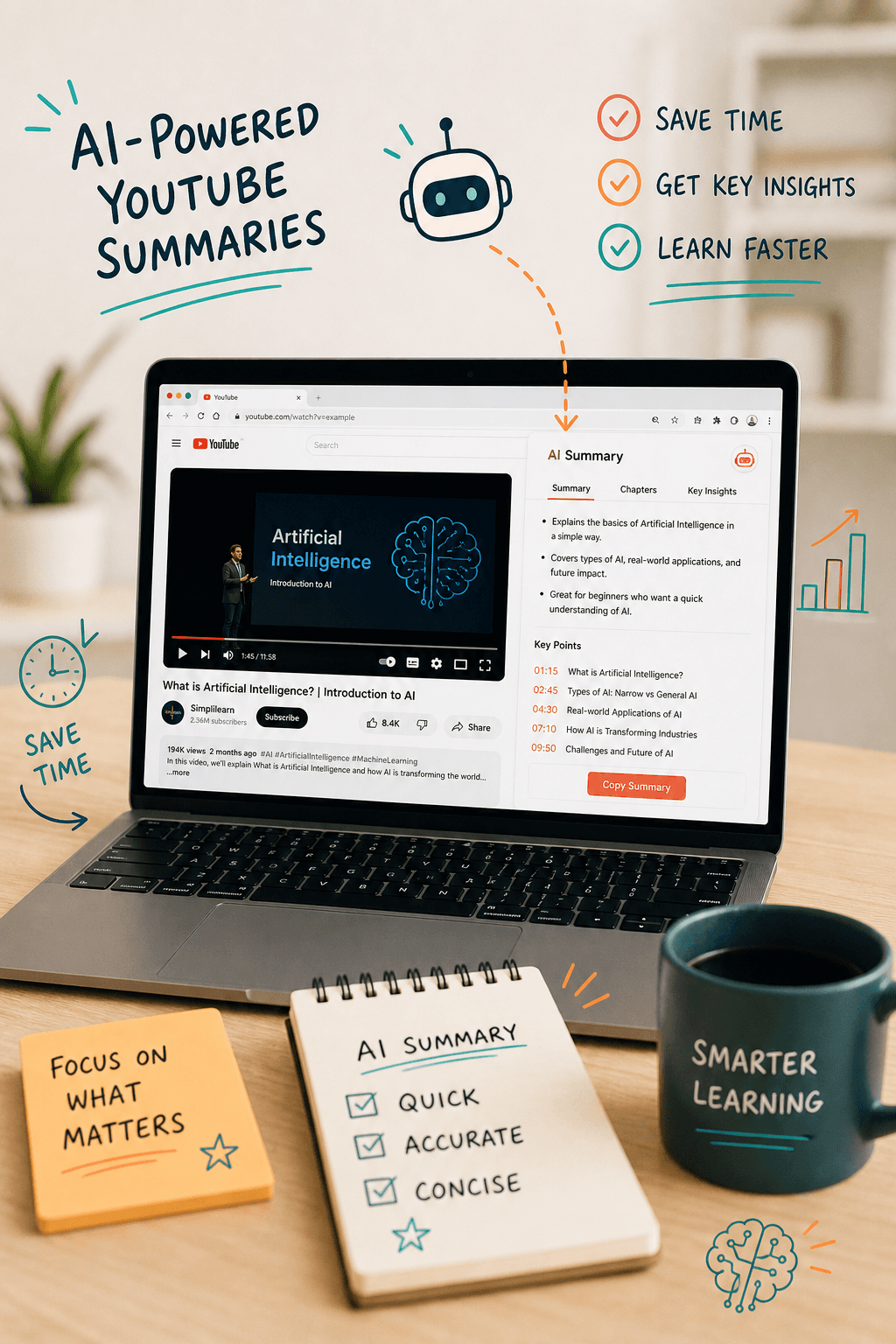
Find the top AI tool to summarize YouTube videos. Free and paid options, formats, and practical tips for entrepreneurs.
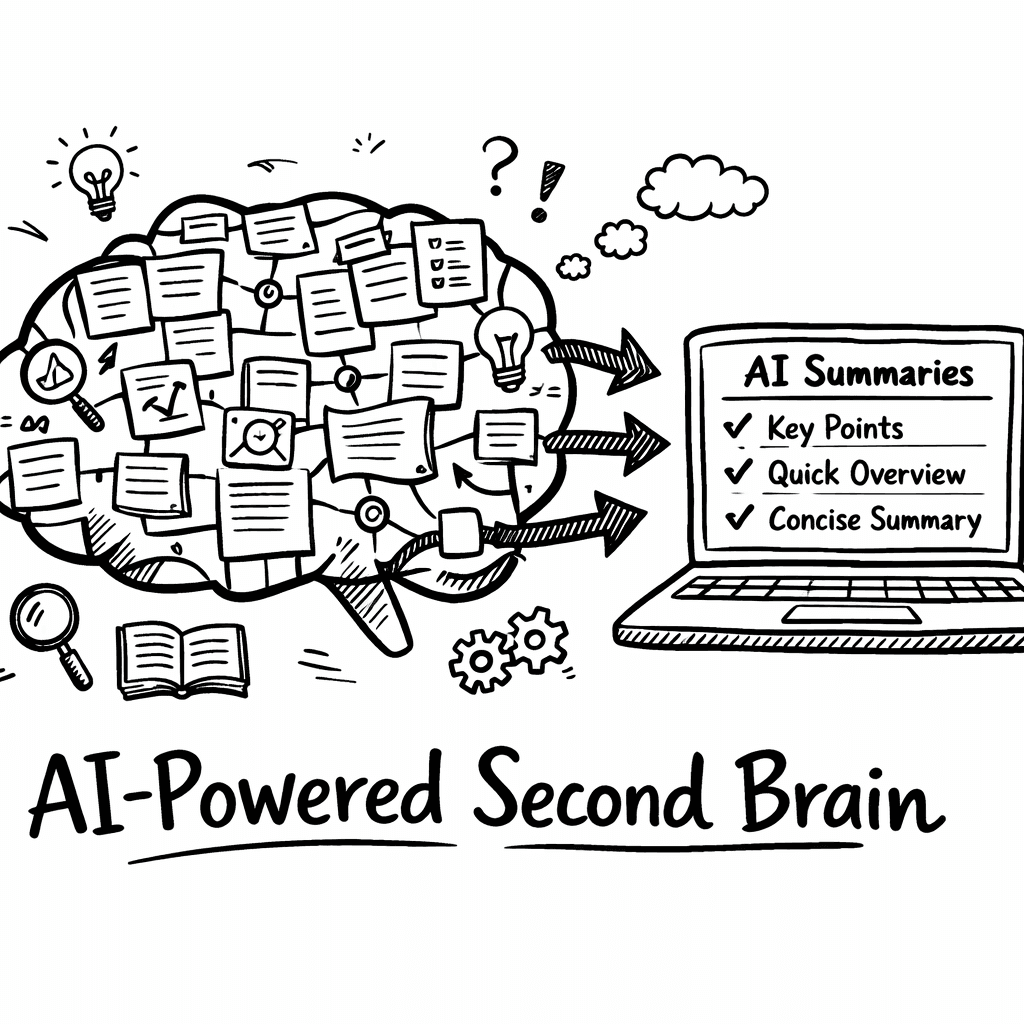
Compare personal knowledge management software: Notion, Obsidian, Roam, and Adviserry. What each is actually built for, and which one fits how you work.
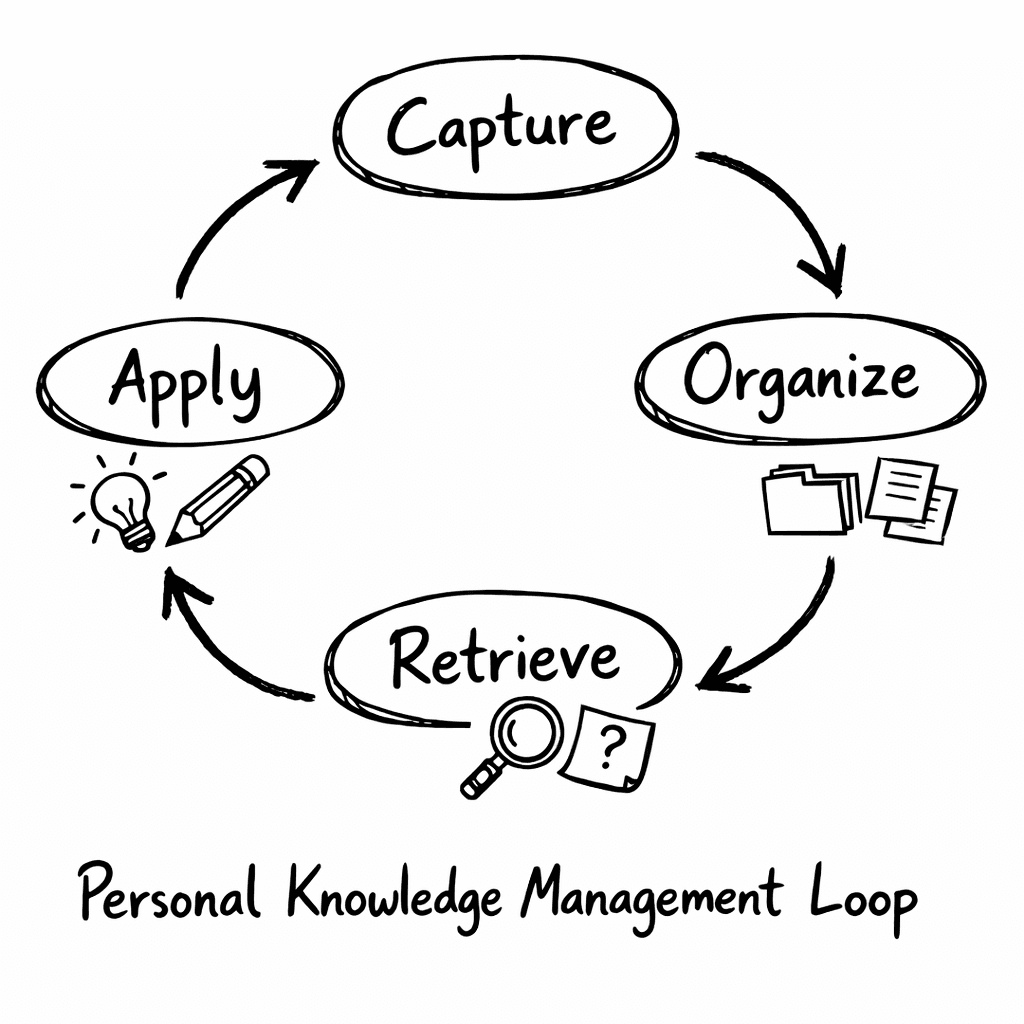
Learn what is personal knowledge management, why it matters for founders, and how to build a simple, AI-powered system that works for you.
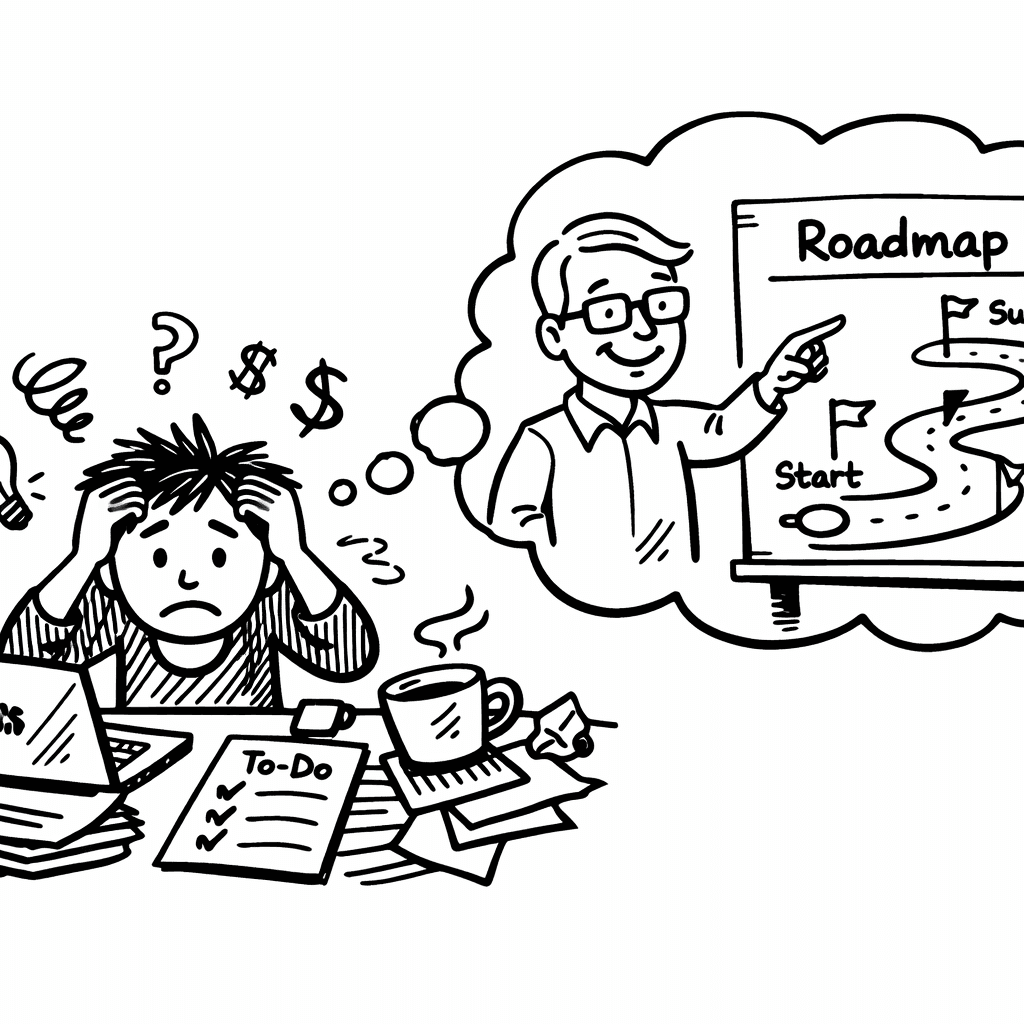
Learn what a business advisor does, when to hire one, and how to pick the right advisor for your small business. Practical guide for founders.
Discover the best business strategy software to plan, execute, and track your strategic goals. From startup to enterprise, find the right tool for your team.
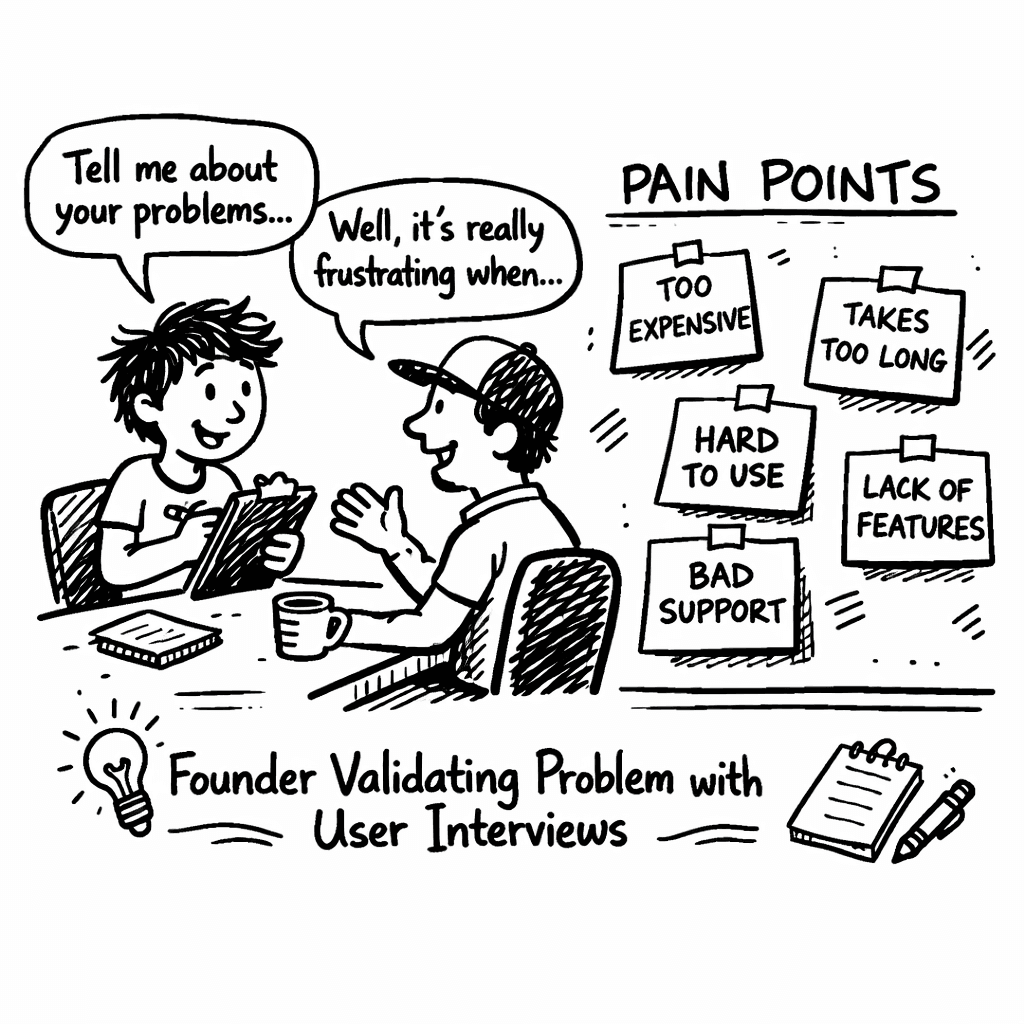
Practical AI startup guidance for solo founders. Validate the problem, build a no-code prototype, land users, iterate fast, and monetize early.
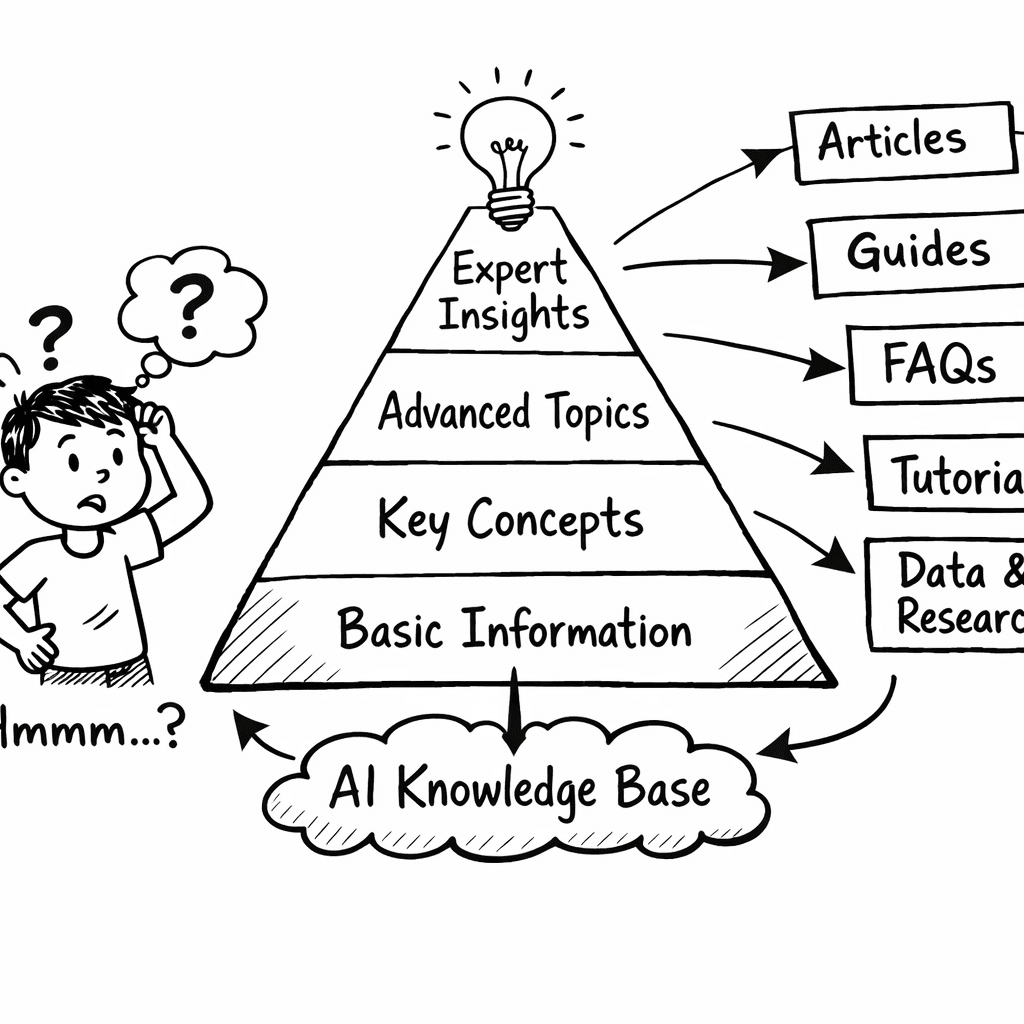
Learn how to create an AI knowledge base for your business. Follow a step-by-step guide with tools, tips, and real examples to get started fast.

Learn a step-by-step process to create a practical AI business strategy for your small business. Avoid hype and get real results.
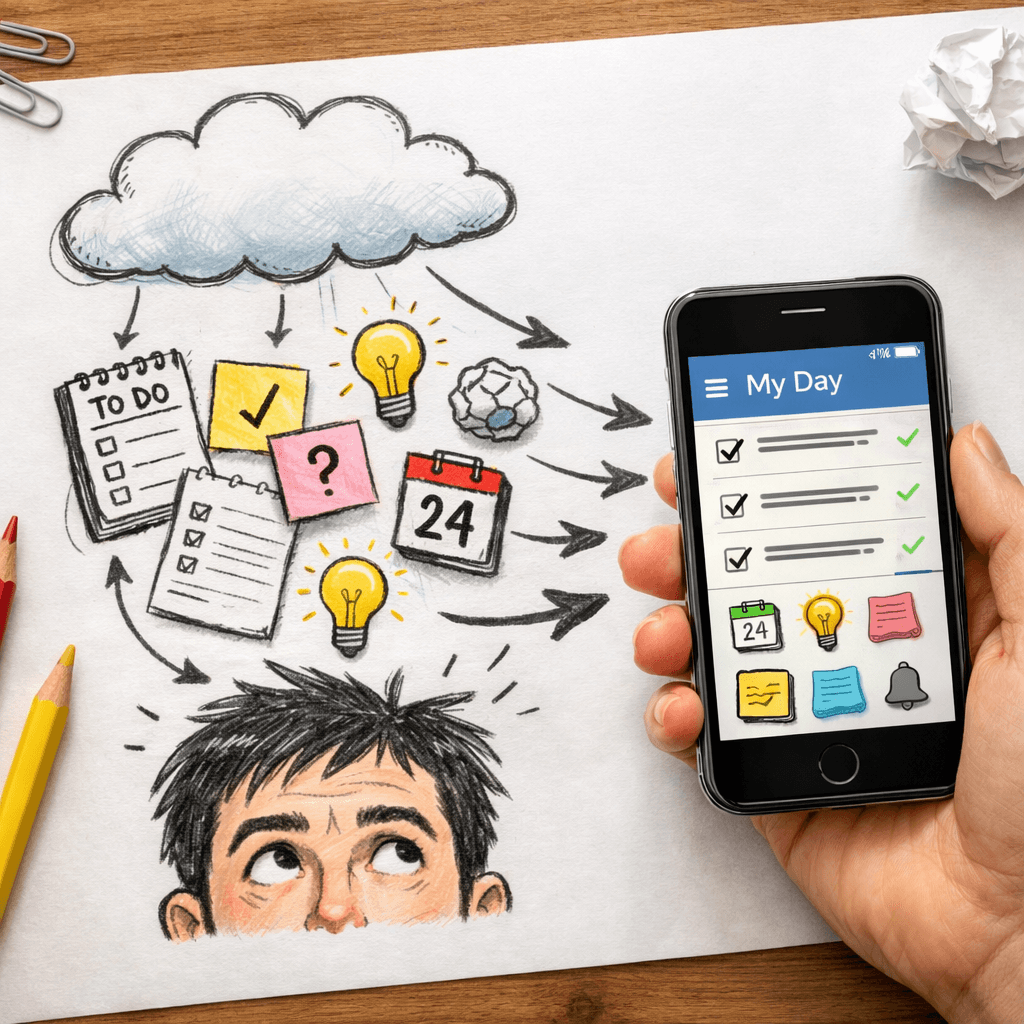
Stop juggling chaos. How to build a personal management system that actually works for solo founders, without the corporate BS.

Learn how to build an AI advisory board from newsletters, podcasts, and YouTube. Step-by-step guide for solo founders who want curated advice on demand.
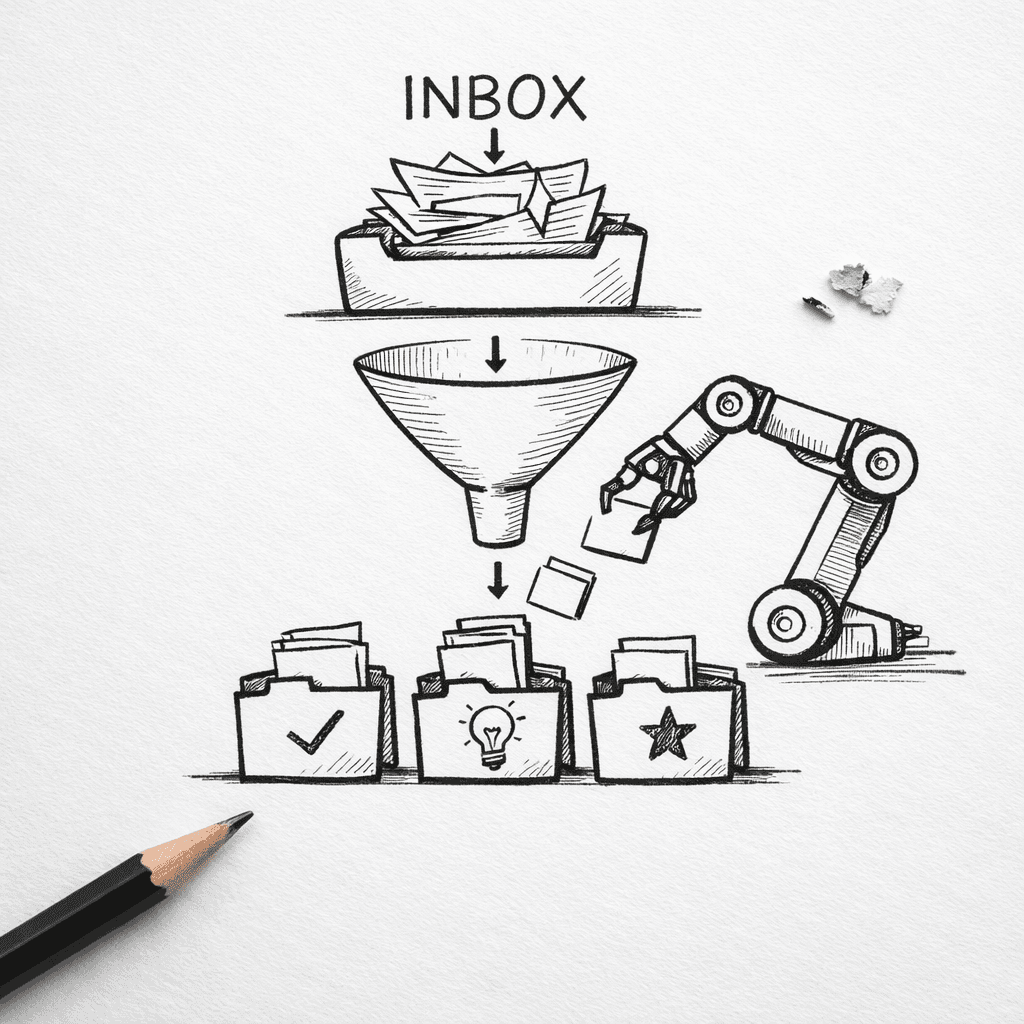
A step-by-step guide to creating an AI-powered second brain that remembers everything and helps you think better. No fluff, just what works.
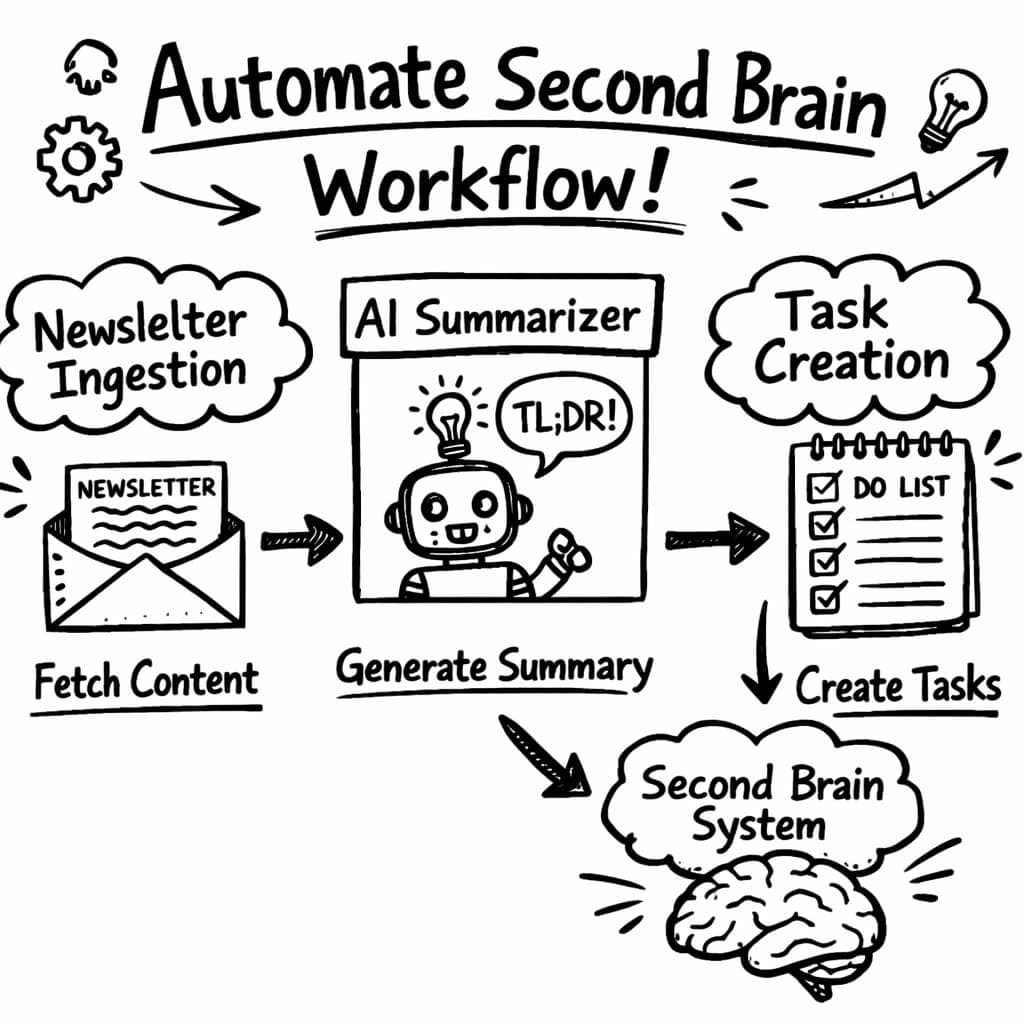
Learn a step-by-step system to capture, organize, link, review, and automate your knowledge and build a powerful second brain today.
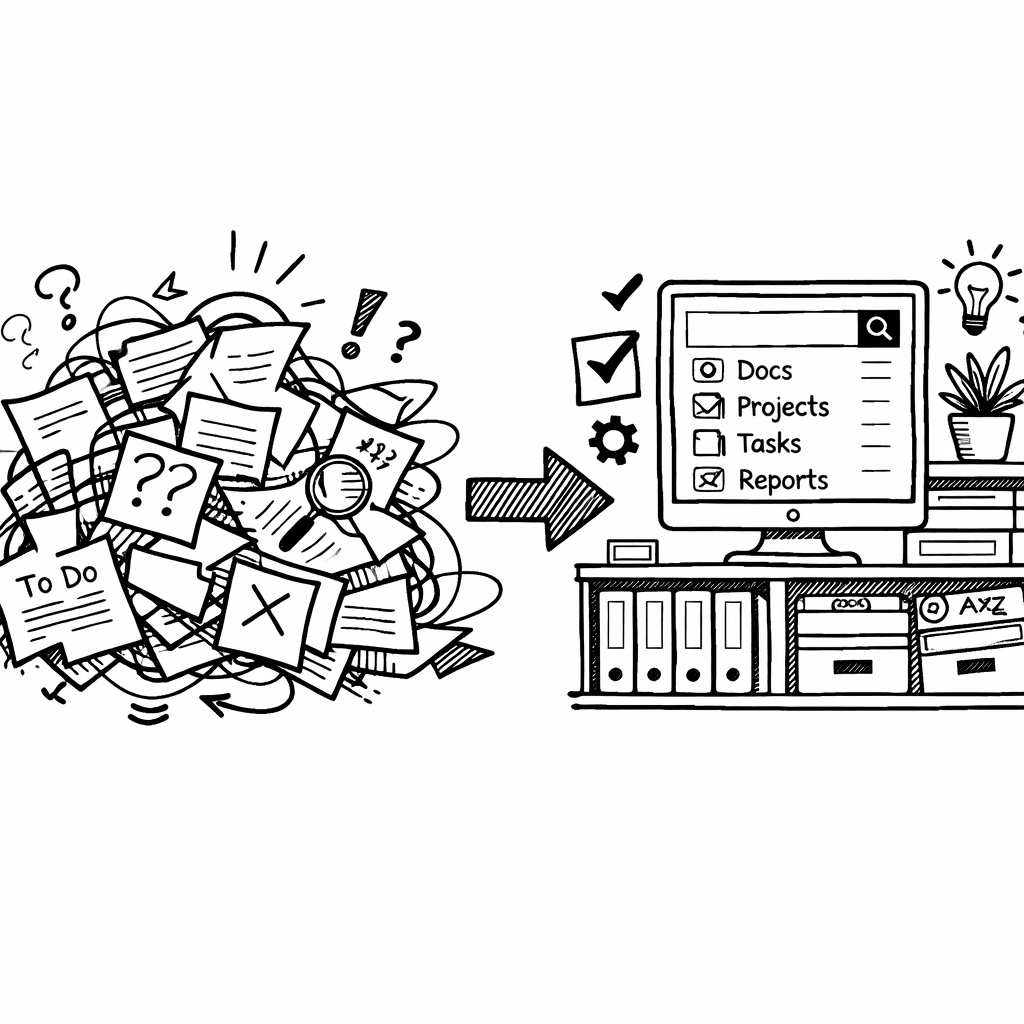
Learn what a knowledge management system does, its key parts, common pitfalls, and how to pick the right one for your business in plain English.
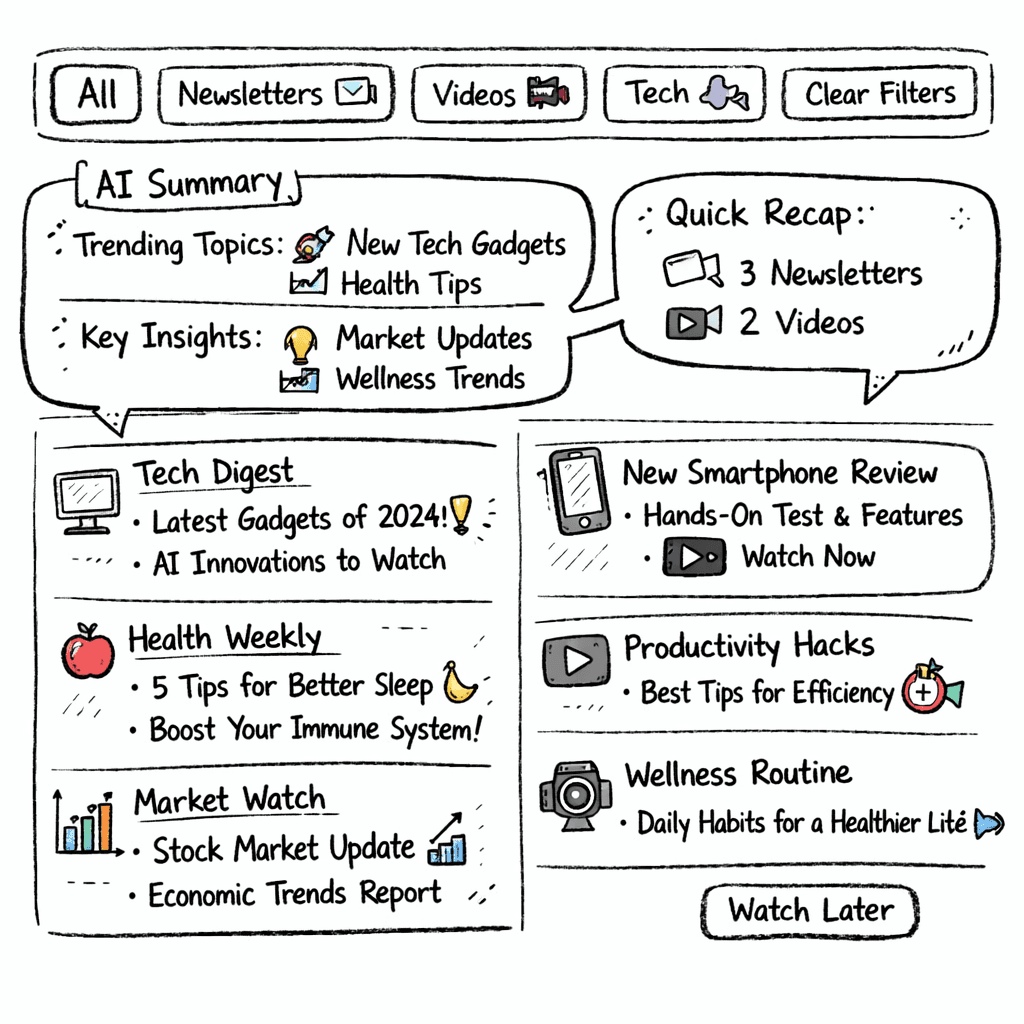
Information overload is a retrieval problem, not a volume problem. Five steps that work, and the tools worth using at each one.

Turn the YouTube channels you follow into a searchable, citable archive. How AI knowledge management for video works, what it costs, and how to set it up.
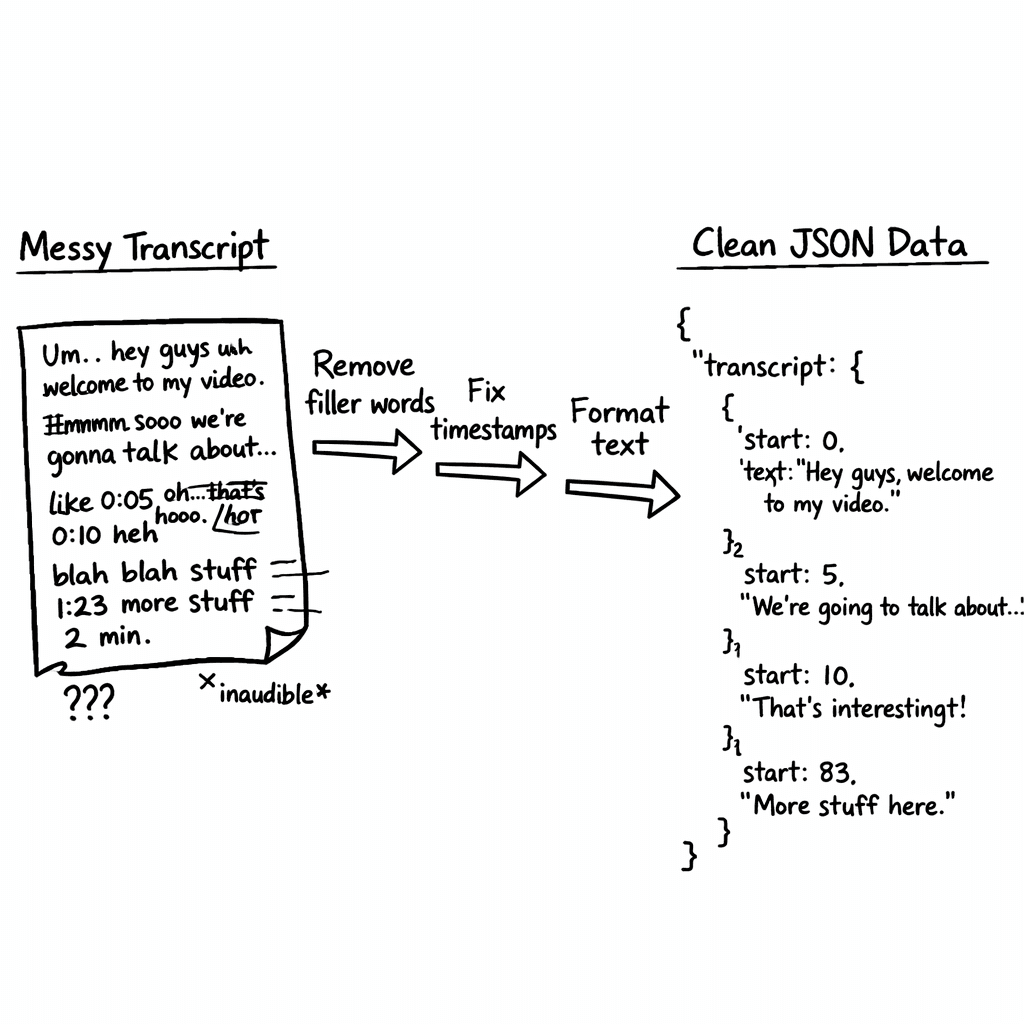
Learn how to turn YouTube videos into an automated knowledge base. A step-by-step guide for founders to capture, store, and query video content.
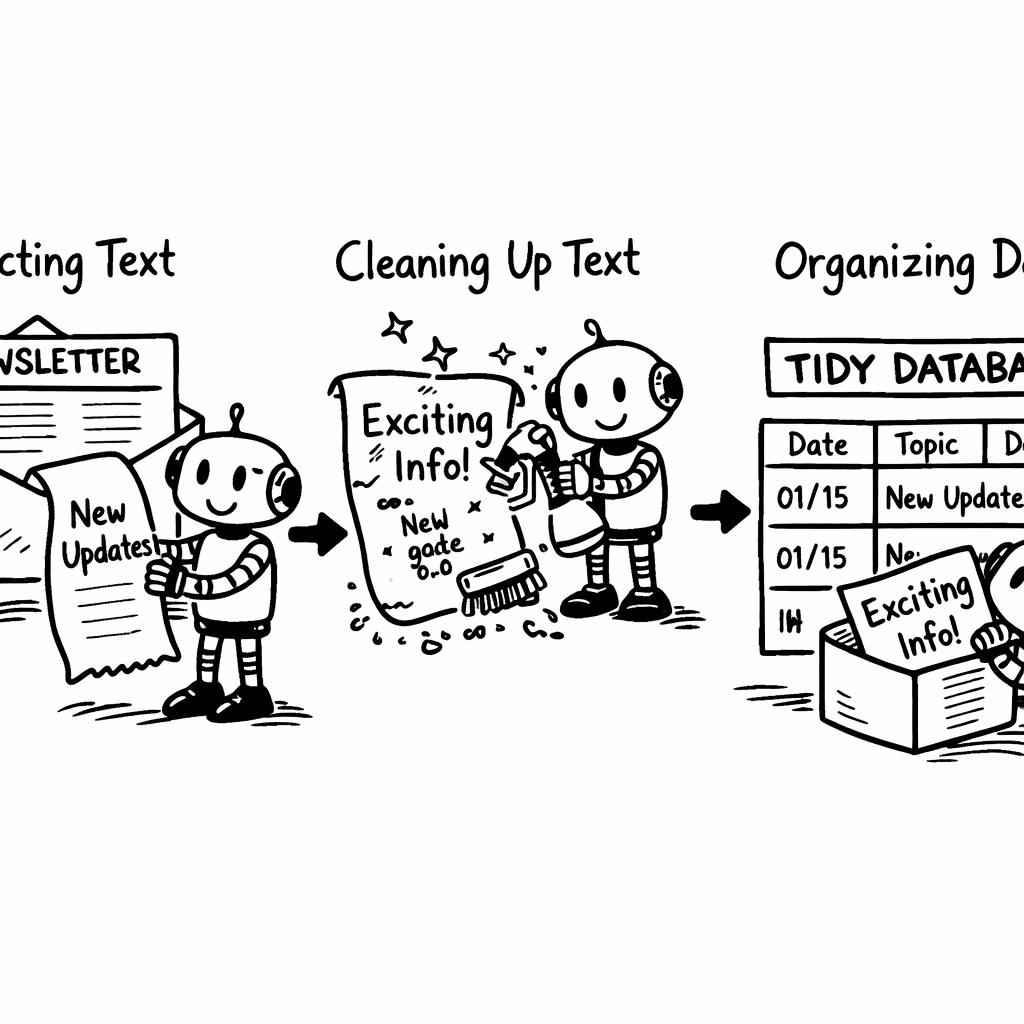
Learn how to turn newsletters into an automated knowledge base that answers questions instantly. Step-by-step guide for founders.
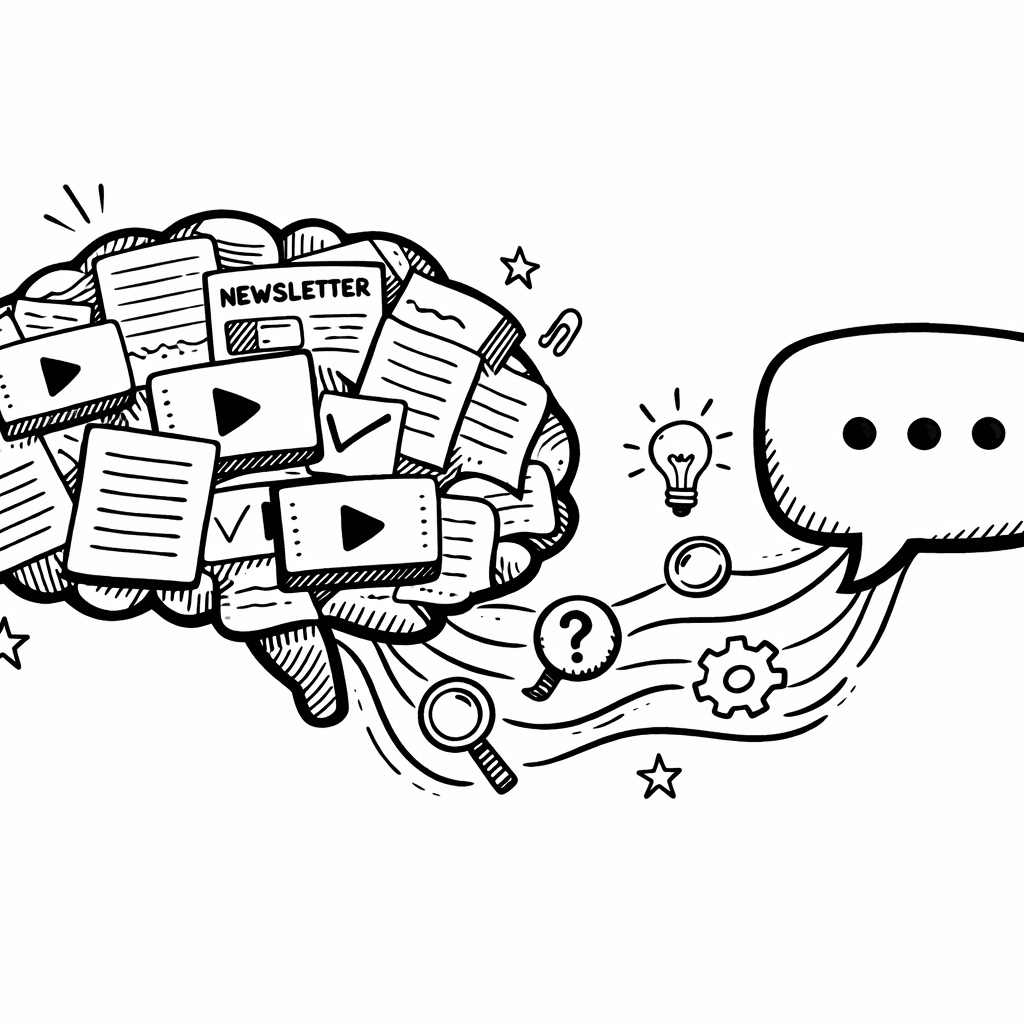
Learn how an AI knowledge management tool works, key features, pitfalls, and why Adviserry Boards is the top pick in 2026.
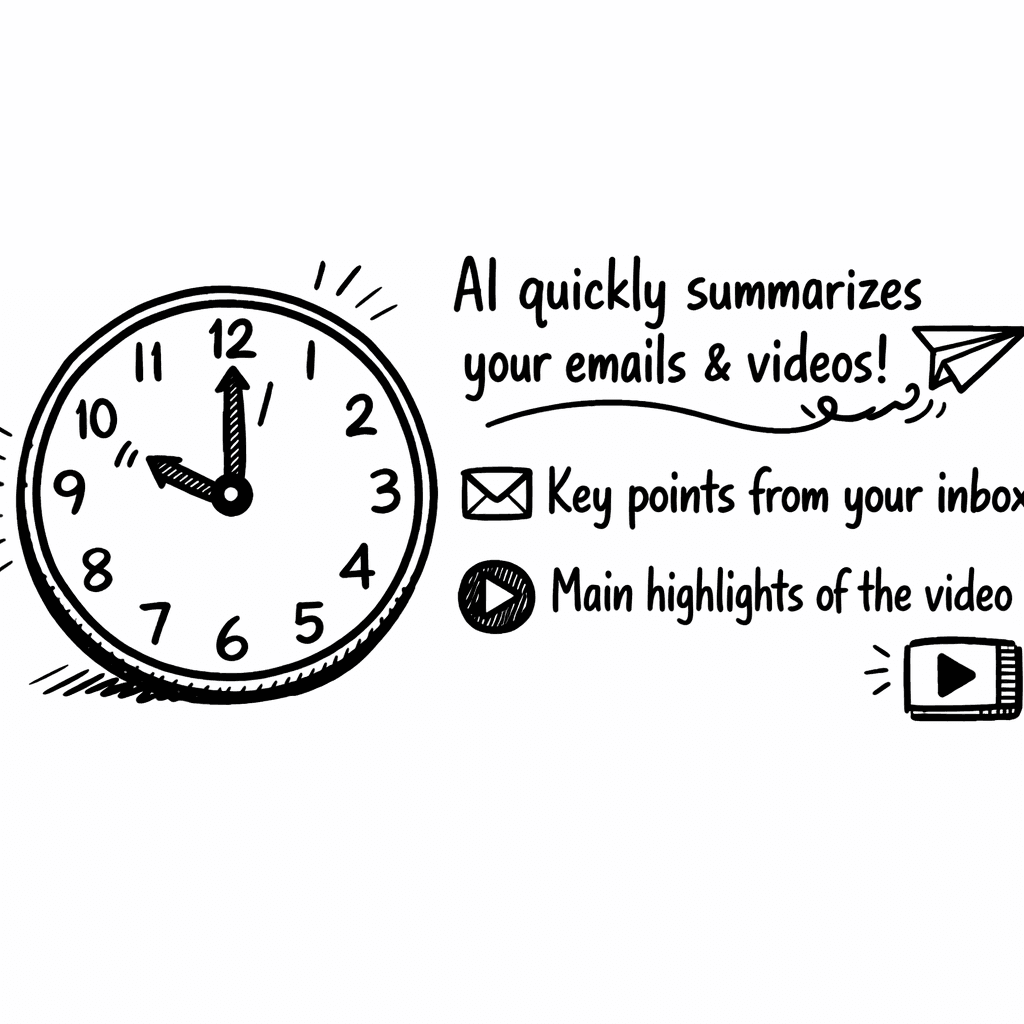
Most AI summarizers do newsletters or videos, not both. Compare Adviserry, Readless, Meco, TubeOnAI, and NoteGPT with real 2026 pricing.
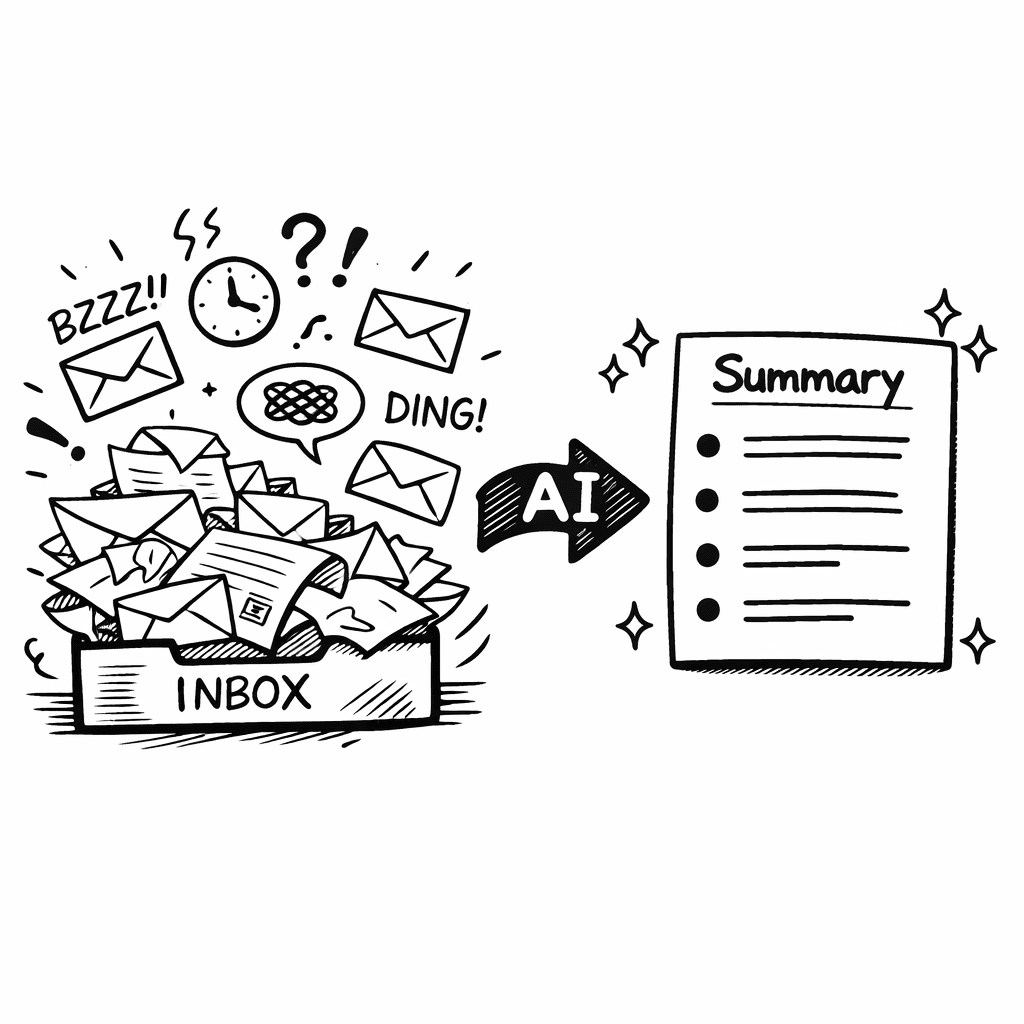
Compare AI newsletter summarizers in 2026: Adviserry, Readless, Meco, Digest AI, and DIY LangChain. Real pricing, and which one fits how you actually read.
An AI business coach runs $20 to $60 a month against several hundred or more for a human one. What you gain, what you give up, and how to choose.
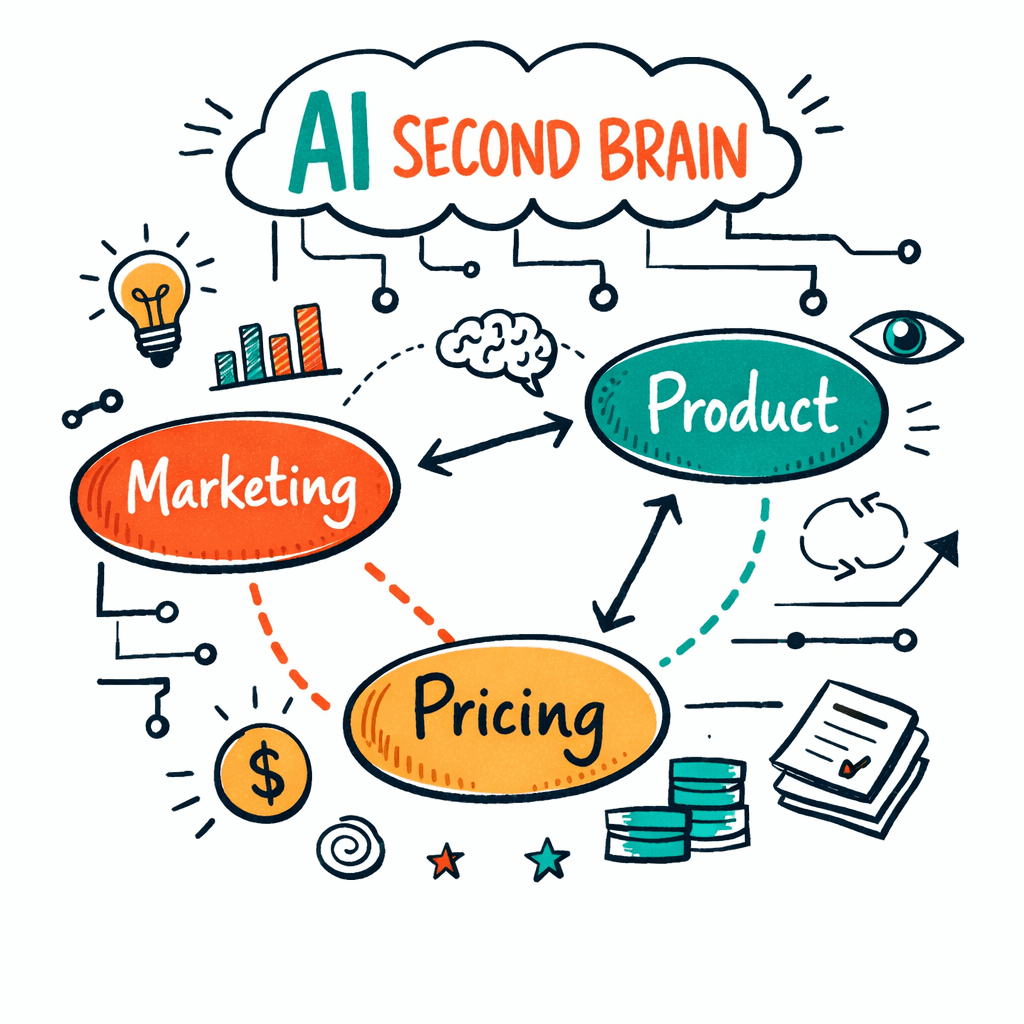
Step-by-step guide to create an AI second brain that learns your business, automate insights, and boost decisions for solo founders.
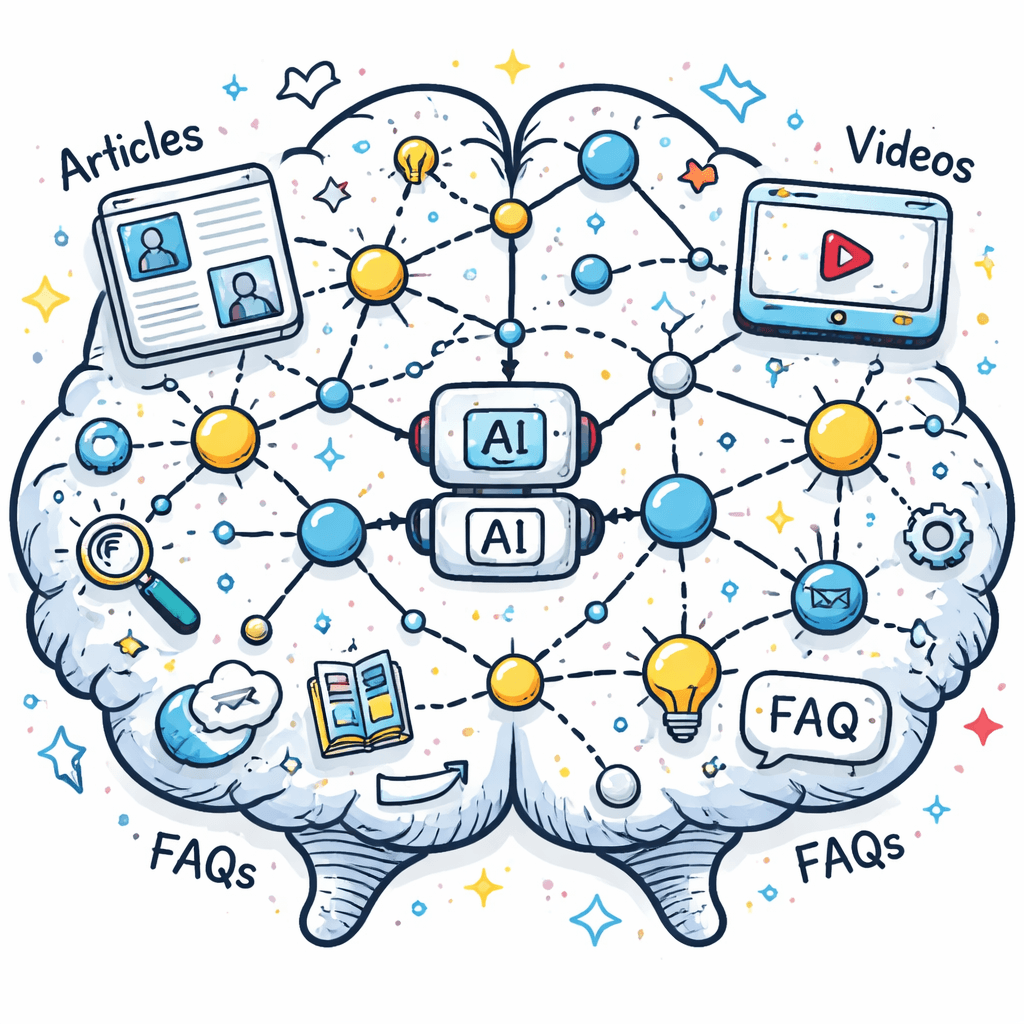
Learn step-by-step how to create an AI-powered knowledge base that boosts search, scales knowledge, and saves time for founders and solo entrepreneurs.
AI coach vs human coach in 2026: personalization, cost, scalability, and real-world results, so you can pick the right fit.
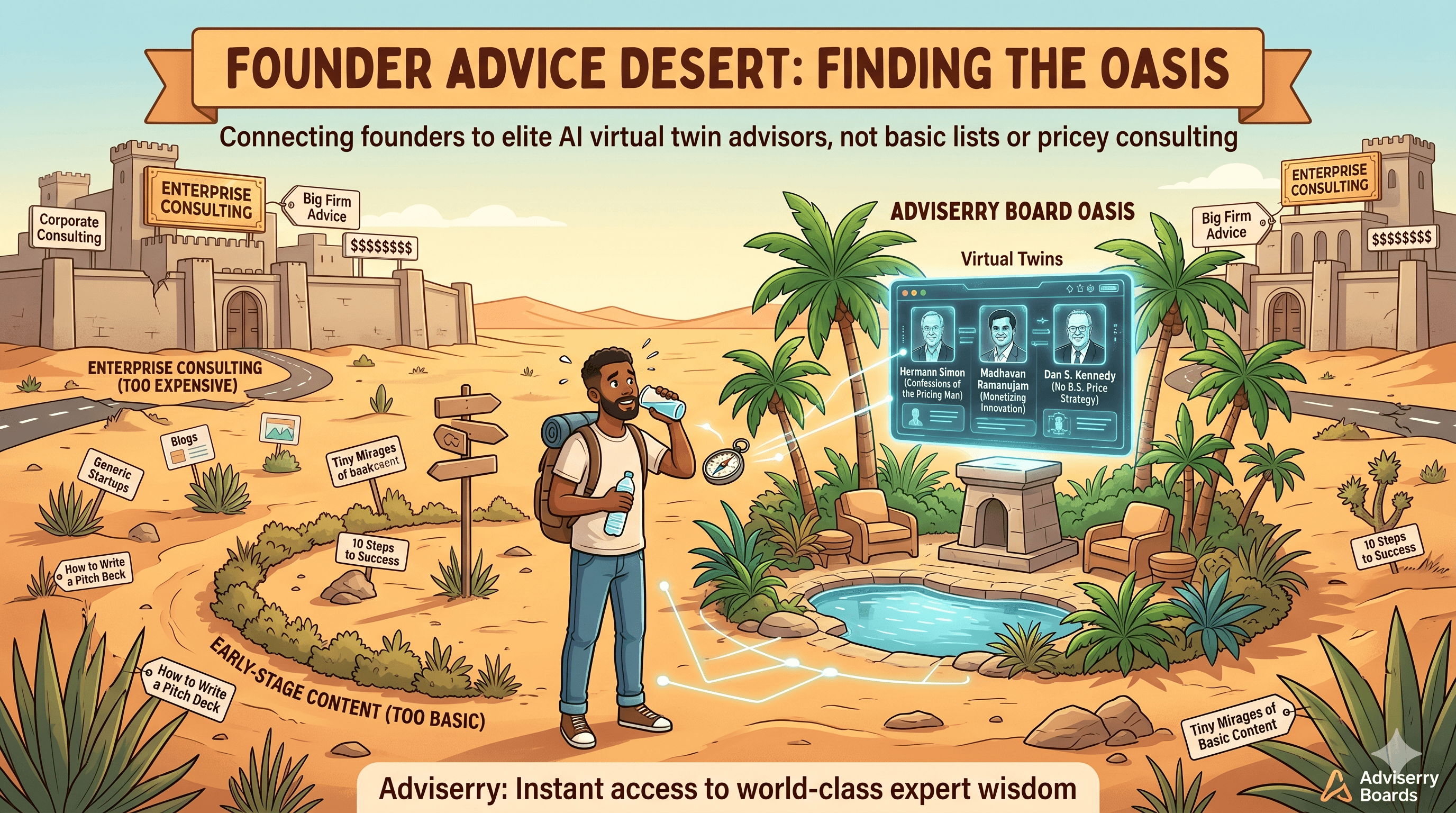
Too big for blog advice. Too small for McKinsey. The $1M-$10M founder is underserved by the current coaching market: and that gap has a name.
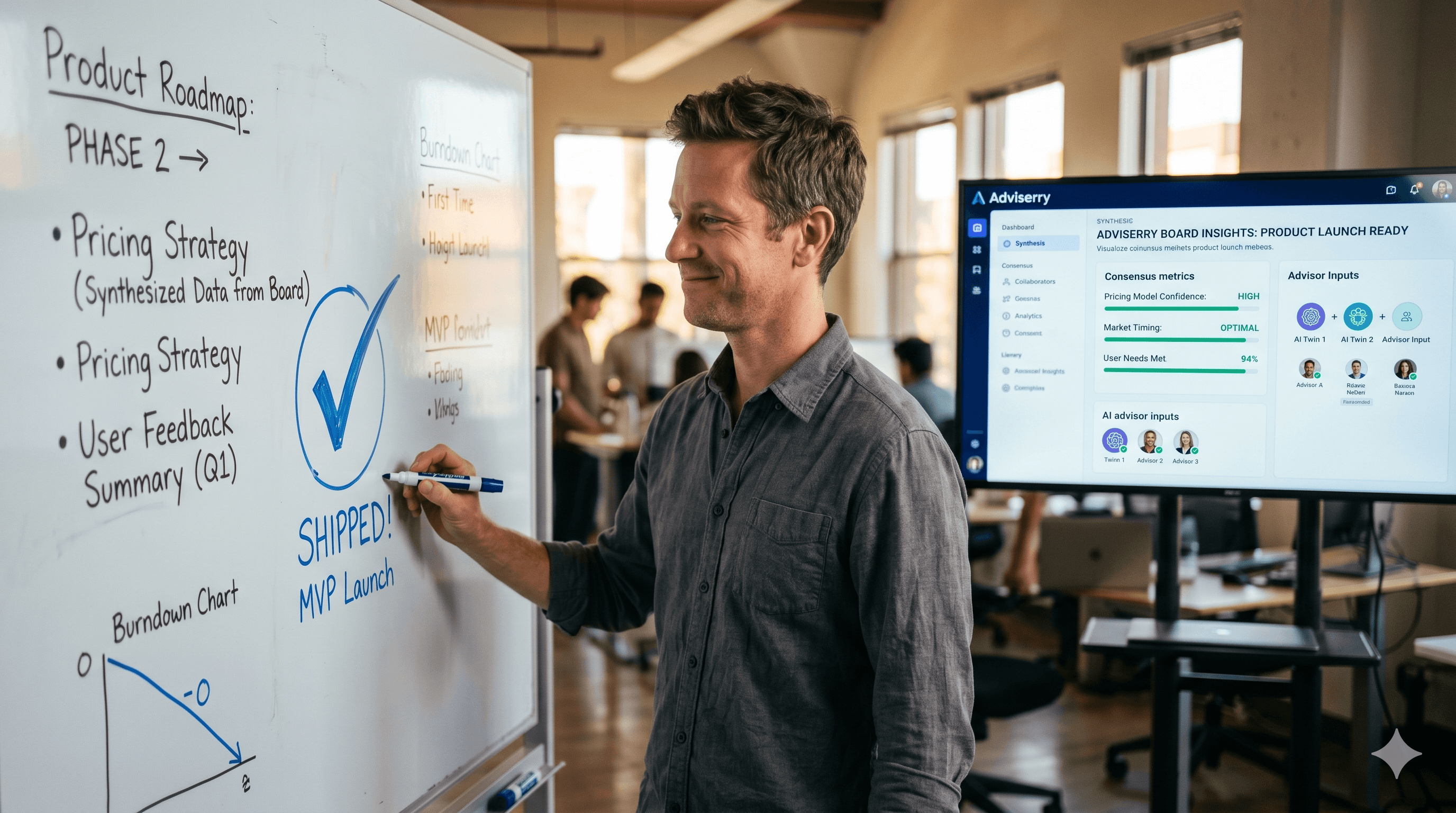
Decision fatigue is real, and it compounds. Here's how having expert-backed answers on demand stops the second-guessing spiral and changes what you actually ship.
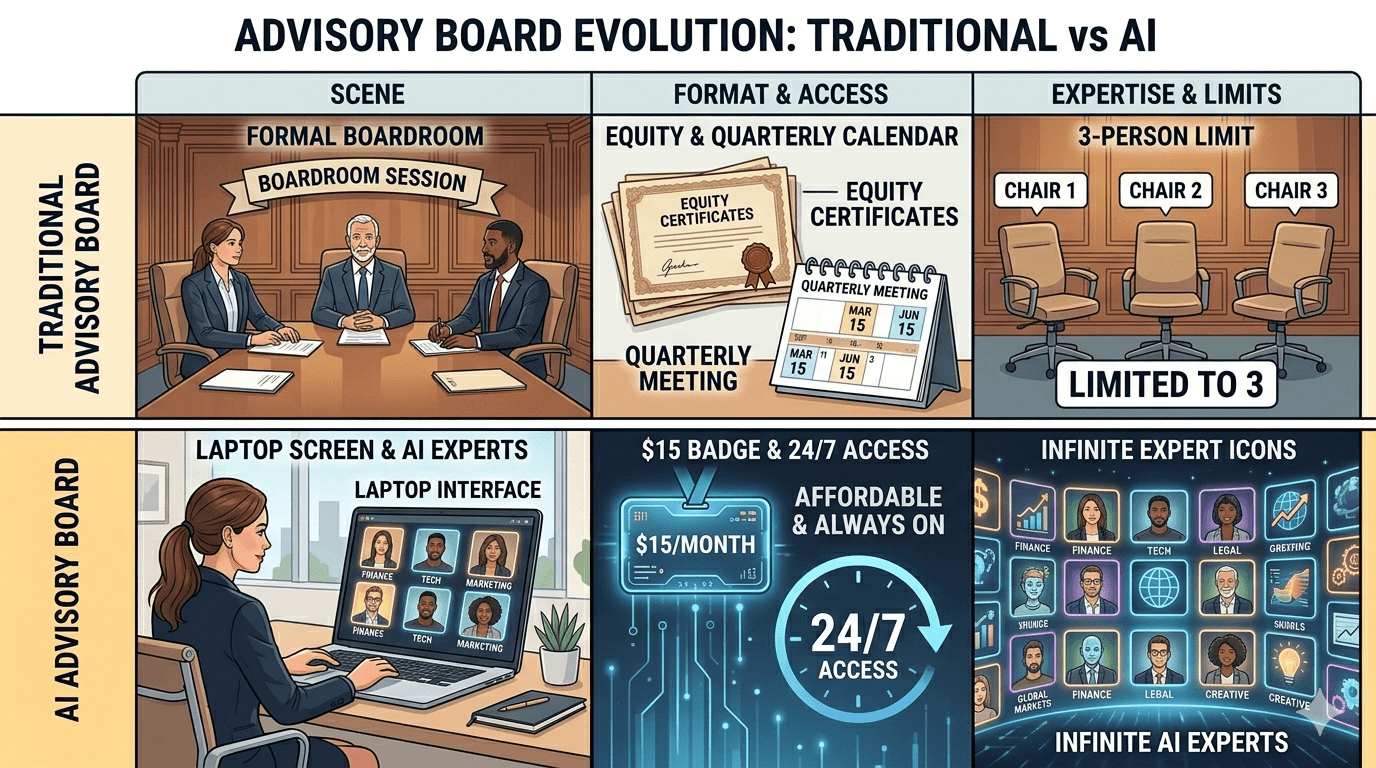
A formal advisory board costs equity and five figures a year. Here is what you actually get from each, and where a $49/month version genuinely substitutes.

Your Tuesday 2pm coaching call is not when your biggest decisions happen. They happen at 3am, on a Sunday, in the middle of a crisis. Here's why that matters.
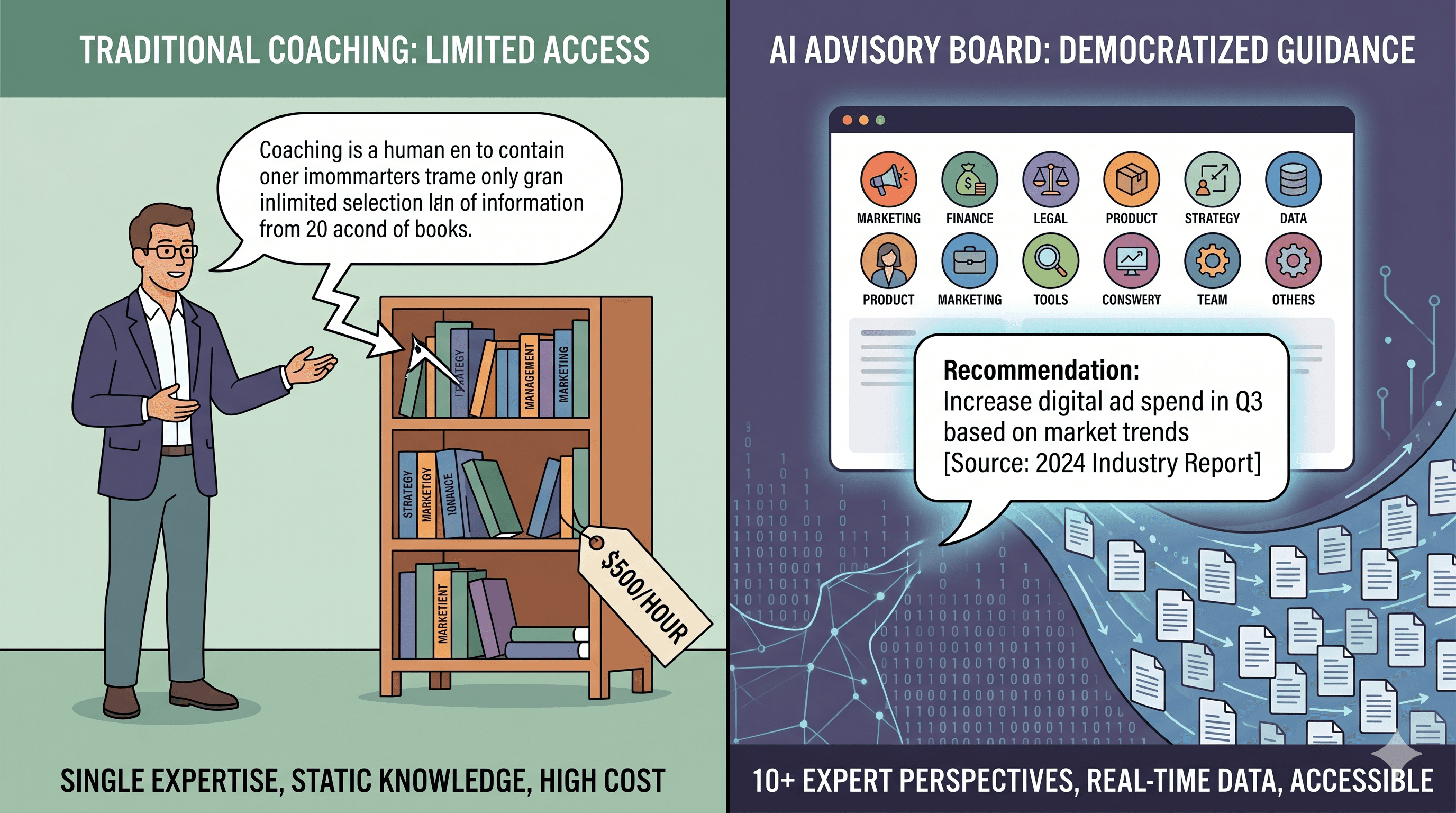
Your human coach has one decade of experience. Your AI advisory board has synthesized what 10+ experts published this week. That's a fundamentally different kind of input.
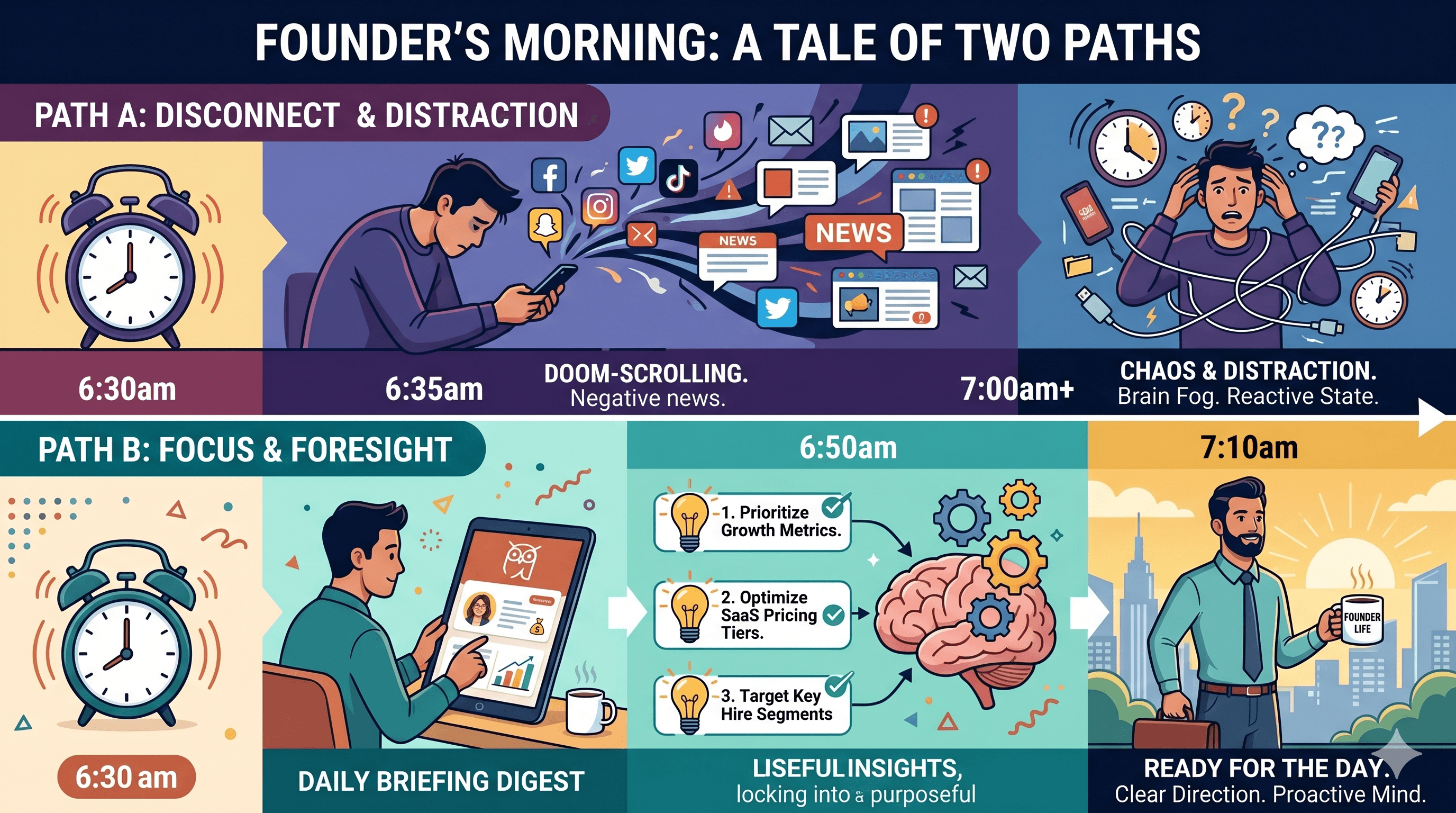
I replaced my morning doom-scroll with a daily briefing from my AI advisory board. Here's what it actually contains and why it changed my first 30 minutes.
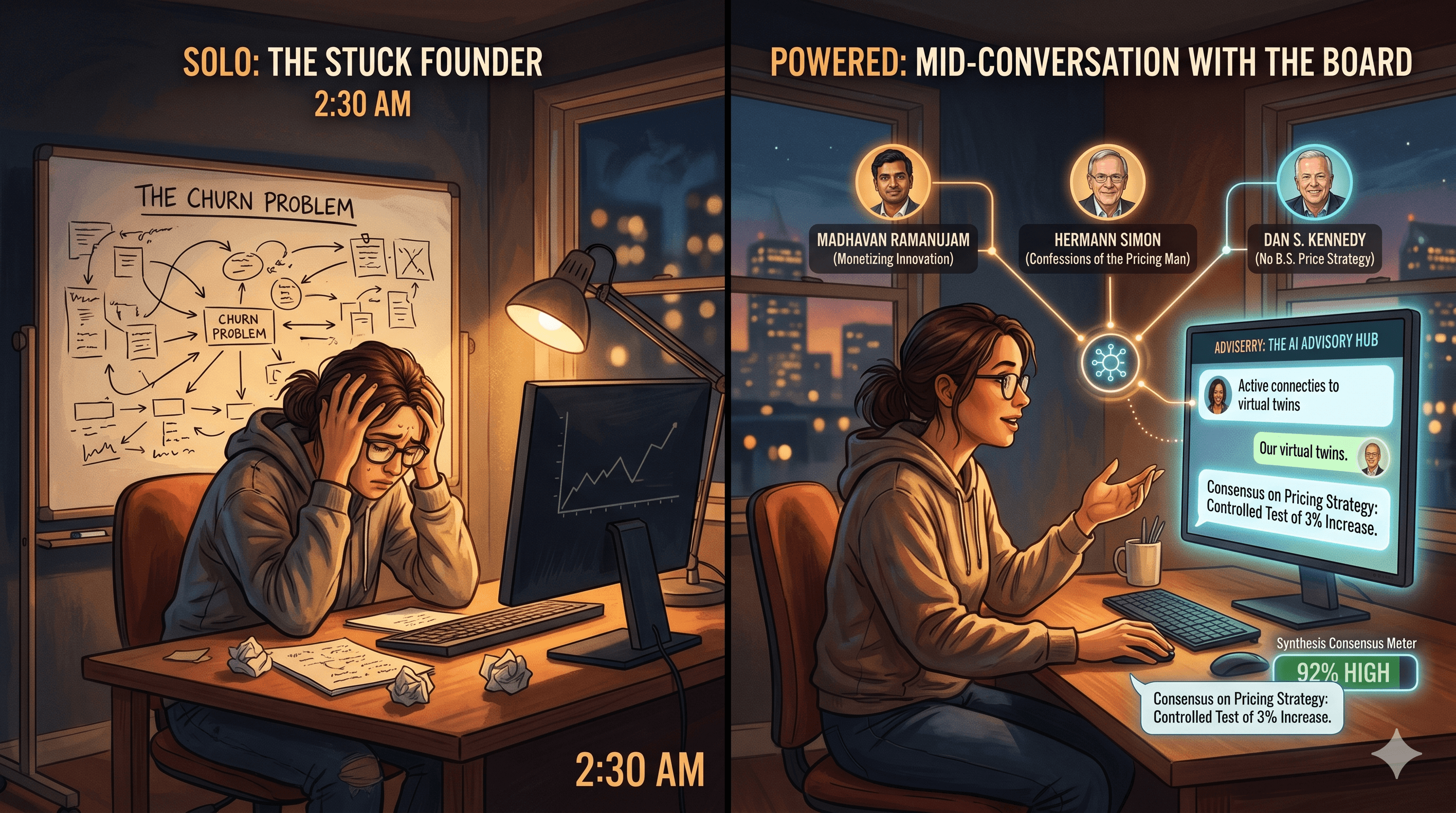
Solo founding is isolating: too expensive for real advisors, too complex for friends and family. An AI advisory panel fills the strategic gap.
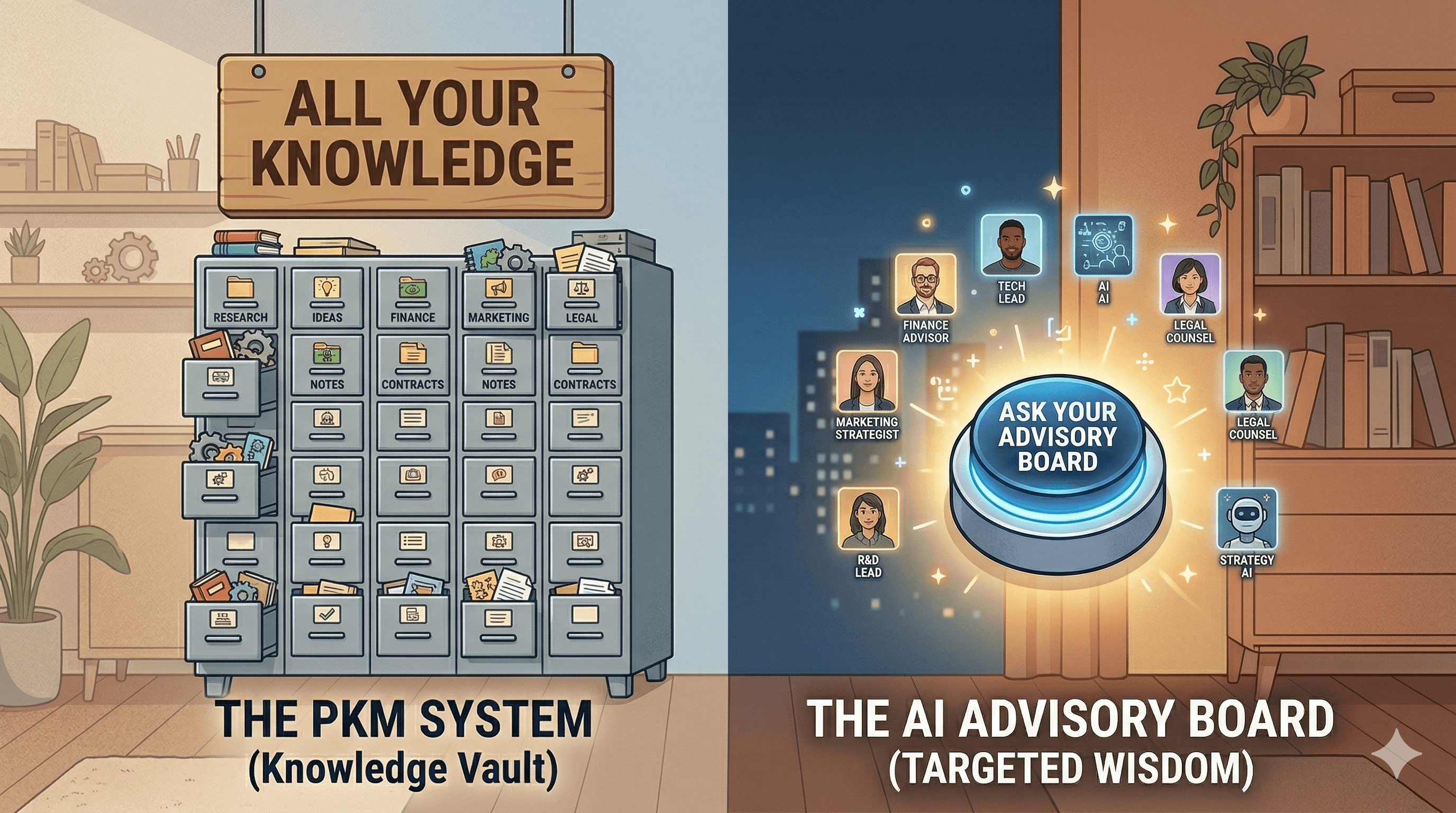
Notion AI helps you organize your notes. Mem helps you find them again. Readwise reminds you they exist. None of them tell you what to do with any of it.
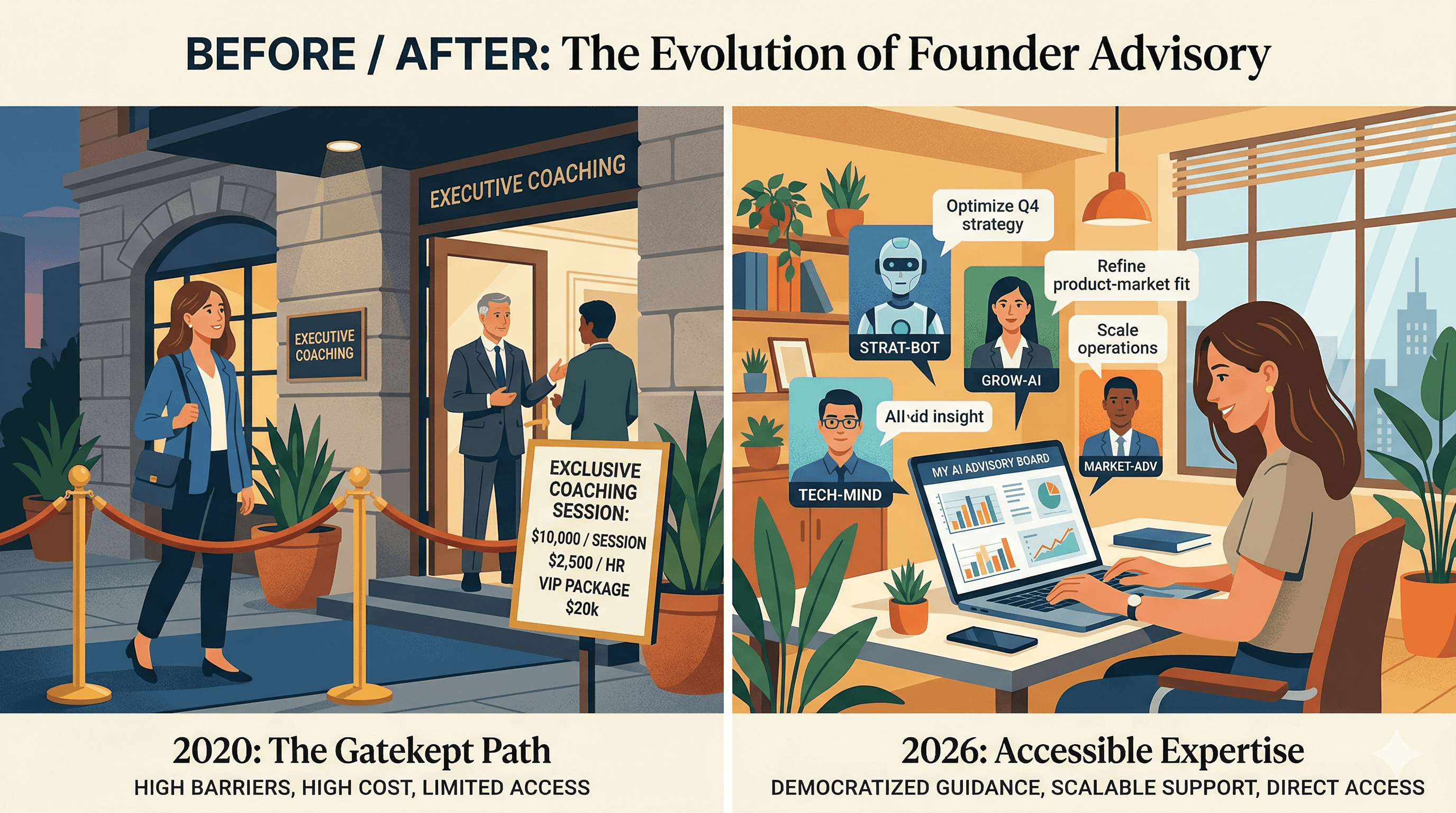
The business coaching industry will generate $7.3 billion this year. Most of it is priced out of reach for the founders who need it most: and AI is about to change that math entirely.
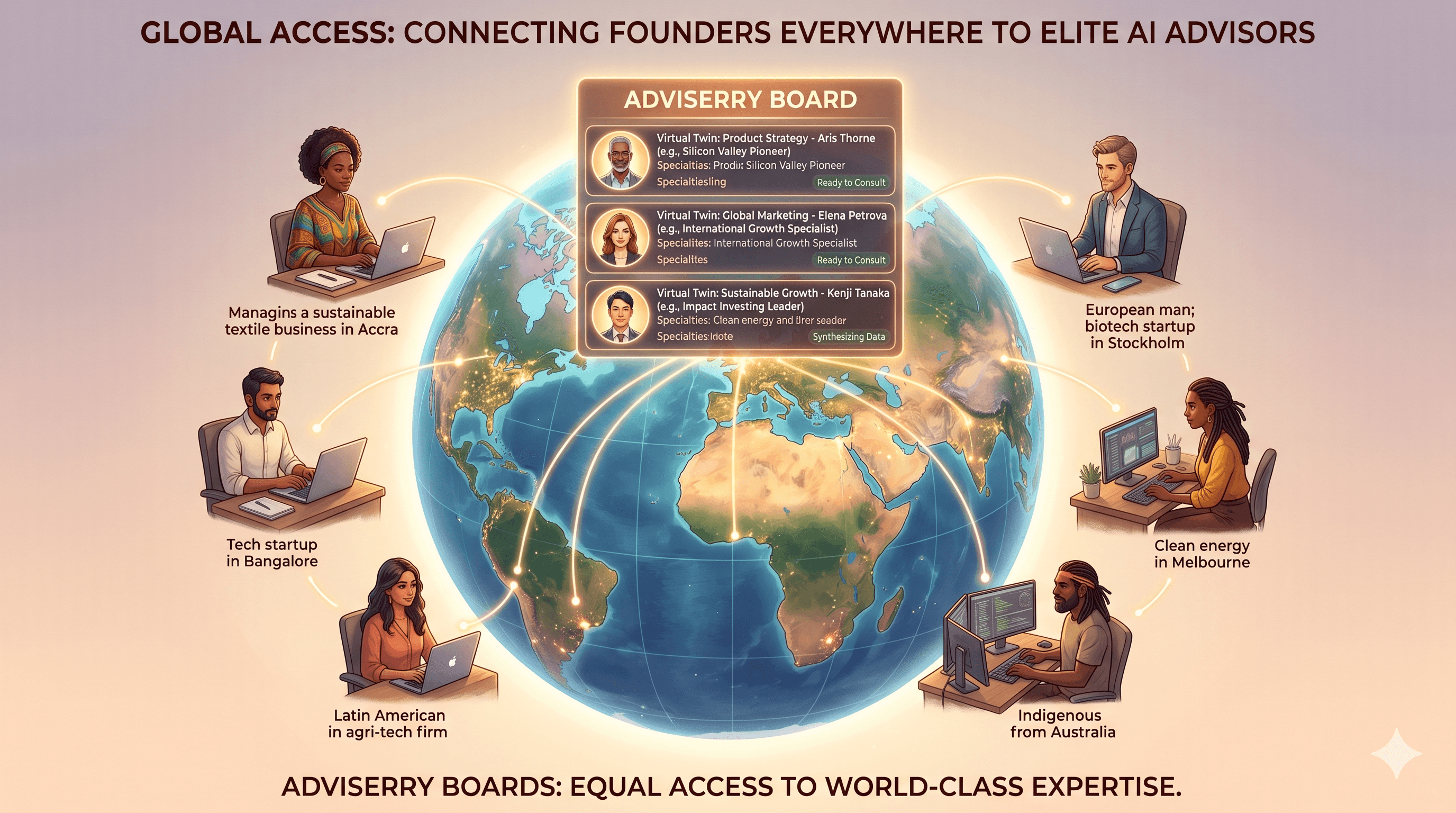
Access to good business advice has always been gated by wealth and connections. AI advisory boards are dismantling that gate.
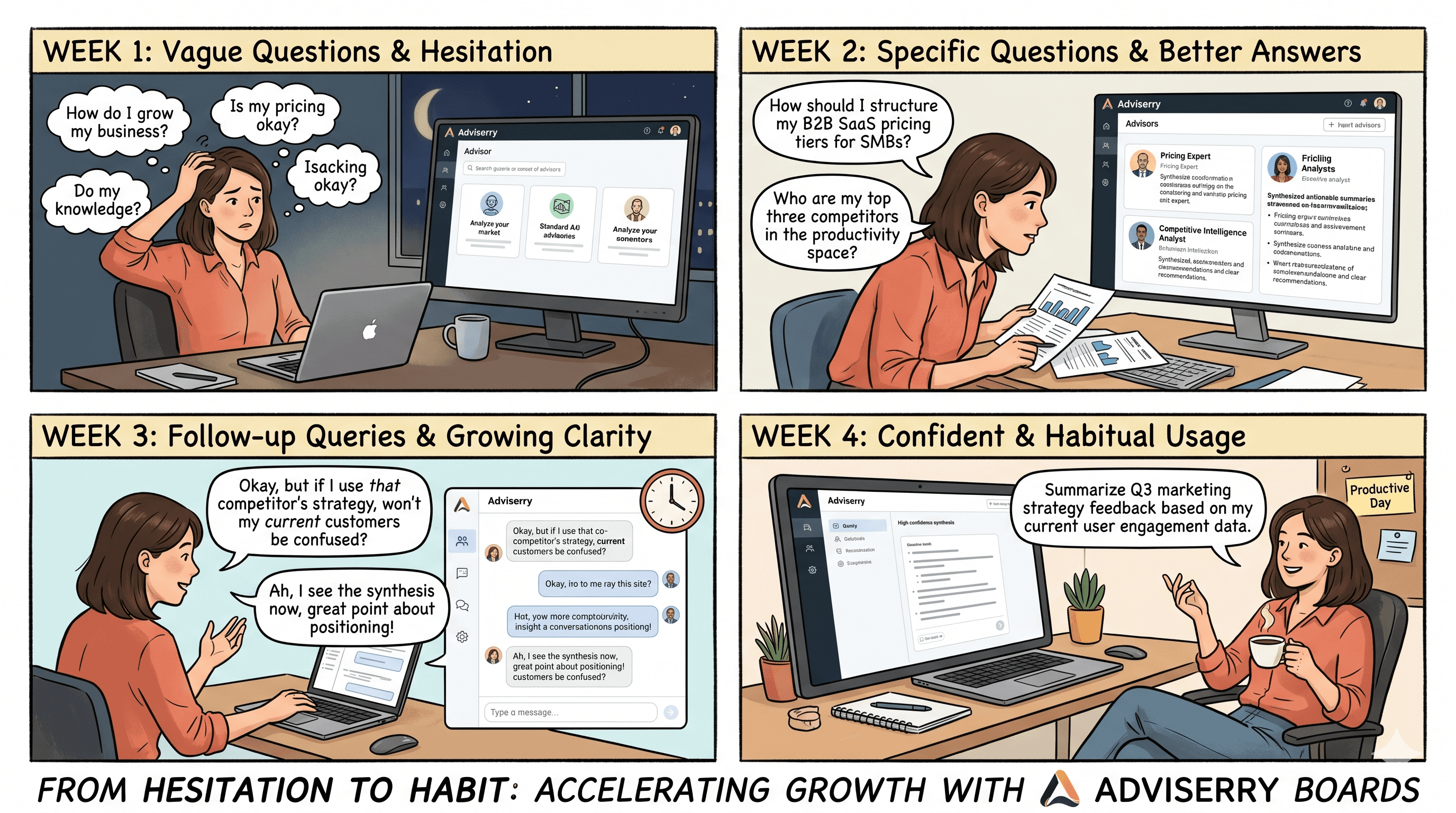
What actually changes over a month: the setup takes a day, week one is unlearning search-engine habits, and week two is where the context work pays off.
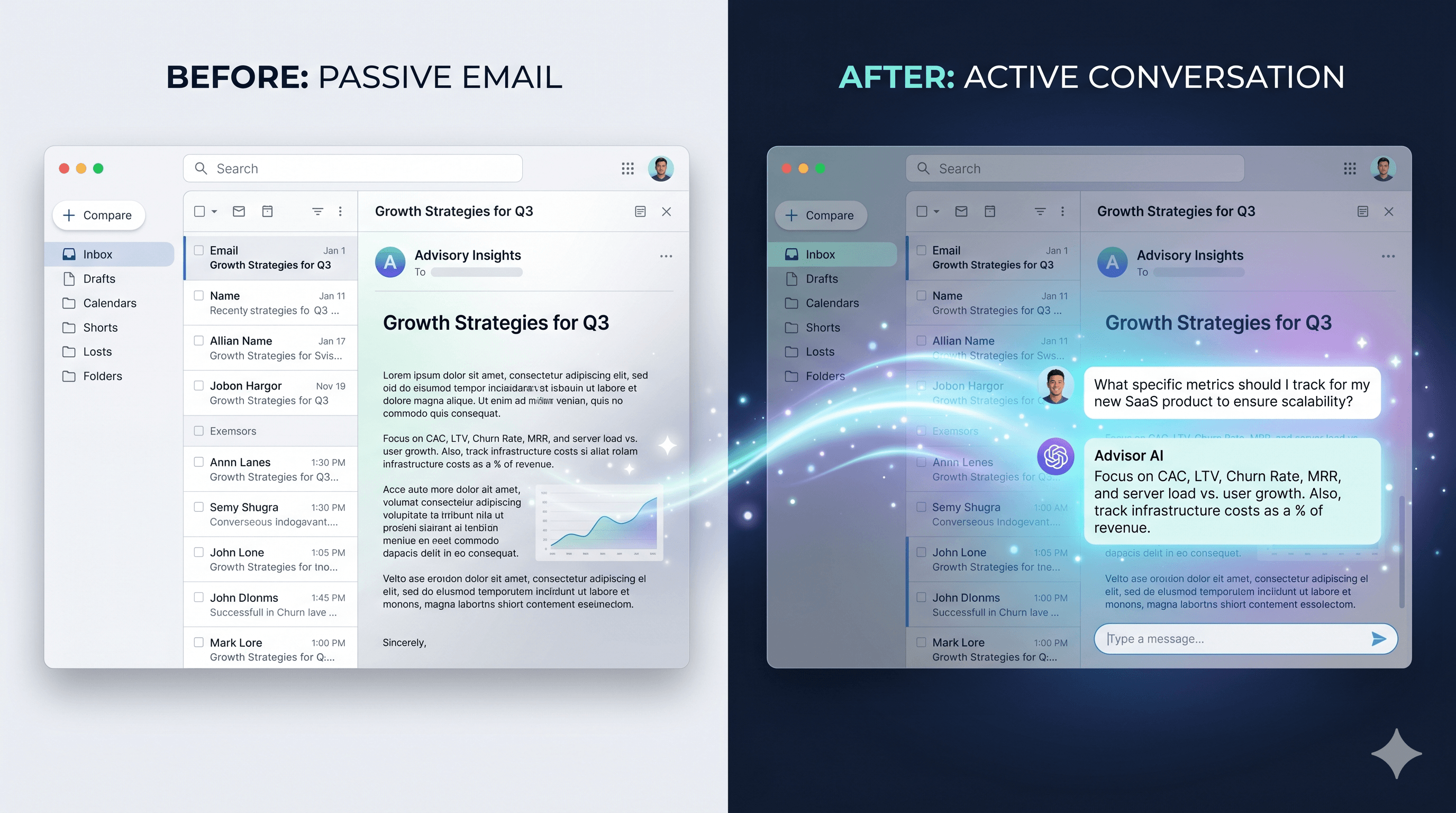
You subscribe to 30 newsletters and read maybe 20% of them. The other 80% is expert knowledge sitting in your inbox doing exactly nothing for your business.
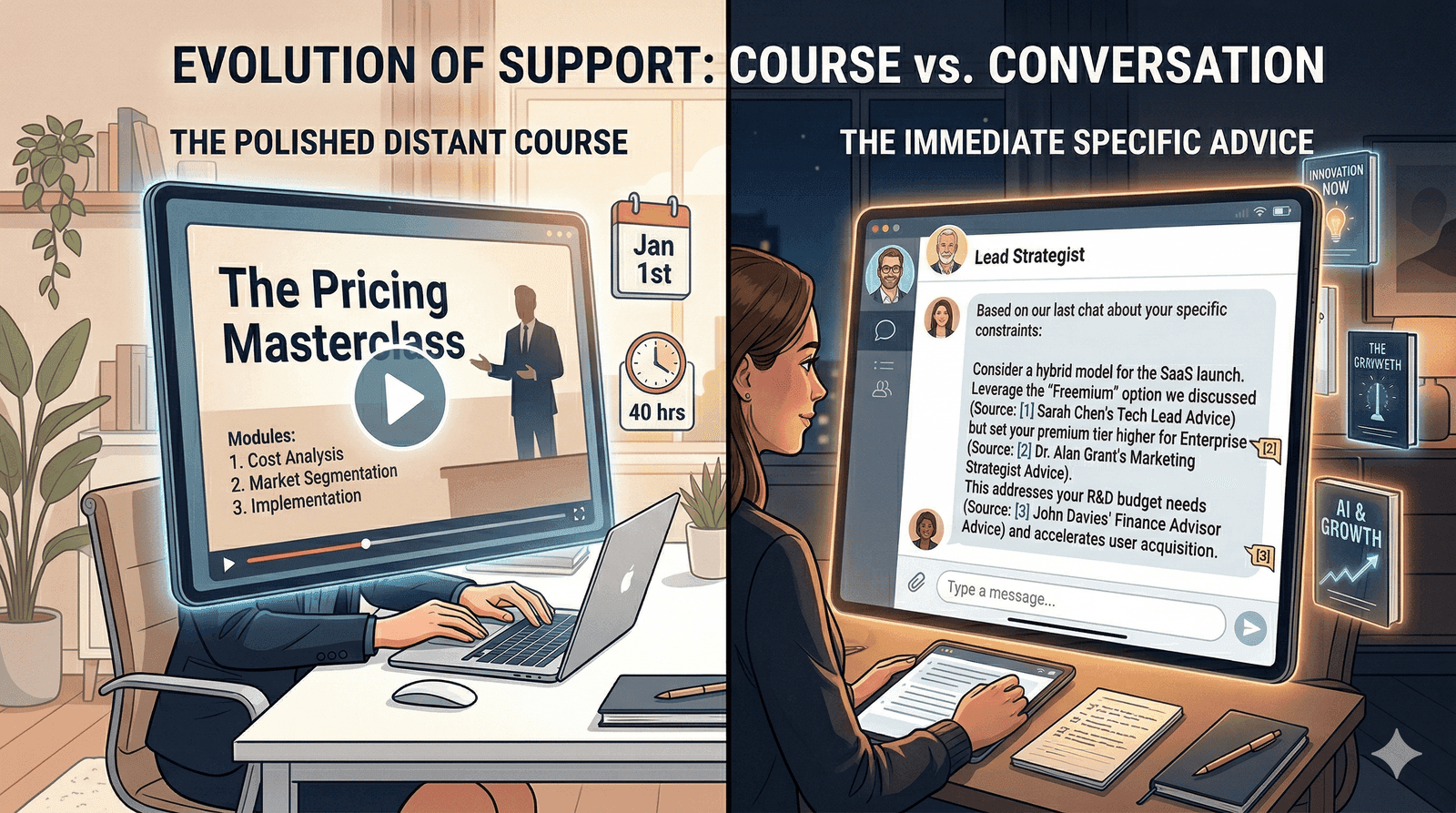
You paid $997 for the course. You watched every video. So why are you still guessing on the same decisions you were guessing on before?
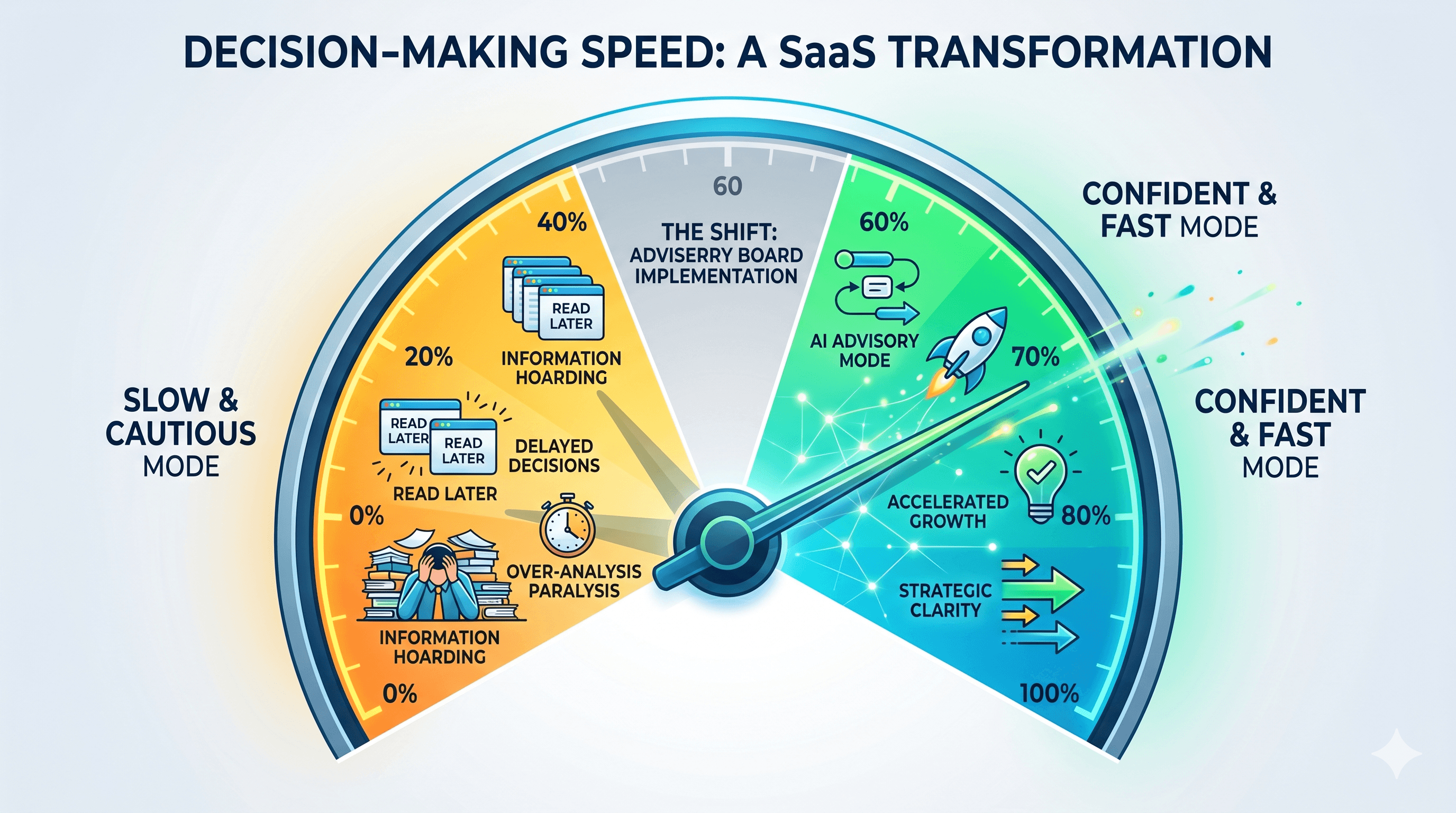
The shift from consuming more information before deciding to having expert perspectives on demand, and how it changes founder operating speed.
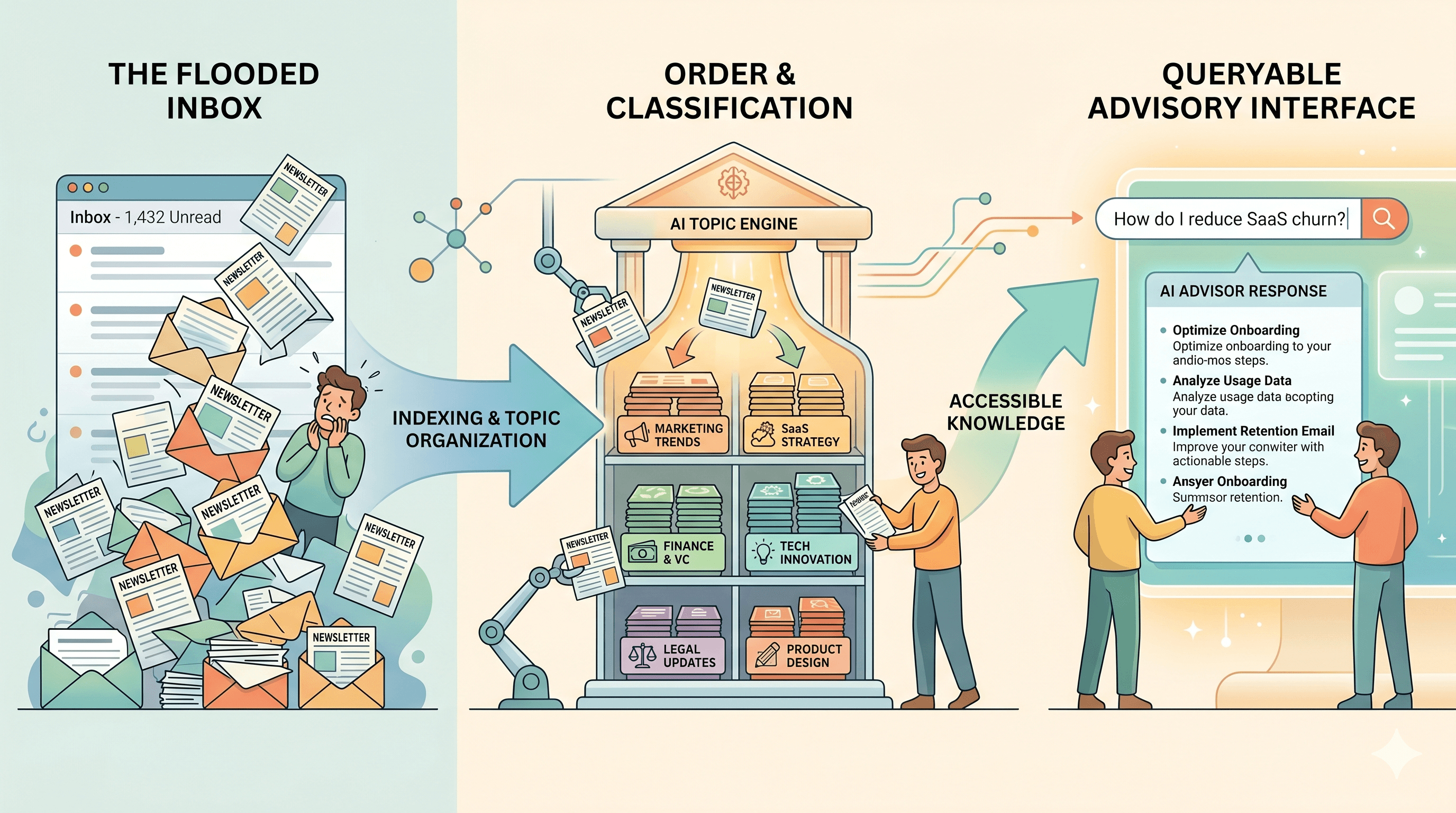
Knowledge workers subscribe to 13 newsletters on average but read only 20%. Why the consumption model is broken, and what works instead.
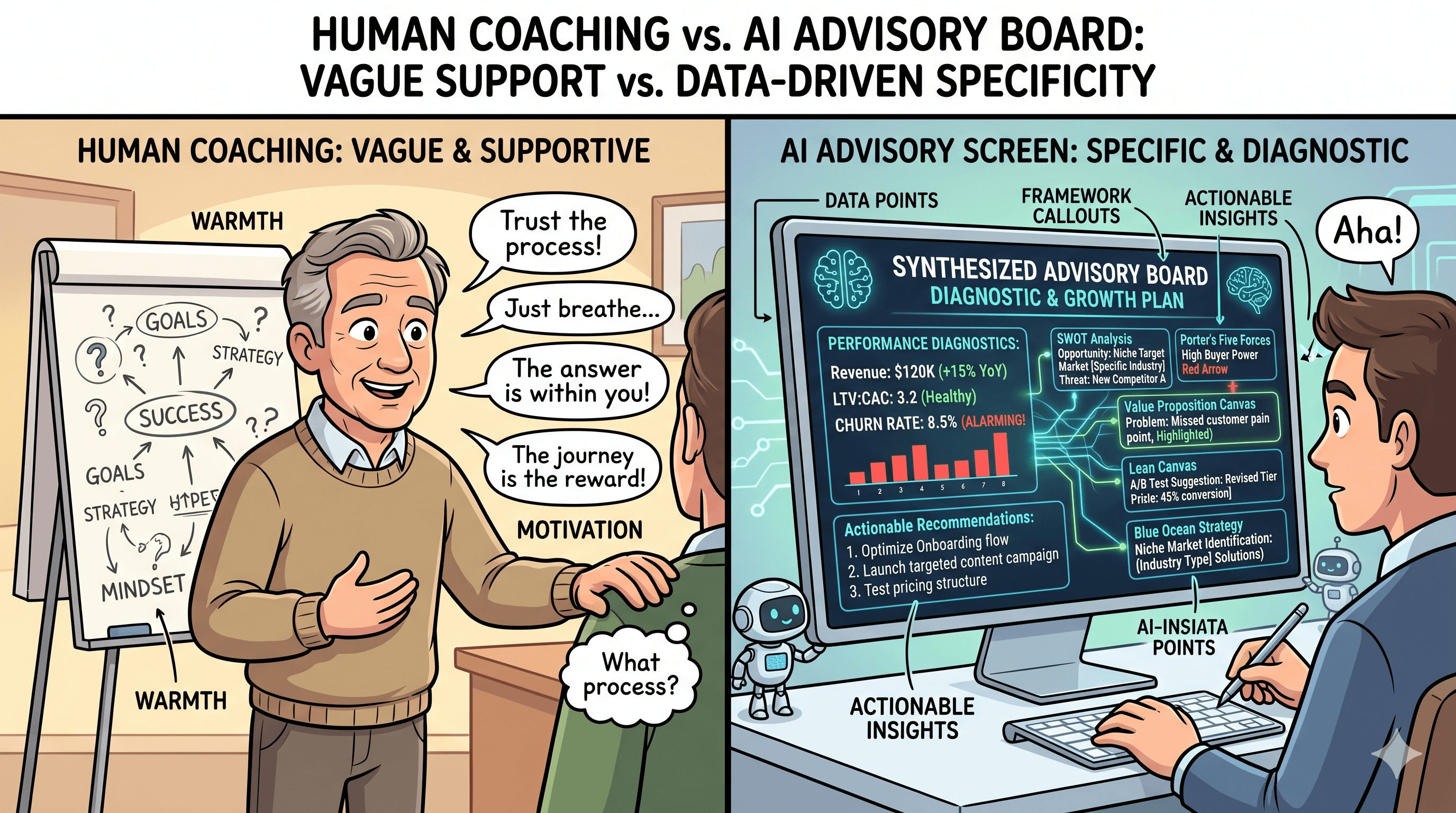
Vague coaching platitudes versus specific, source-backed recommendations, and why that difference changes how founders decide.
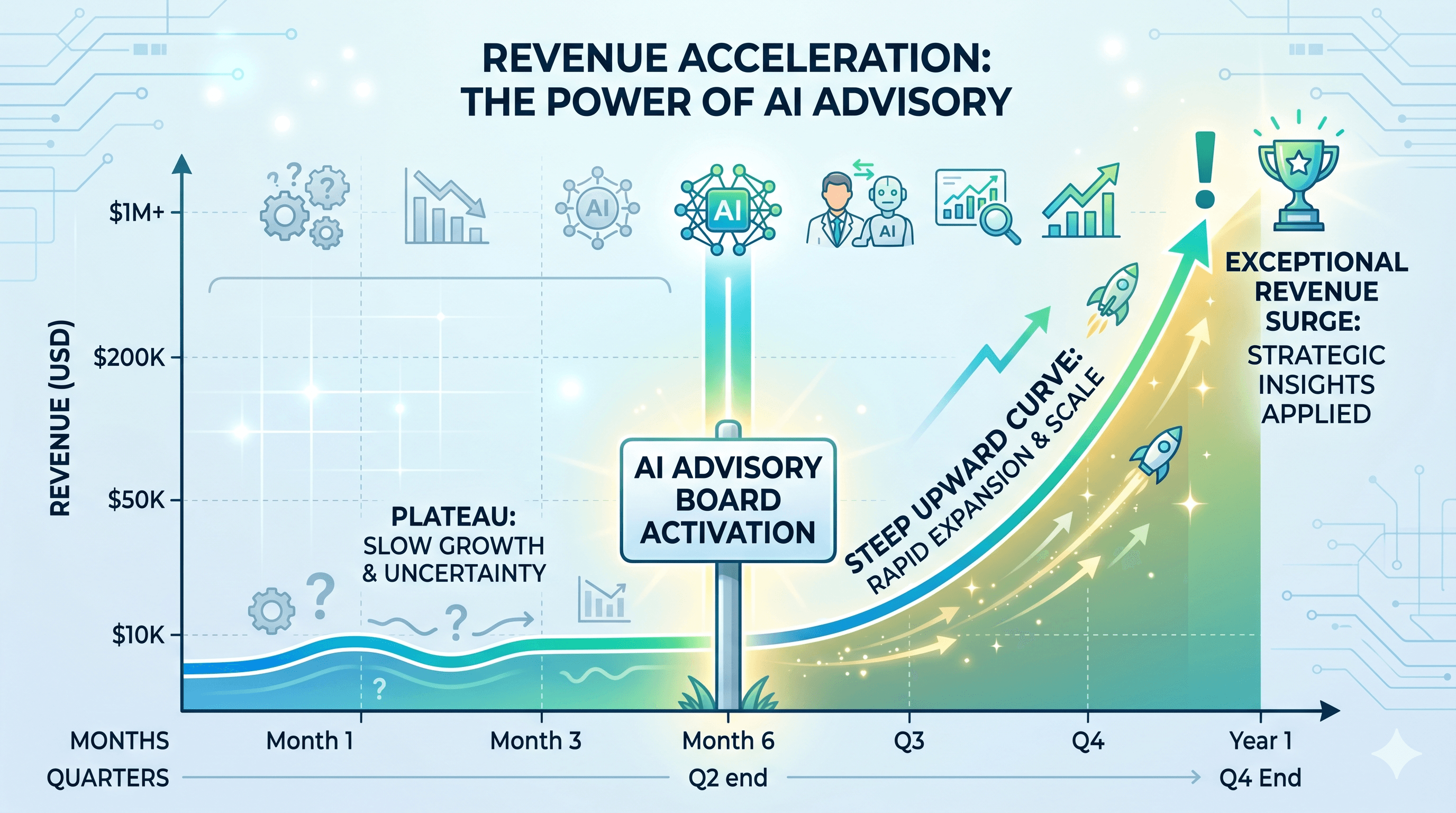
A worked example, not a customer story: how an independent consultant stuck at a revenue plateau could use the experts they already follow to make a pricing shift.
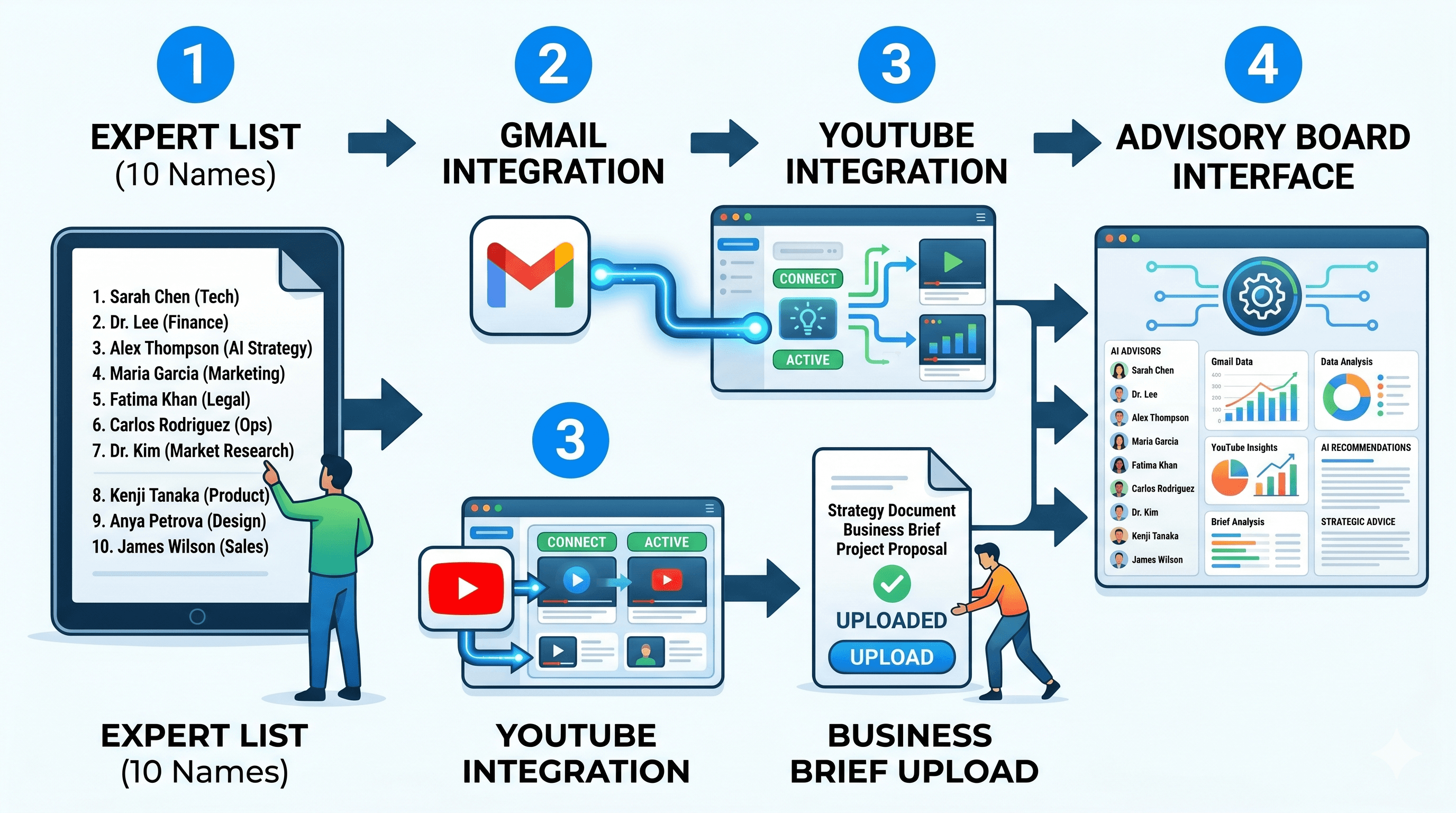
A step-by-step guide to building an AI-powered personal advisory board from the expert sources you already follow.
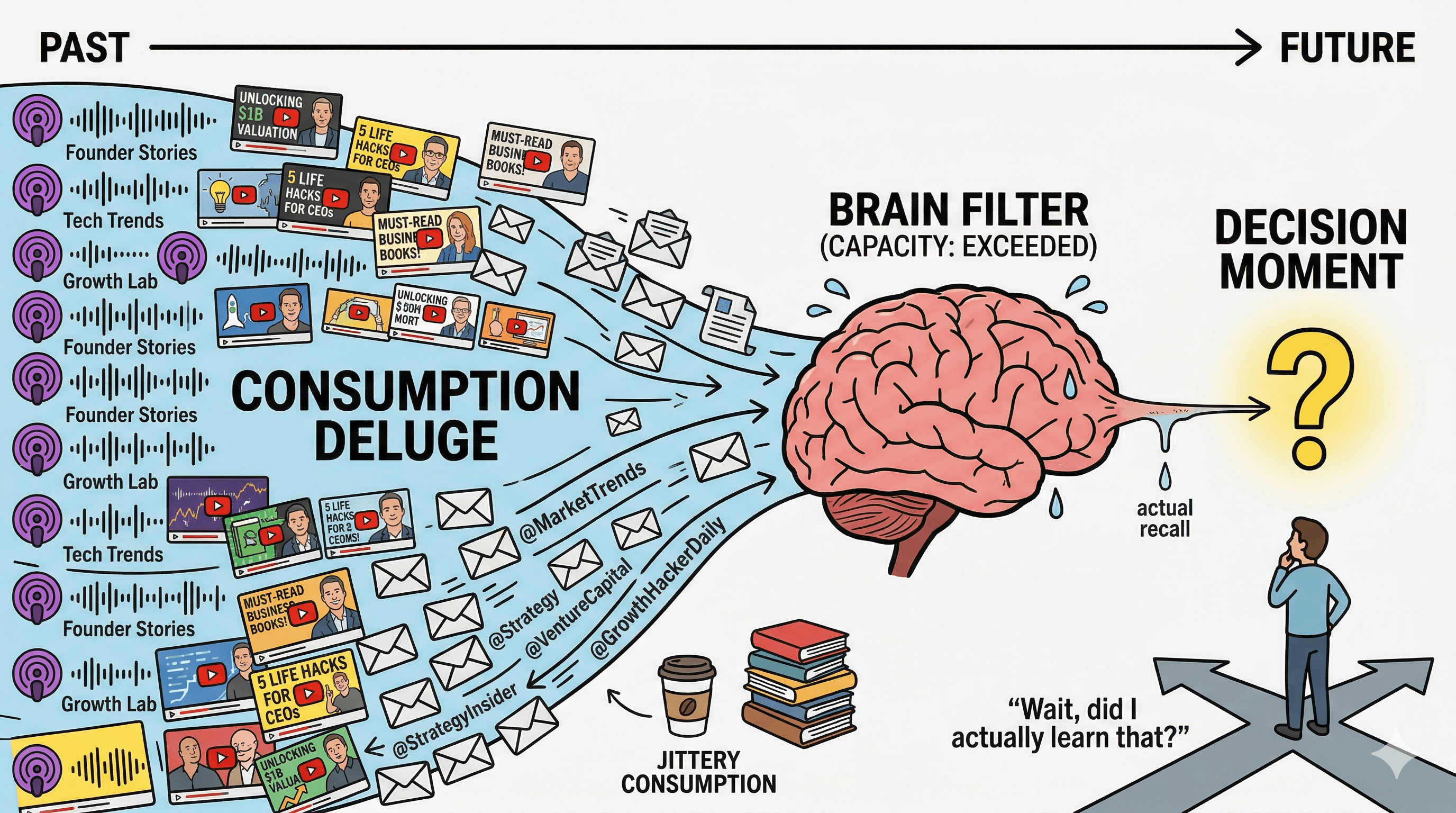
You've consumed 200 hours of business content. Can you recall what Hormozi said about pricing tiers for service businesses? That's the gap: and it's costing you.
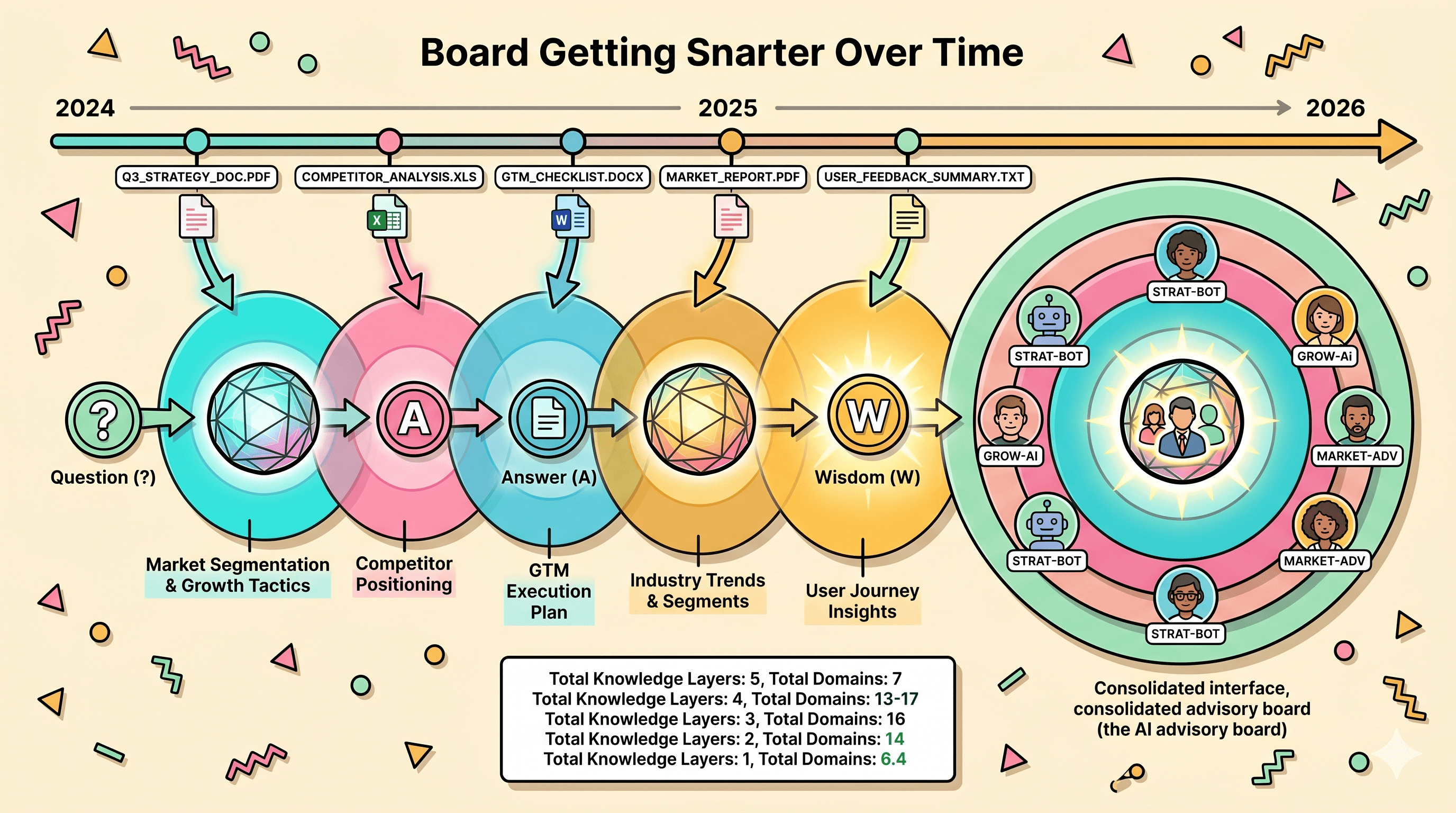
Unlike a search engine, an AI advisory panel remembers your pricing model, ICP, and challenges, so it gets more useful over time. How panel memory works.
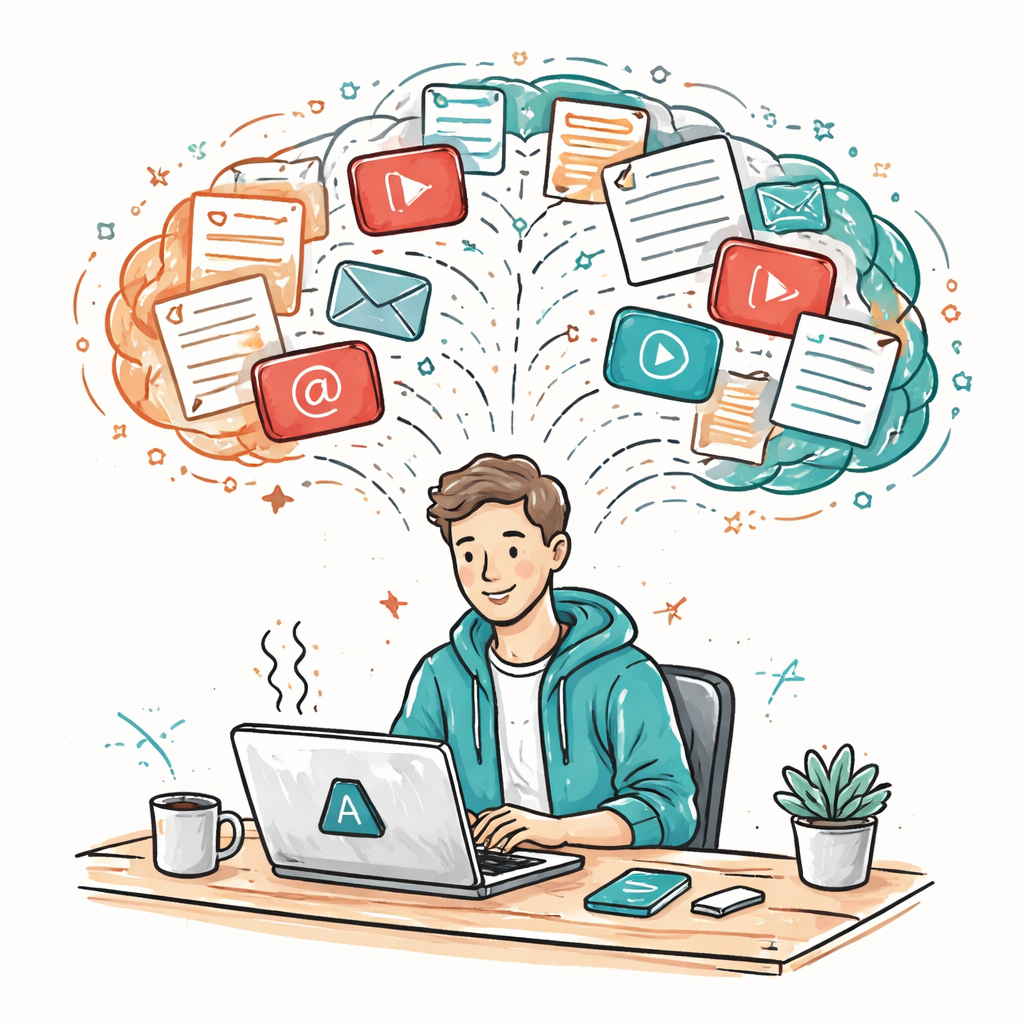
An AI business advisor answers questions from sources you choose: your newsletters, videos, and your own documents. What they cost and how to set one up.
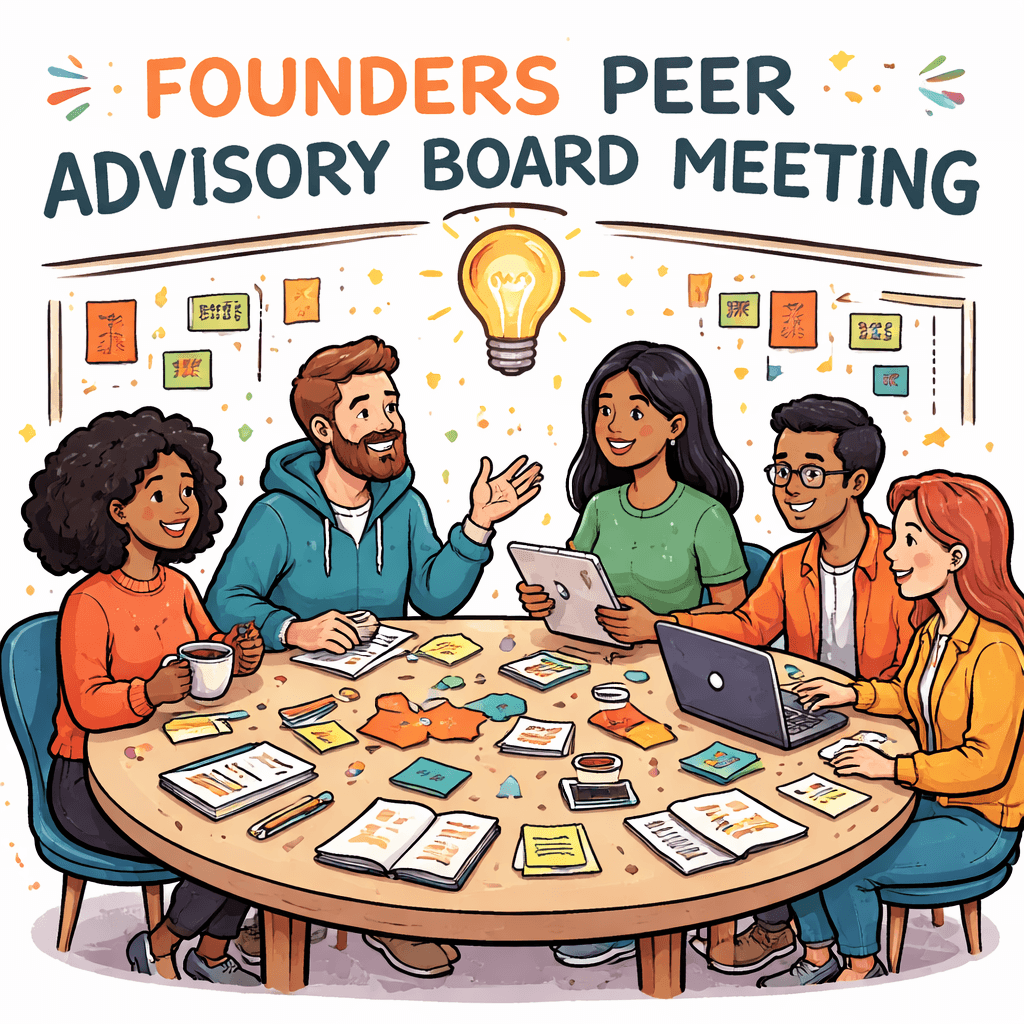
Find low-cost, practical alternatives to business coaching that work for founders and SMB owners in 2026. Learn about peer boards, DIY frameworks, AI tools, and more.
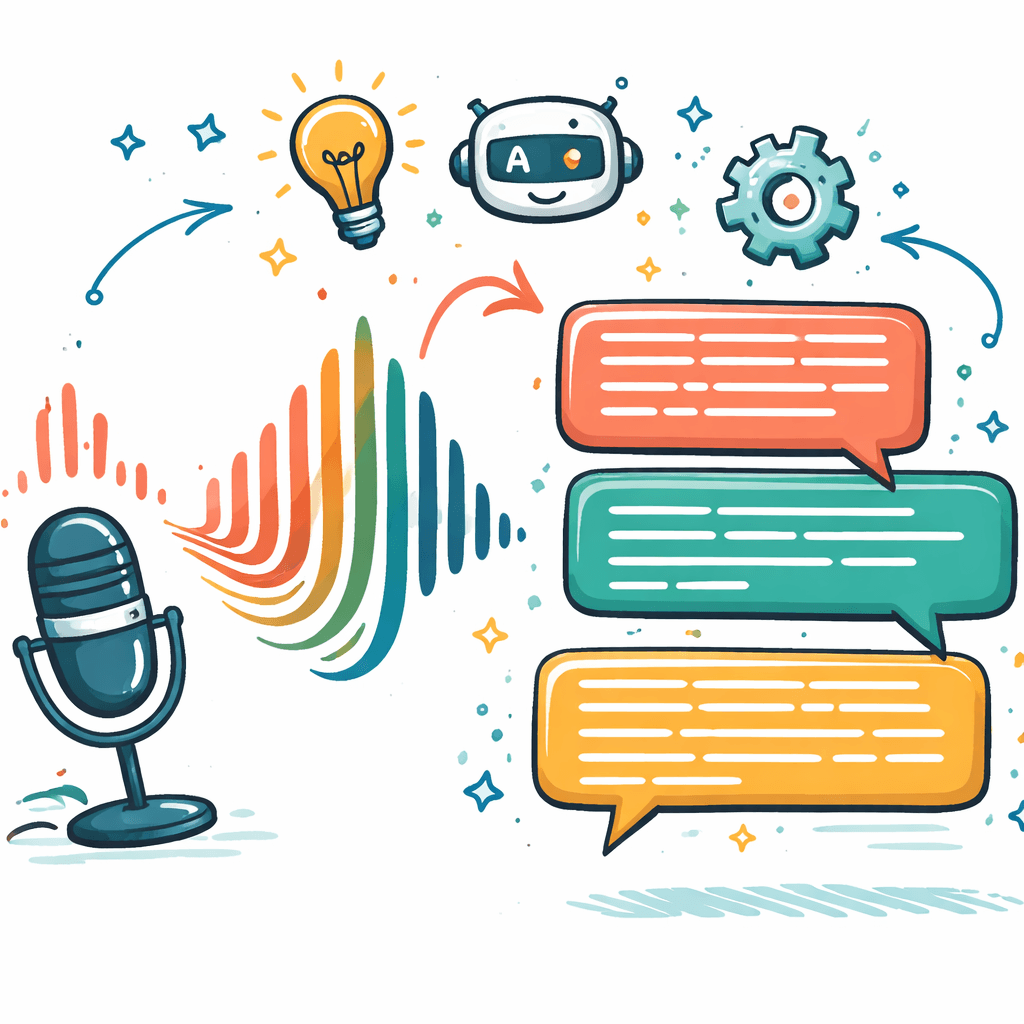
Learn what AI video summarizer tools do, how they work, and a step-by-step way to pick the best one for your business today.
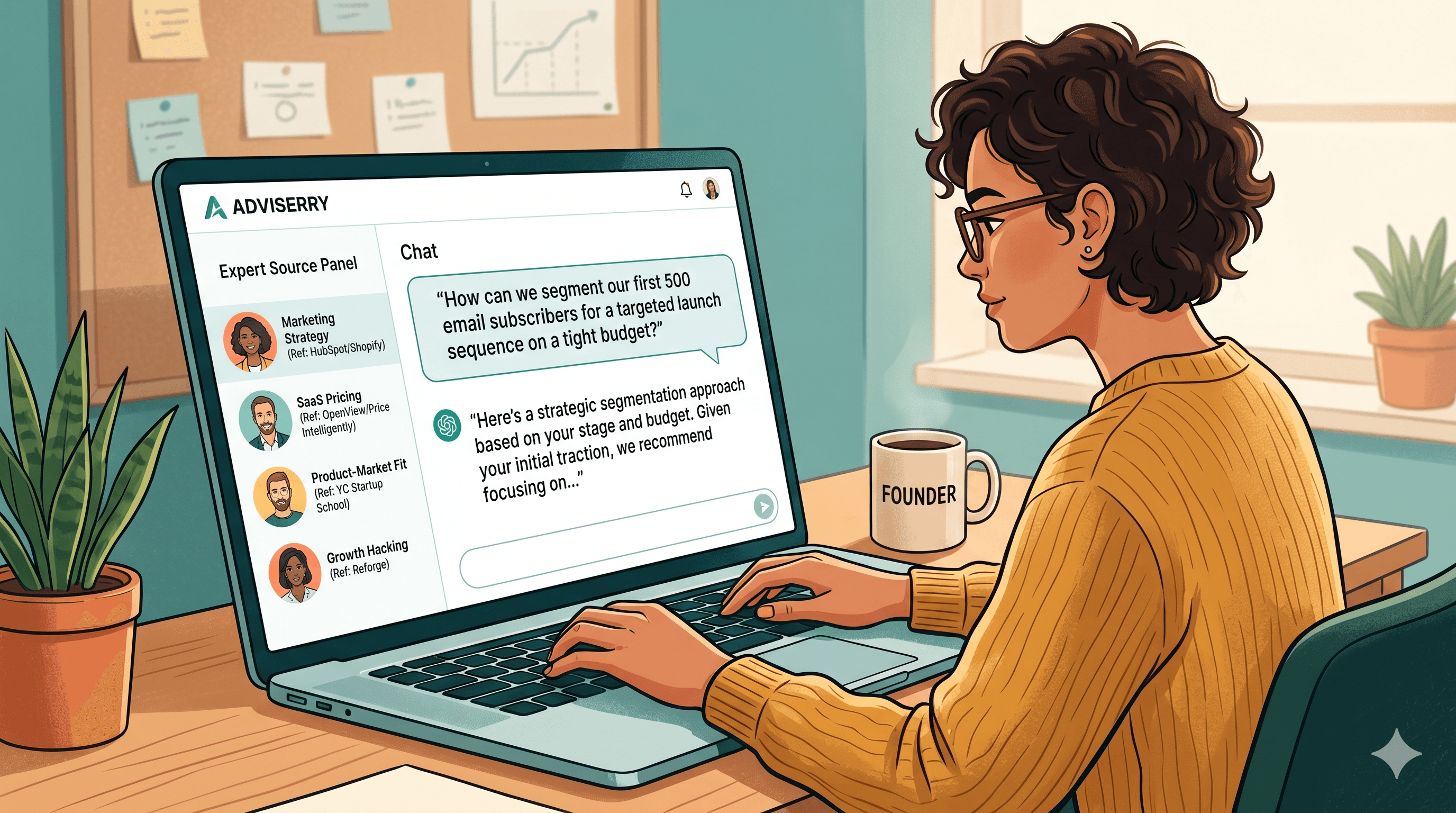
10 specific prompts for getting real strategic value from an AI advisory board, from pricing decisions to churn diagnosis to fundraising timing.
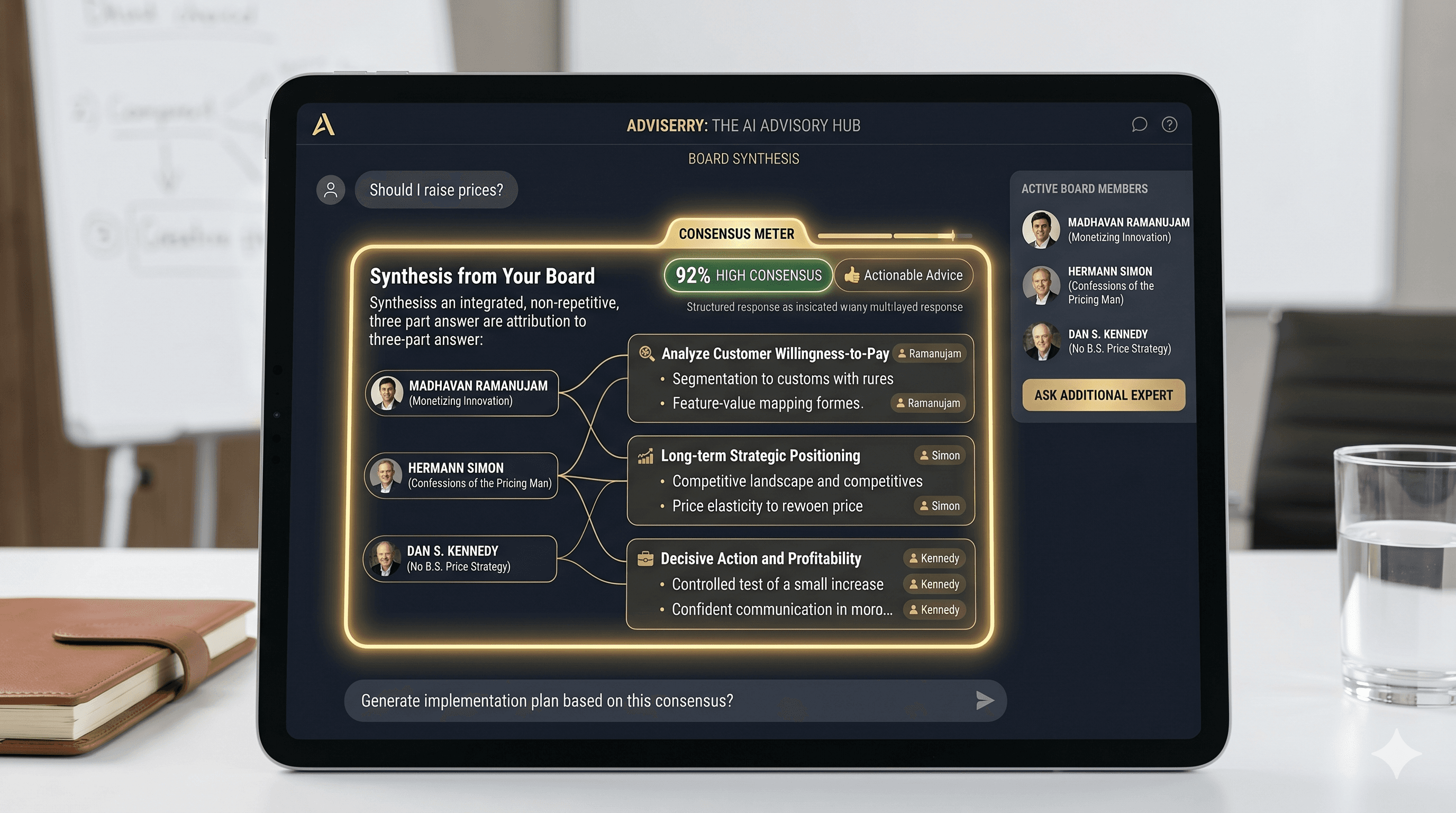
The most expensive pricing mistake is usually the delay, not the price. A worked example of how a founder gets unstuck in ten minutes with sourced advice.
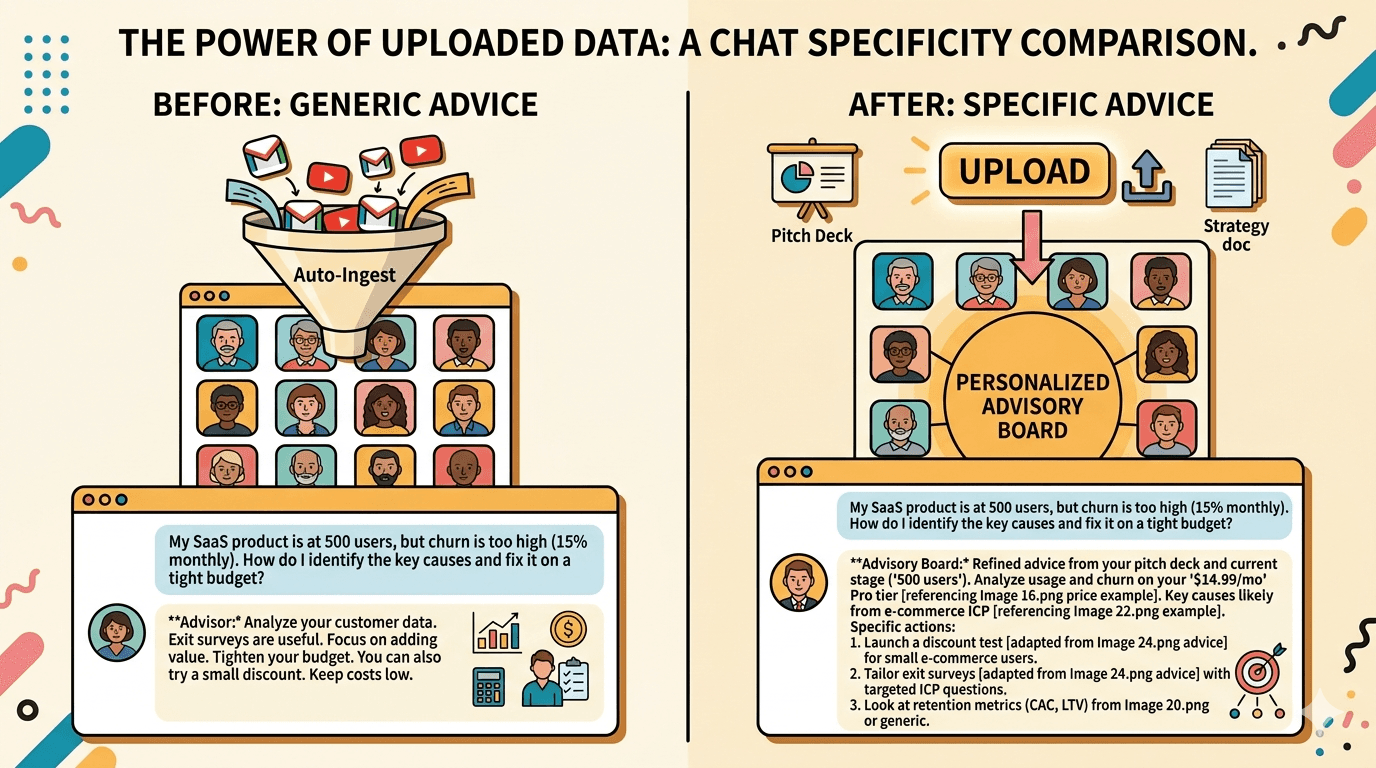
Uploading business documents gives your AI advisory panel the context a real advisor would need, which changes every conversation that follows.
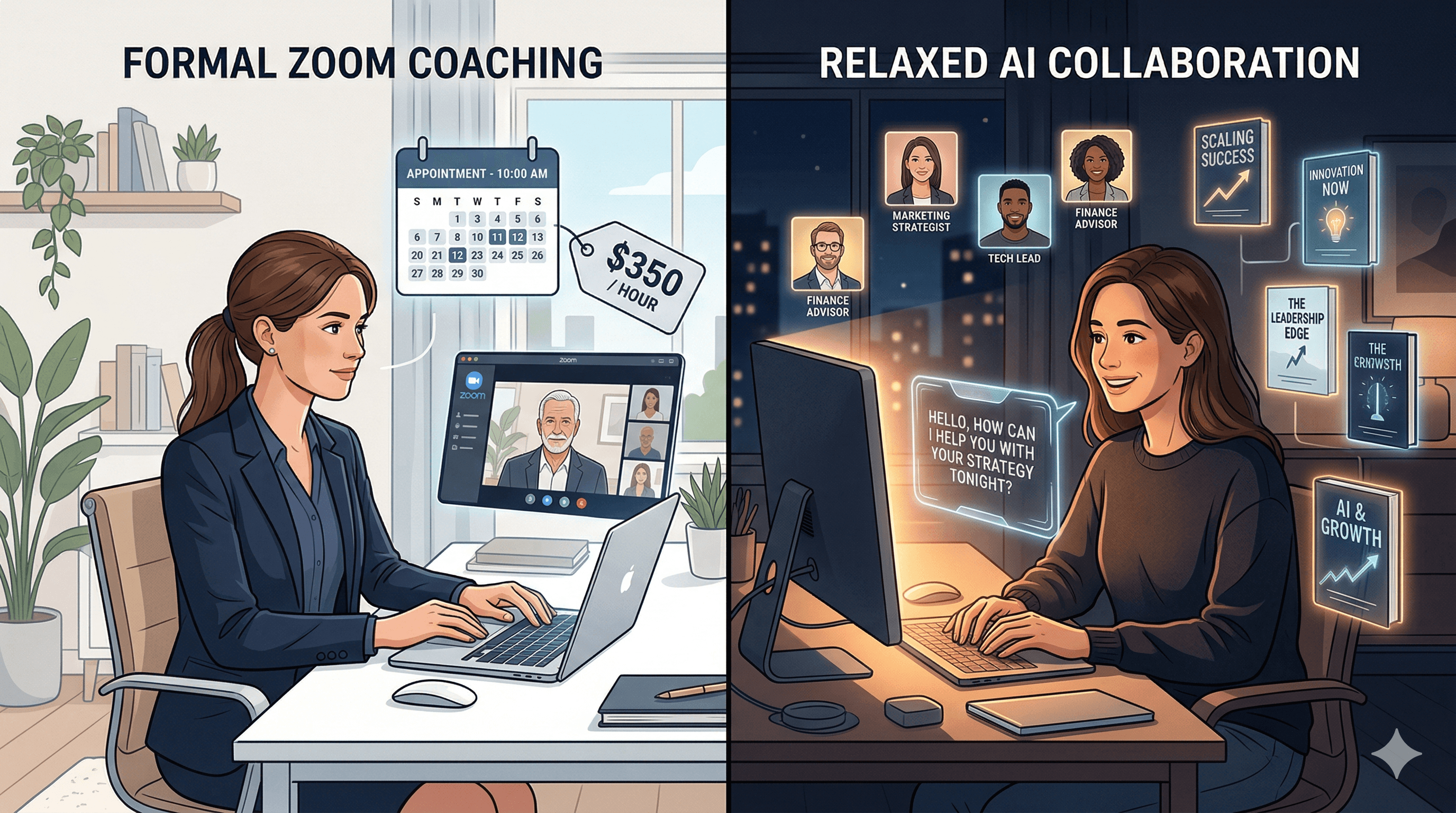
Six months comparing a human coach with an AI advisory board: an honest breakdown of cost, availability, and quality of advice.
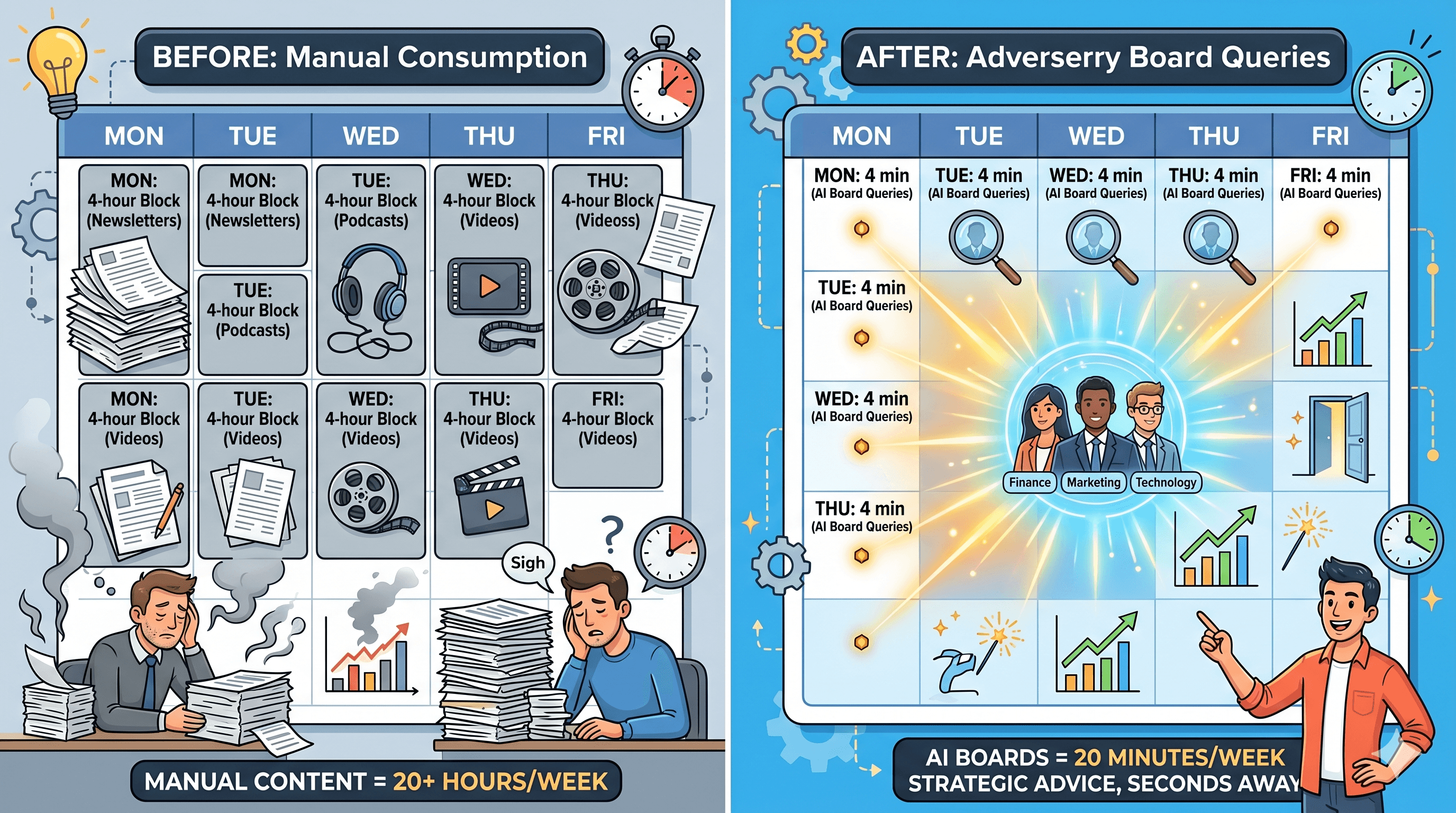
Consuming expert content is not the same as being able to use it. What changes when the archive becomes queryable instead of something you hope you absorbed.
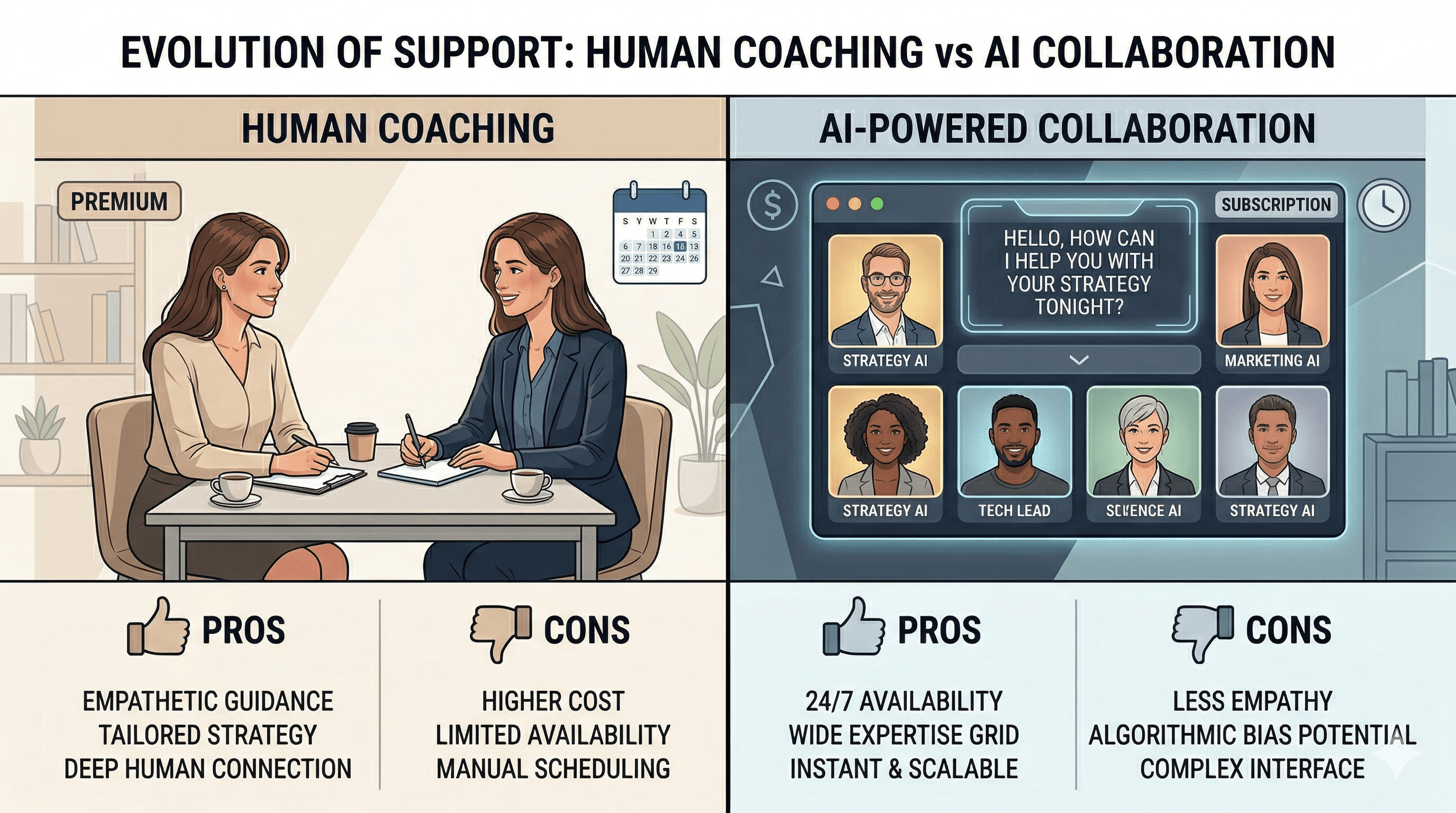
Where human coaches still win (accountability, emotional support) and where AI advisory boards dominate. A fair, founder-to-founder breakdown.
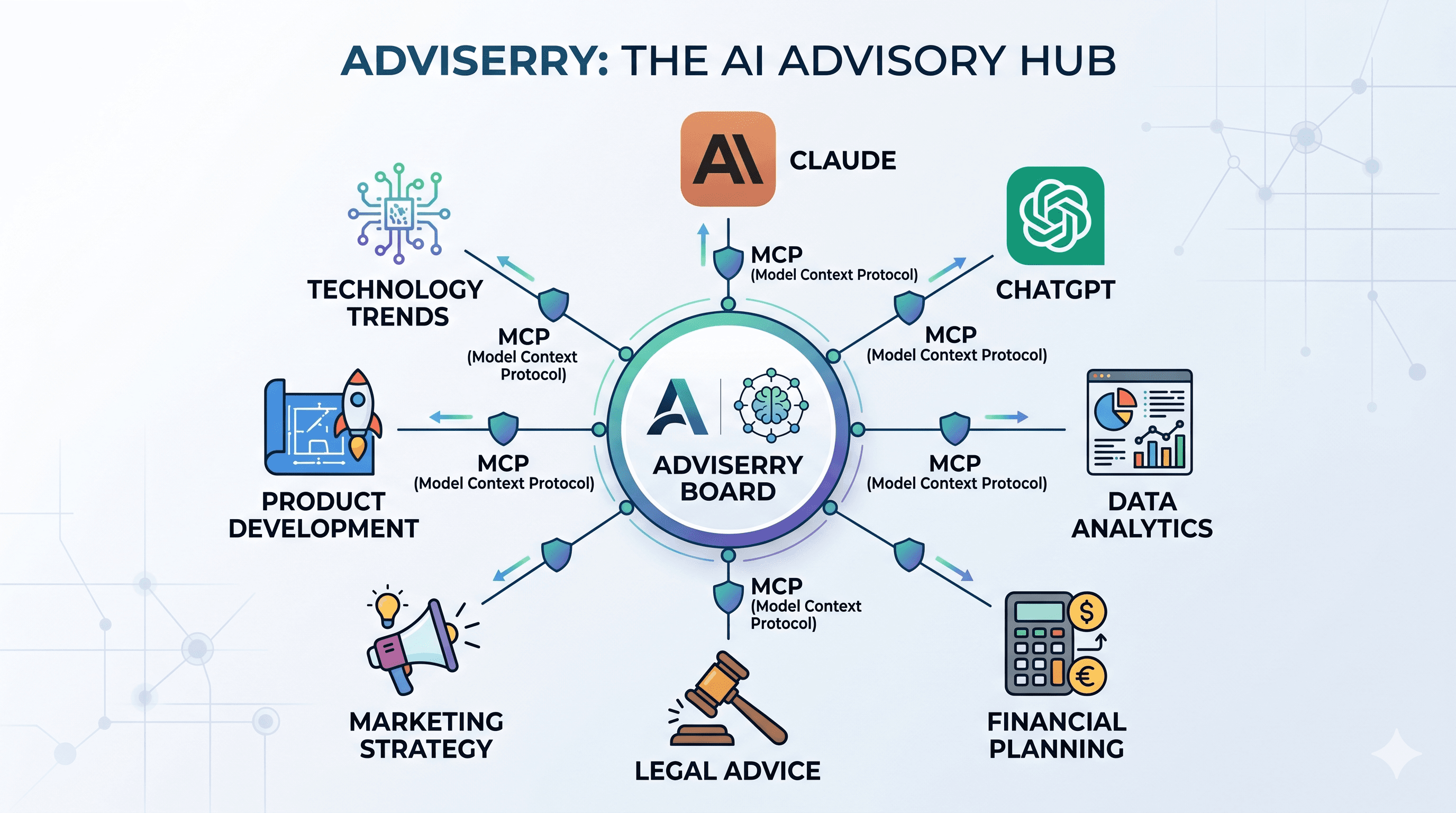
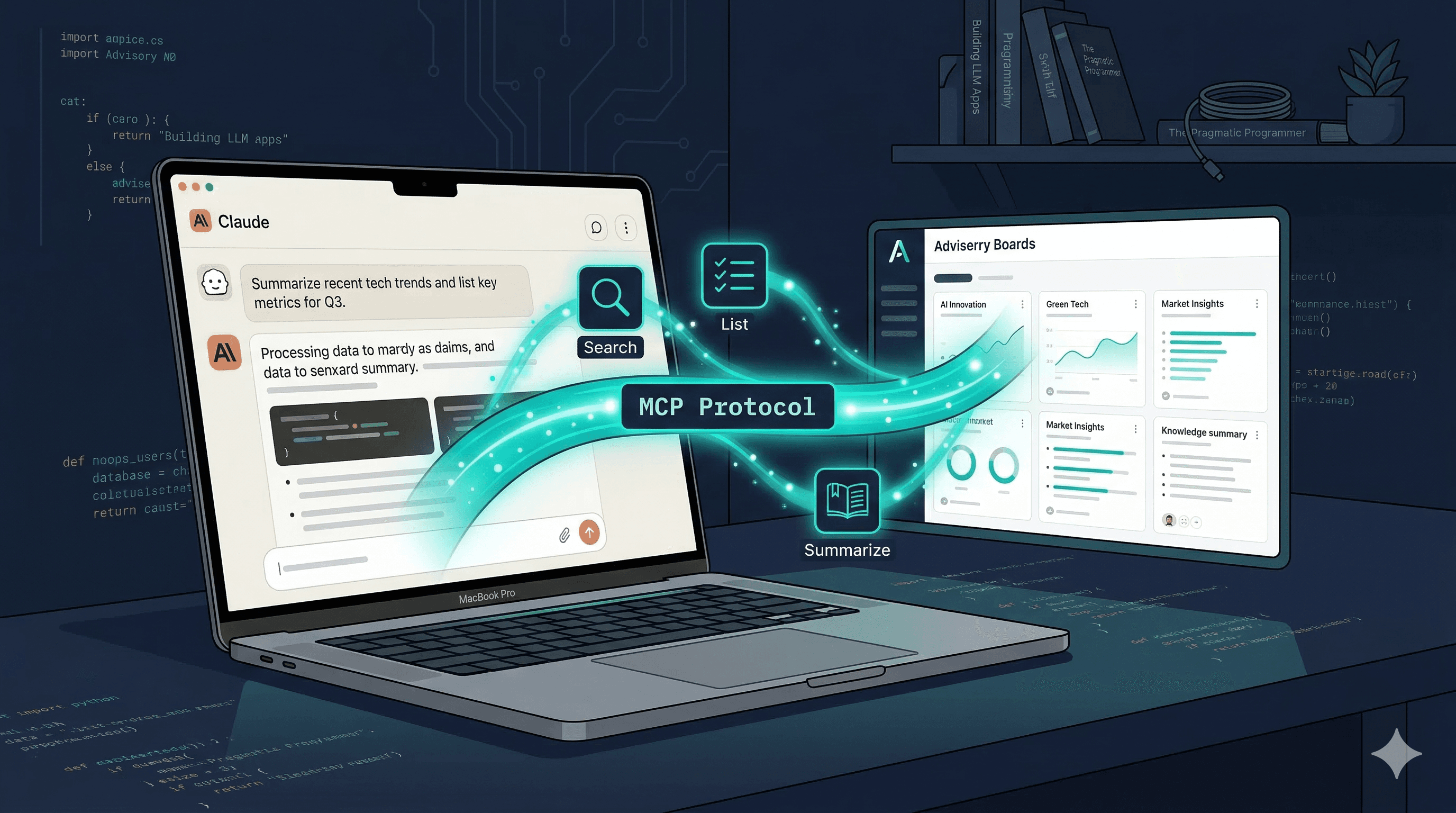
Model Context Protocol lets you query your AI advisory panel from the tools you already use: Claude, ChatGPT, and more. What that means in practice.
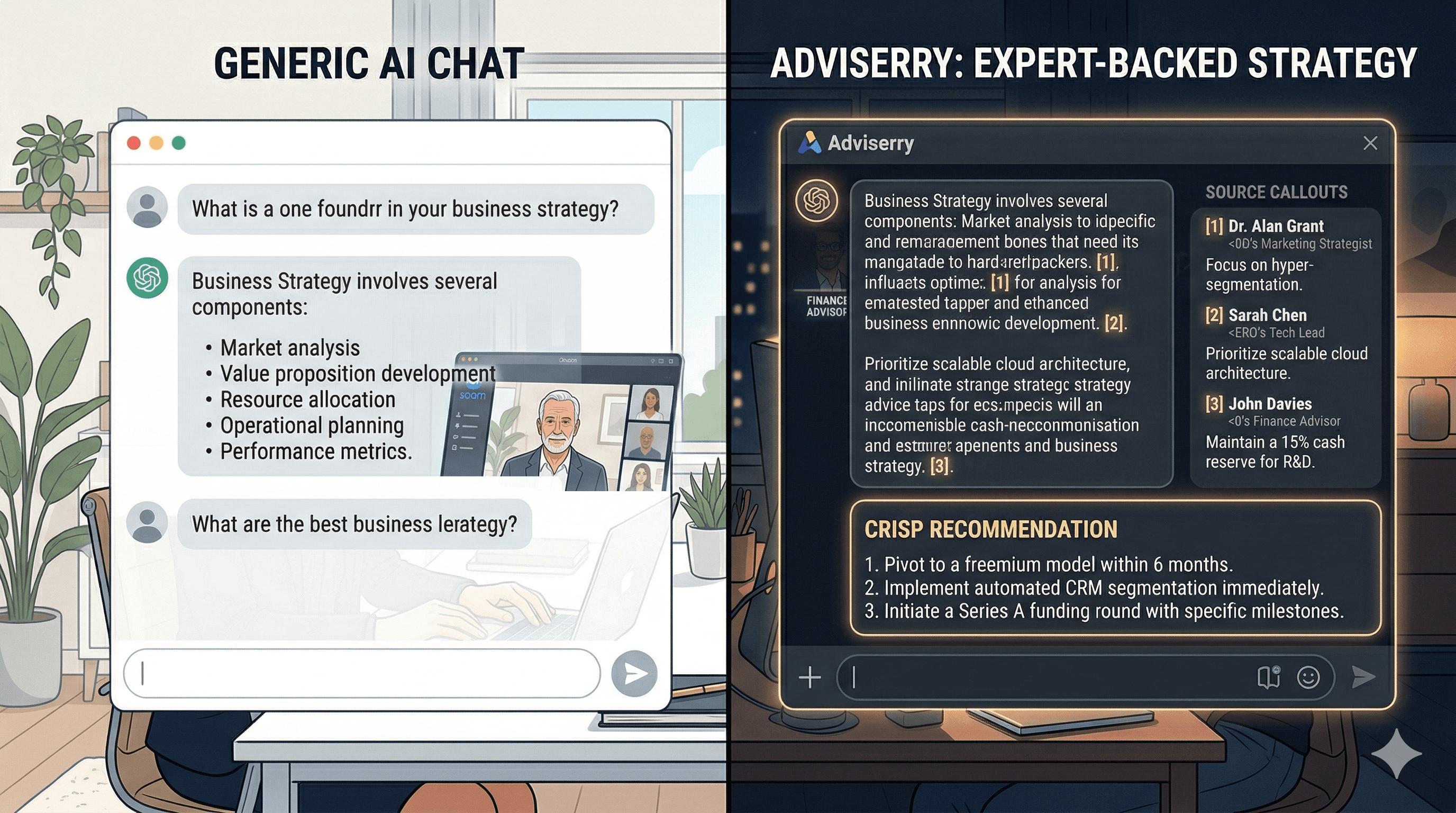
You've been using ChatGPT as a business advisor. Here's why that's like asking a stranger for directions in a city they've never visited.
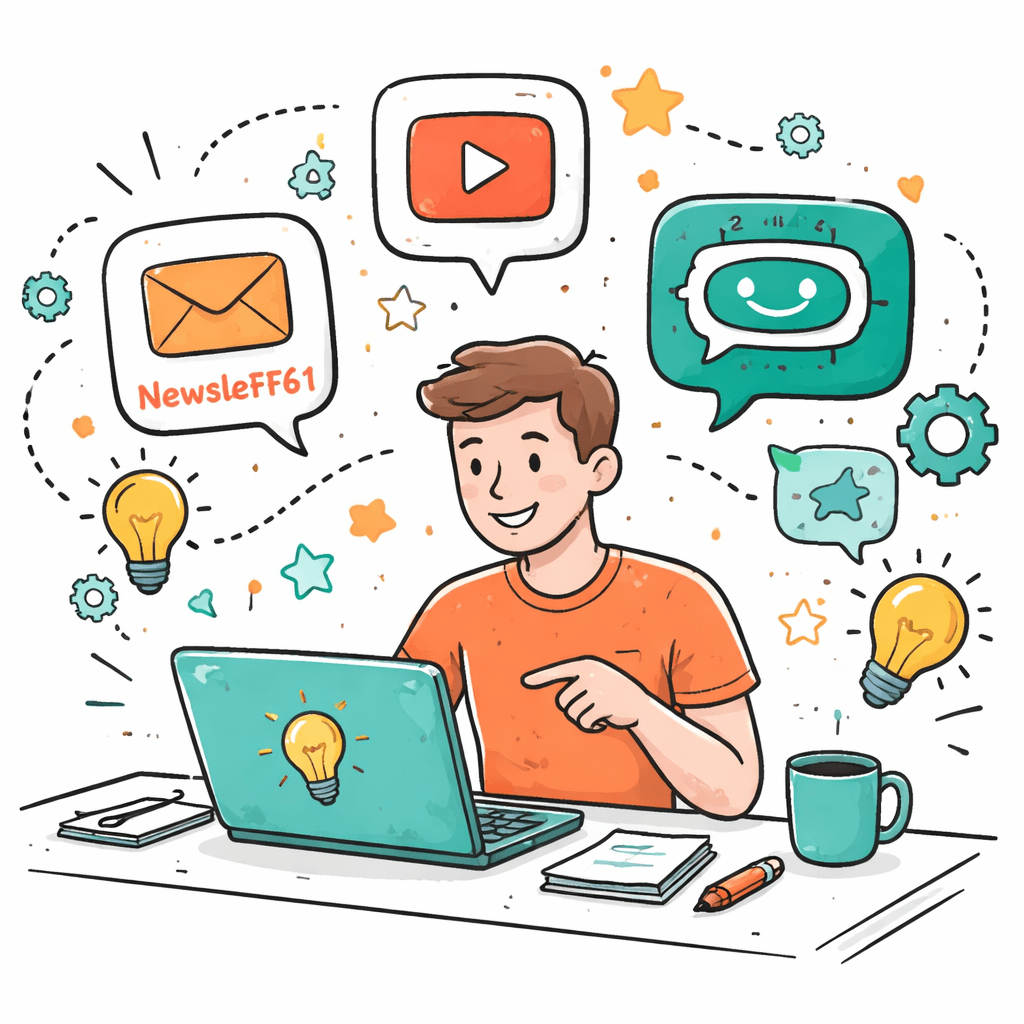
Step-by-step guide to pick, set up, and scale AI knowledge base software for founders and SMBs. Real tips, tools, and pitfalls to avoid.
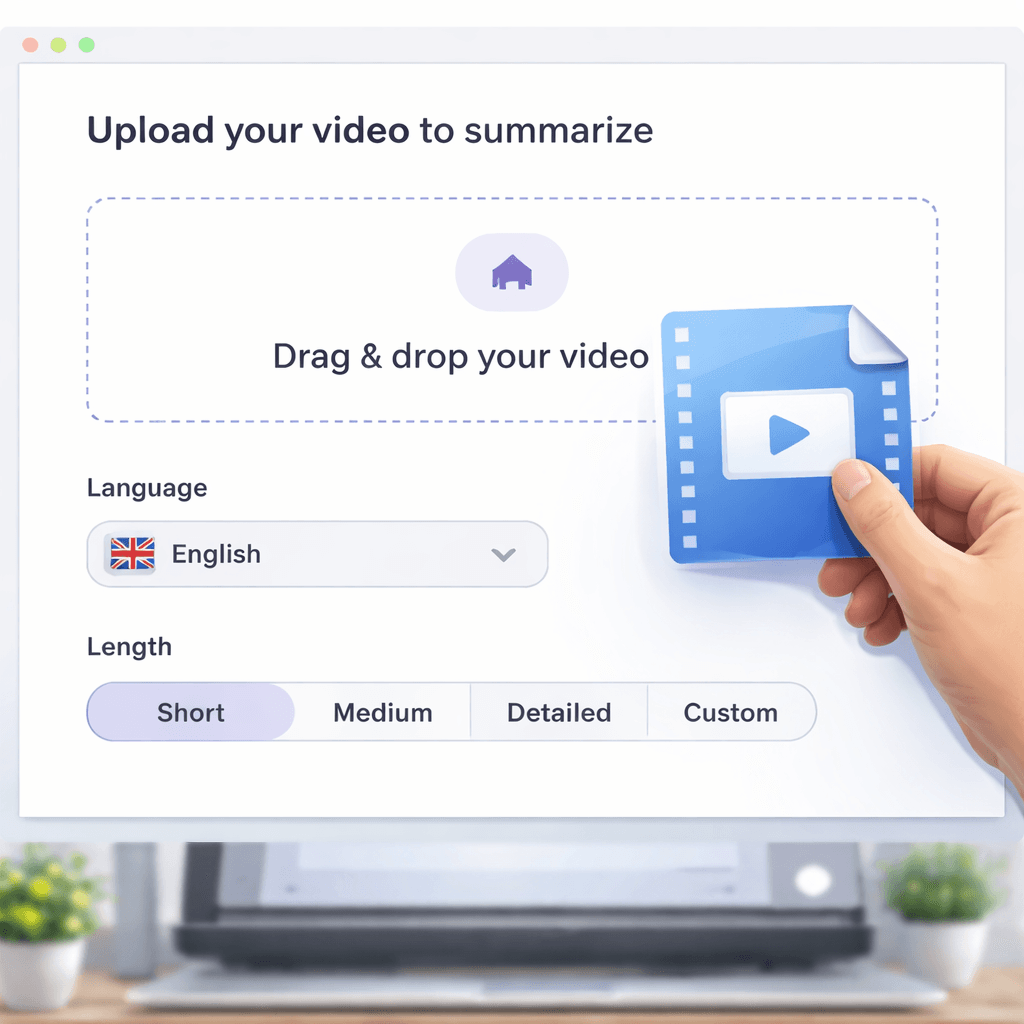
Step-by-step guide to using video summarizer AI tools, from picking a tool to exporting and optimizing your workflow.
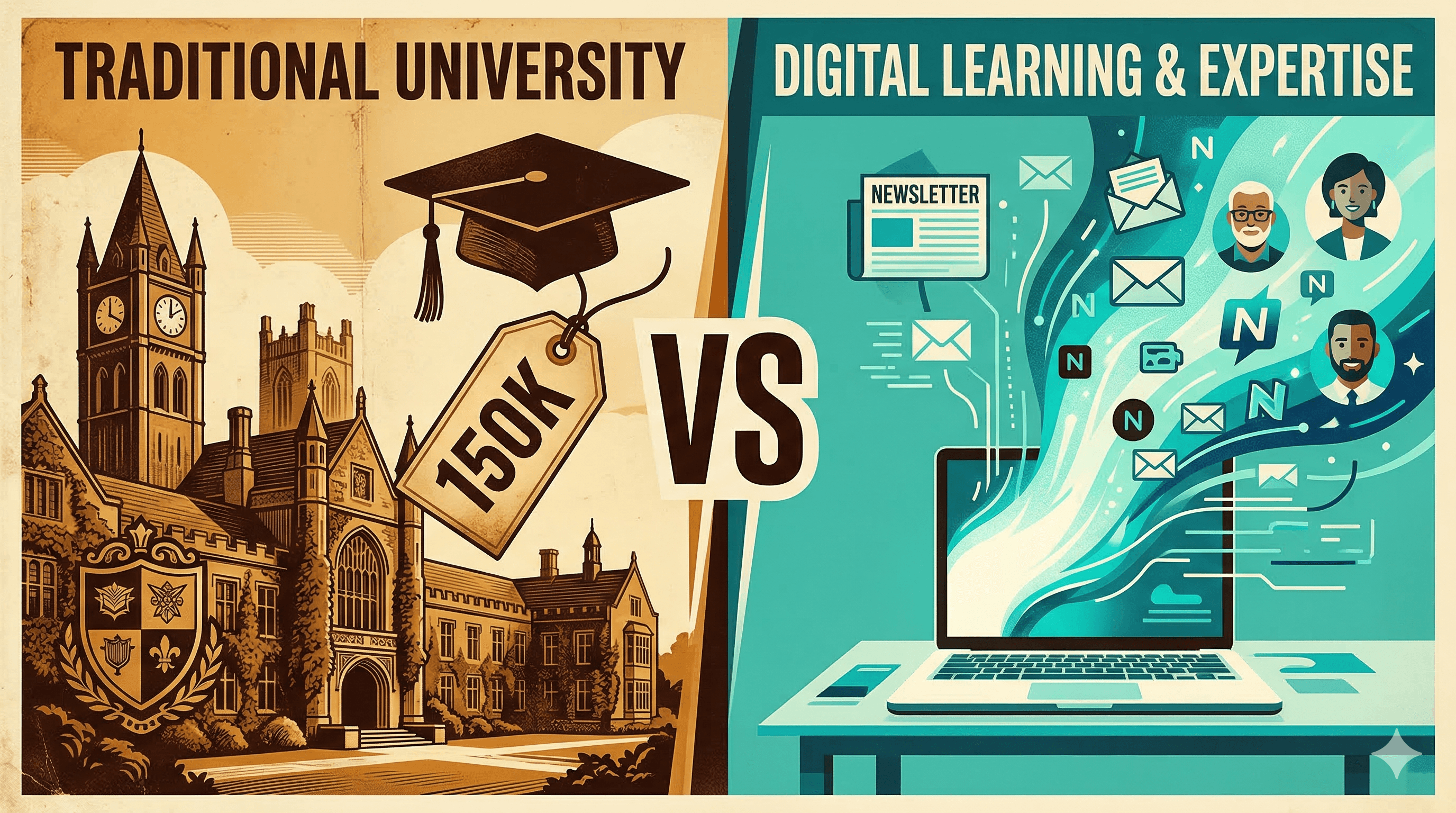
An MBA costs $150k and takes two years. The right newsletter subscriptions cost $0 and deliver more current, more practical business education. There's just one problem.

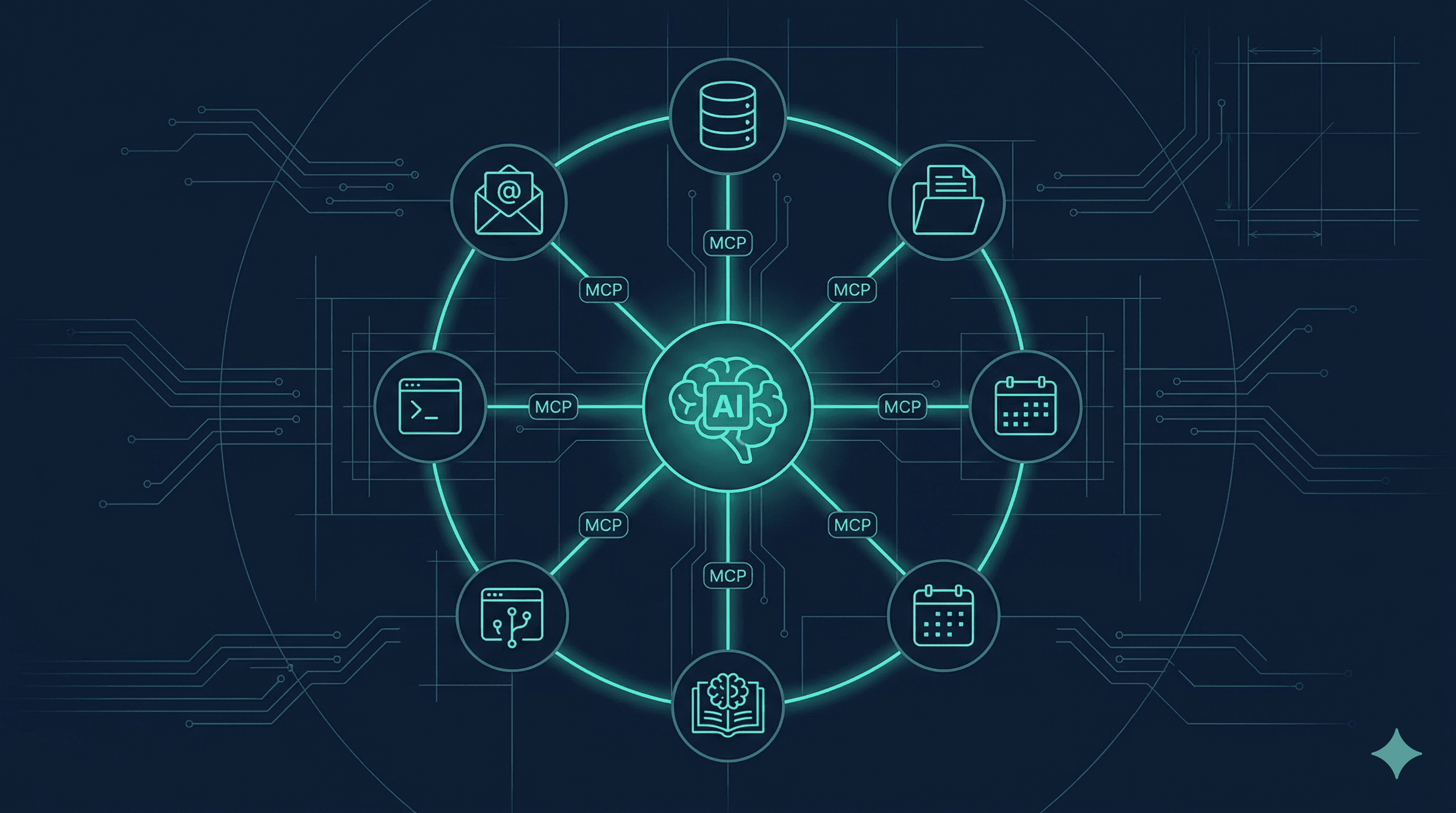
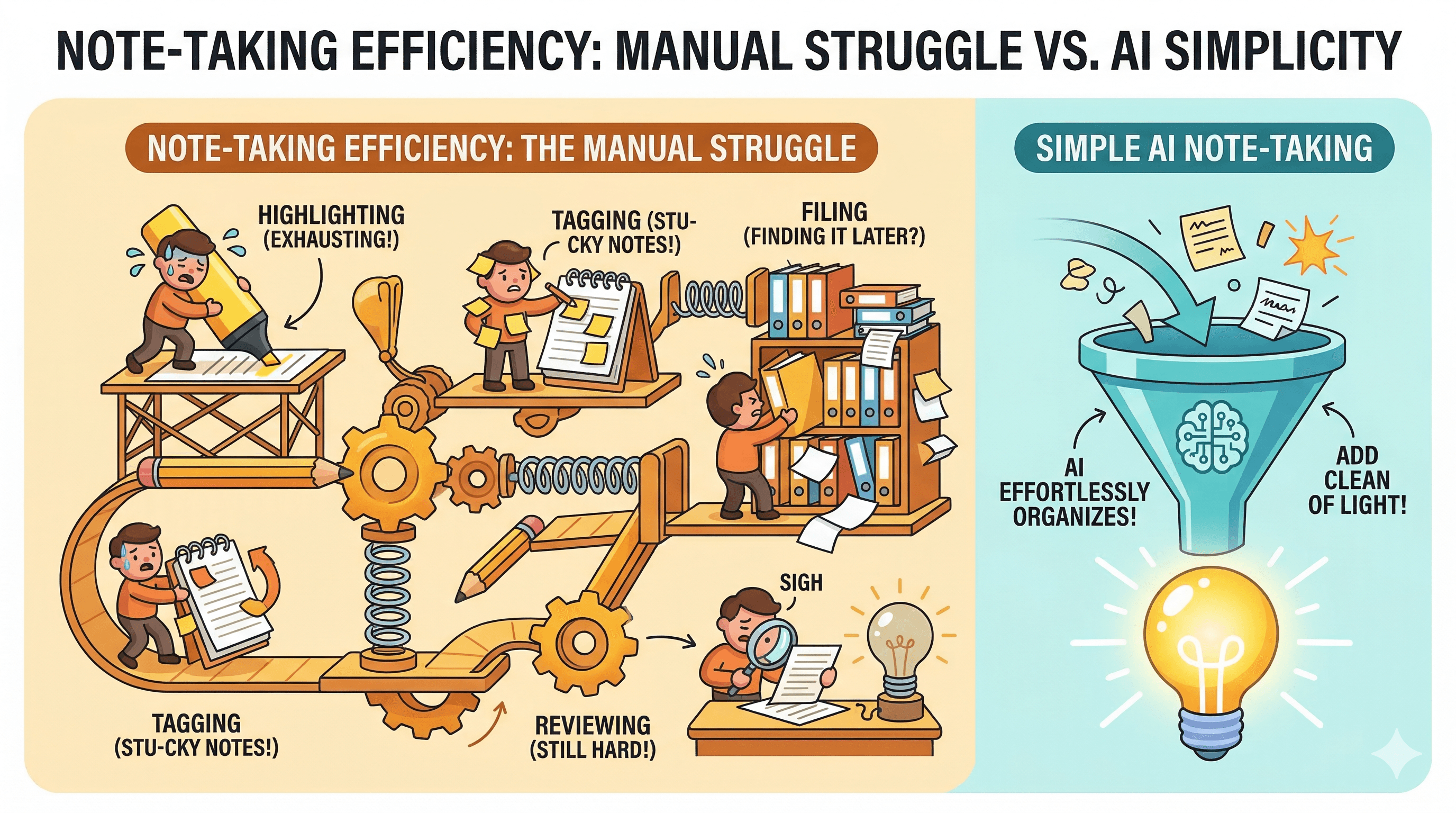
I've built and abandoned three second brains. The concept is right. The execution is wrong. They all require you to do the hardest part: and that's exactly where everyone gives up.
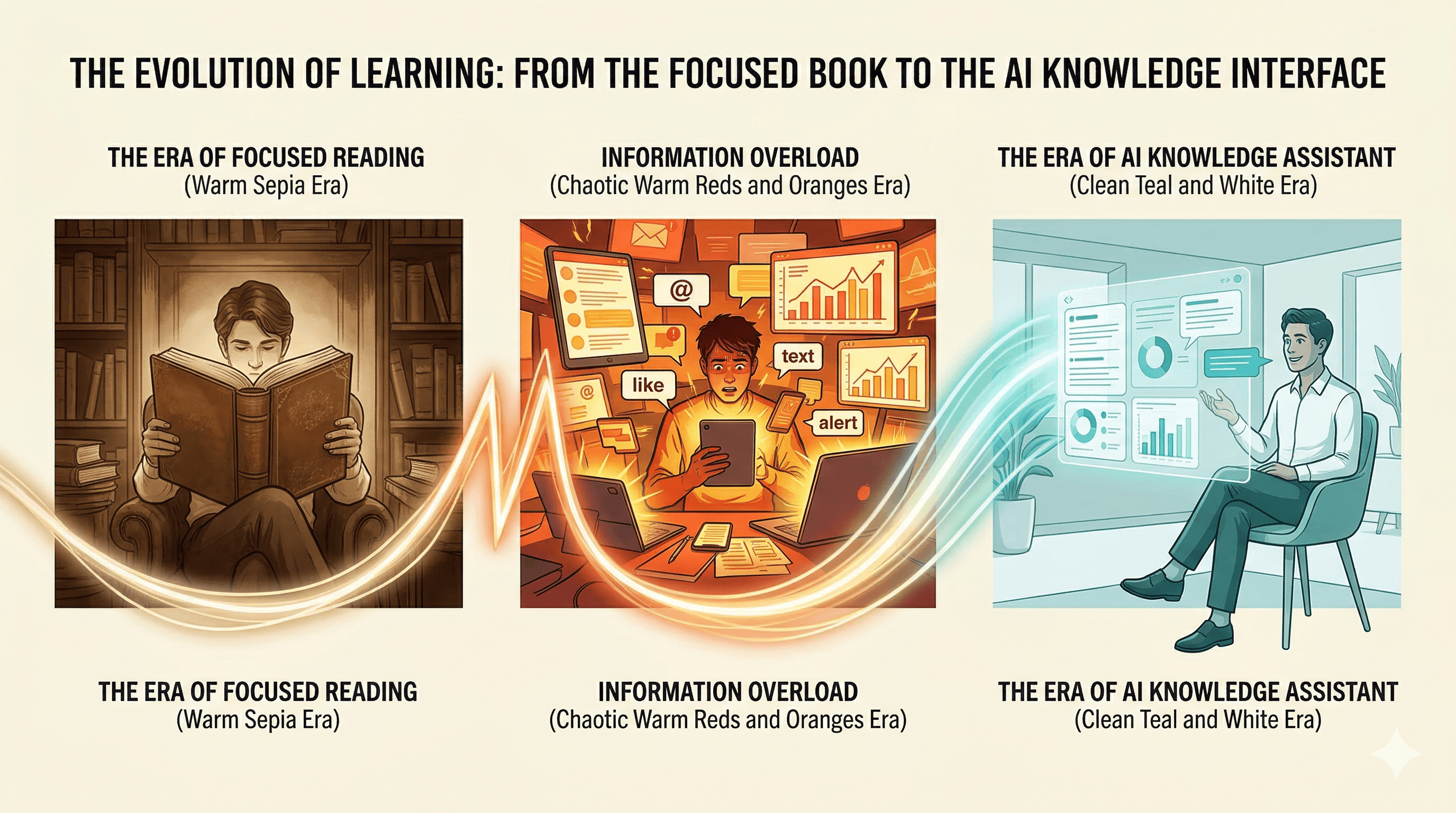
The way we've been learning from online content is fundamentally broken. Read, forget, repeat. AI changes the equation by making knowledge permanently accessible instead of temporarily consumed.

Solo founders make worse decisions. Not because they're dumber, but because they don't have anyone to say "have you considered this?" Here's how to build a board of advisors without giving up equity.
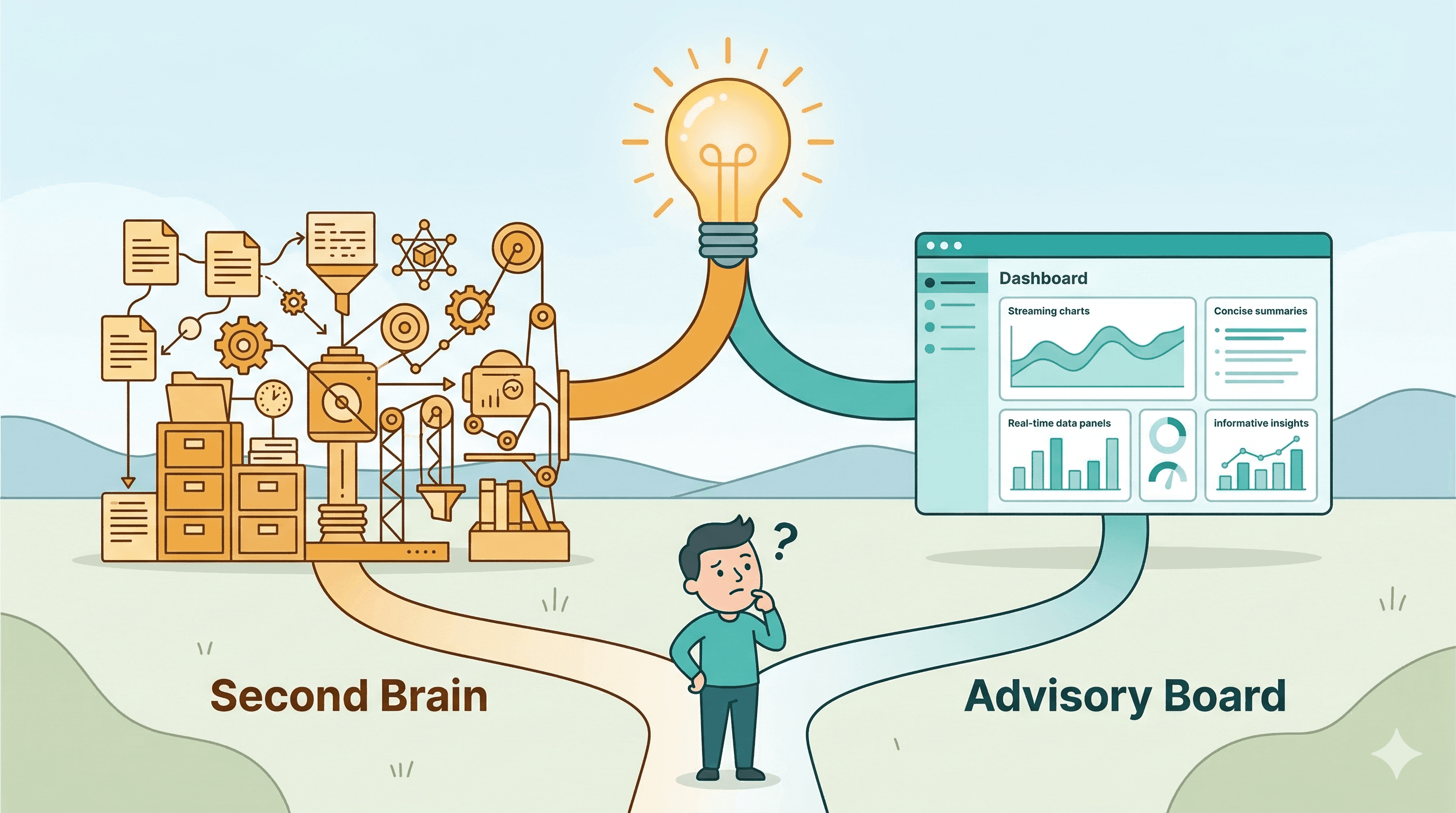
Second brain apps and AI advisory boards sound similar but solve fundamentally different problems. One organizes what you put in. The other organizes what you subscribe to. Here's how to pick.
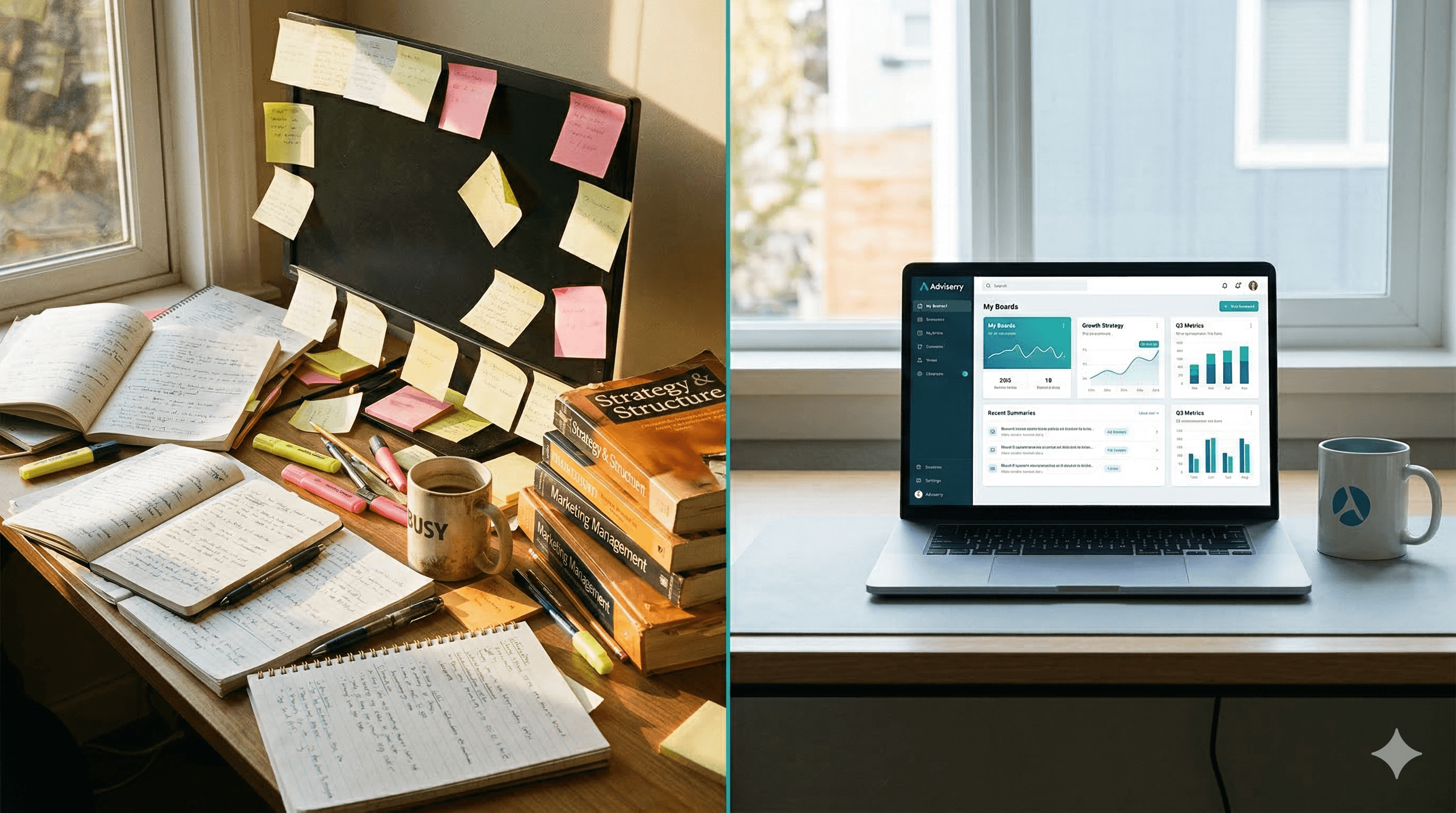
I tried manual note-taking for years. It worked great when I did it and I almost never did it. Here's an honest side-by-side comparison from someone who's been on both sides.
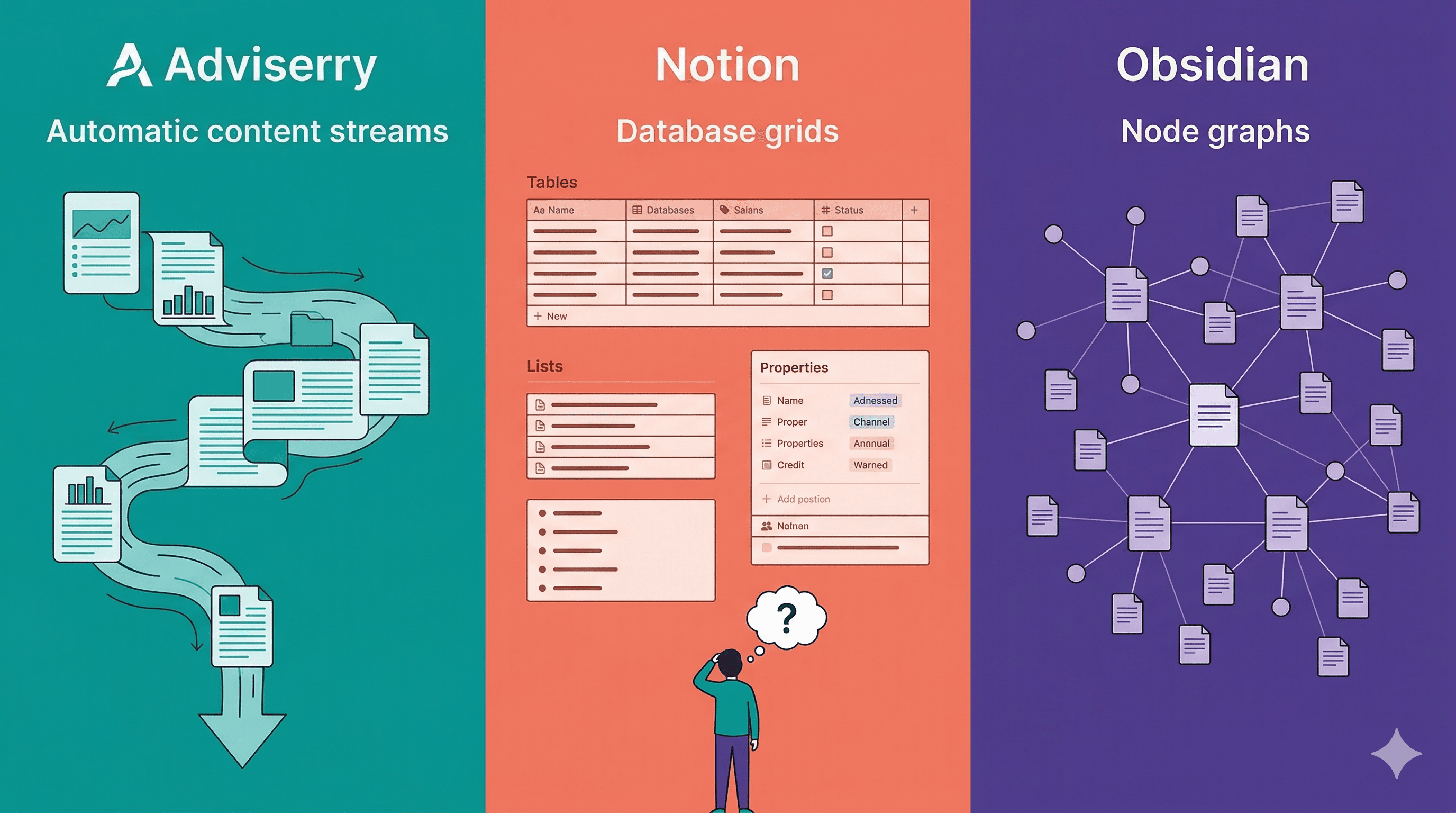
I've used all three for months. They solve different problems for different people. Here's an honest comparison from someone who built one of them and genuinely respects the other two.
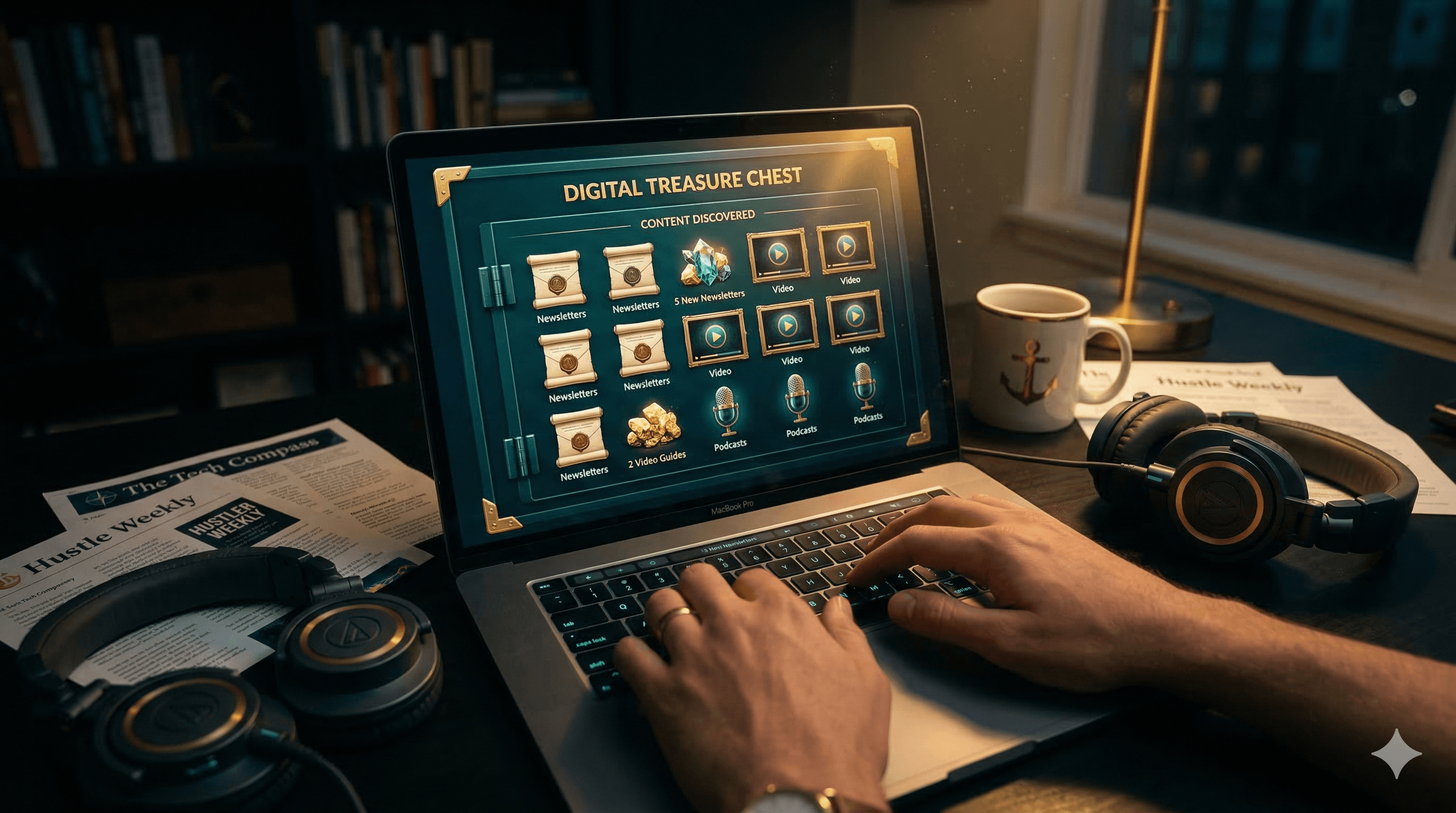
You're sitting on a goldmine of expert knowledge. It's buried in your inbox, your podcast app, and your YouTube subscriptions. Most of that value is going completely unmined.
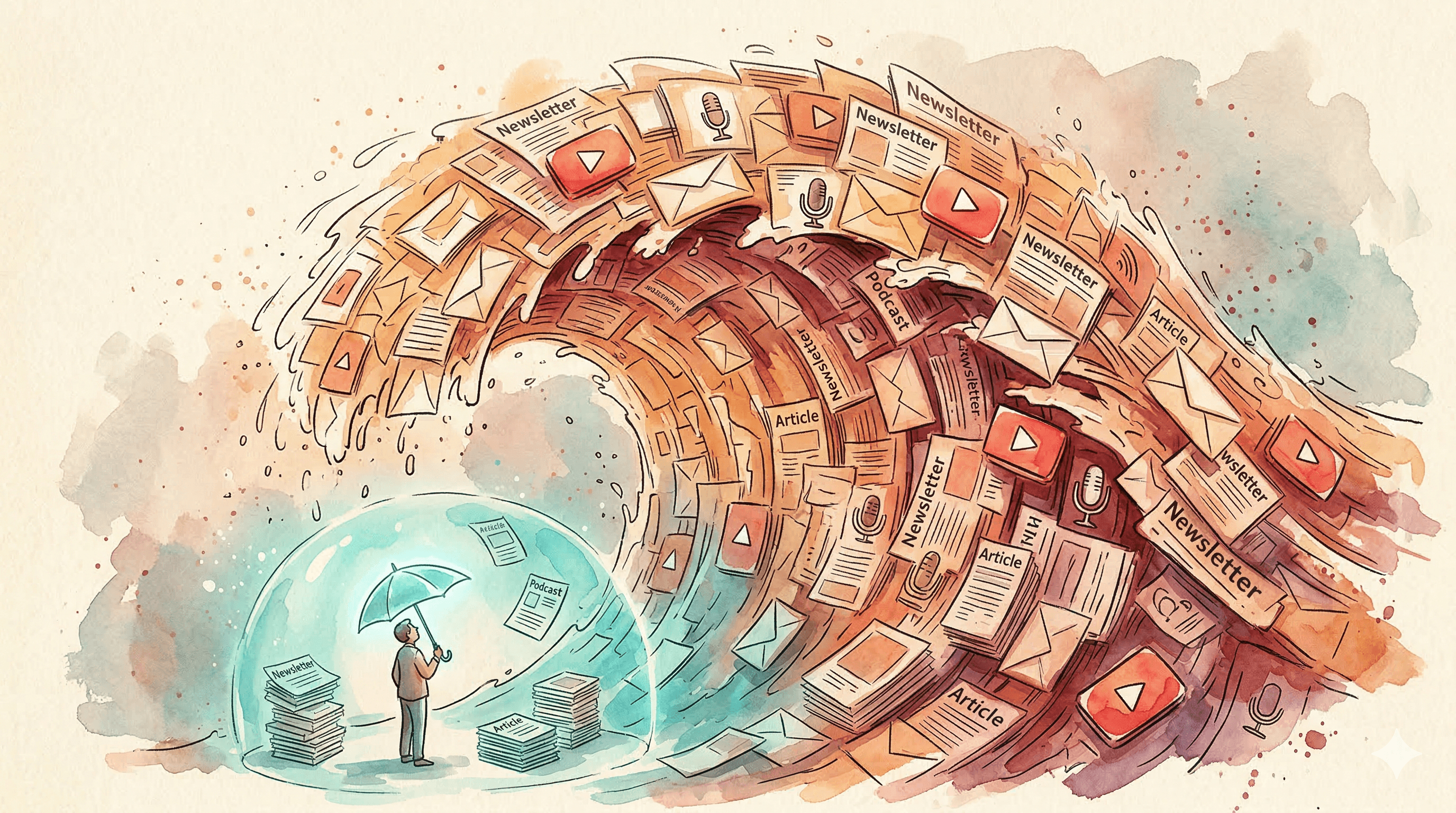
You're subscribed to the smartest people on the internet. You're retaining almost nothing they say. The problem isn't the content. It's the gap between subscribing and actually learning.
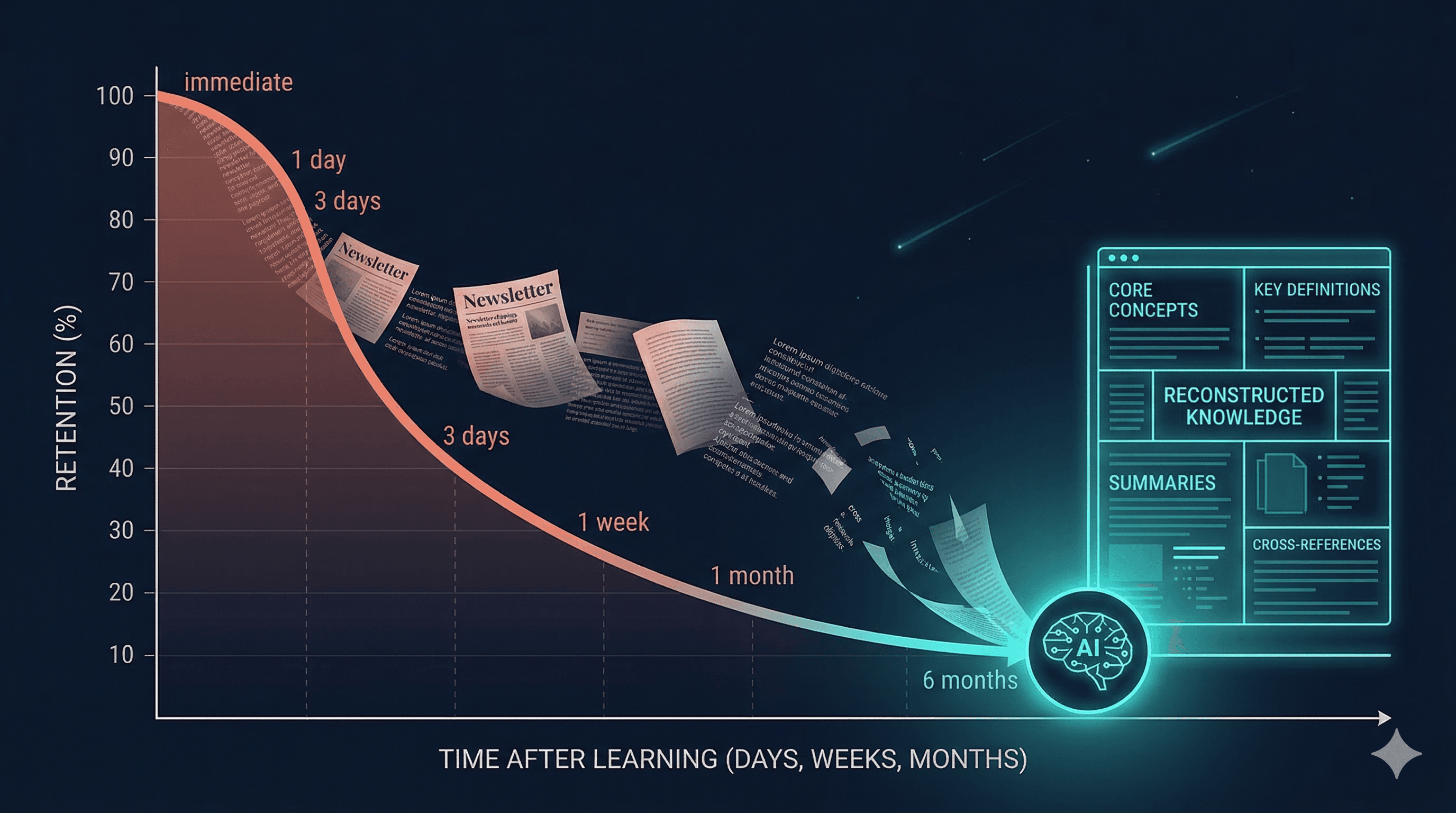
You're not lazy or stupid. Your brain is just optimized for survival, not for remembering that pricing framework from last Tuesday's newsletter. Science says so. Here's the fix.
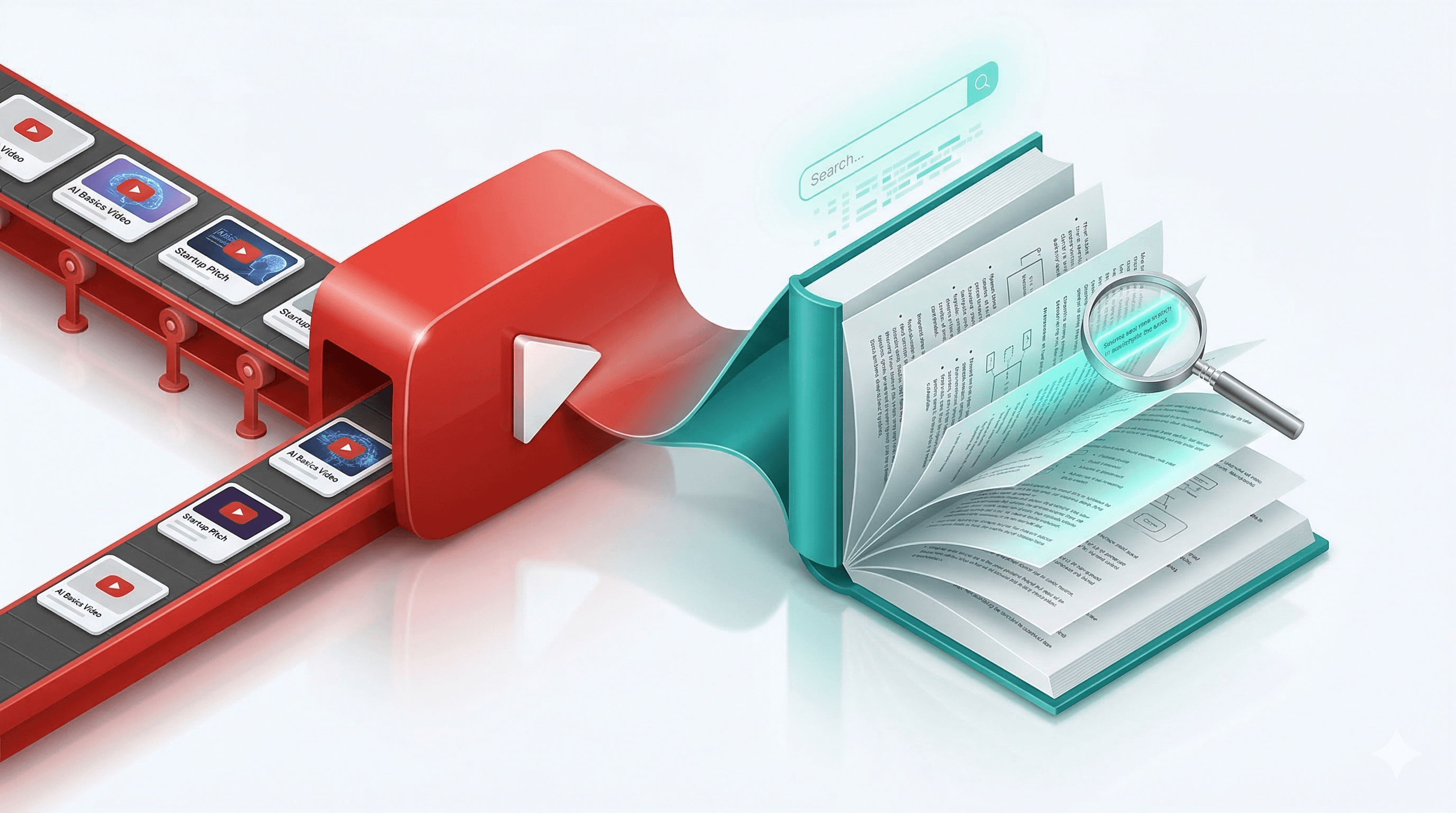
I'm subscribed to 40+ YouTube channels and can't remember what any of them said last week. Here's how I turned all those subscriptions into something I can actually search and ask questions about.
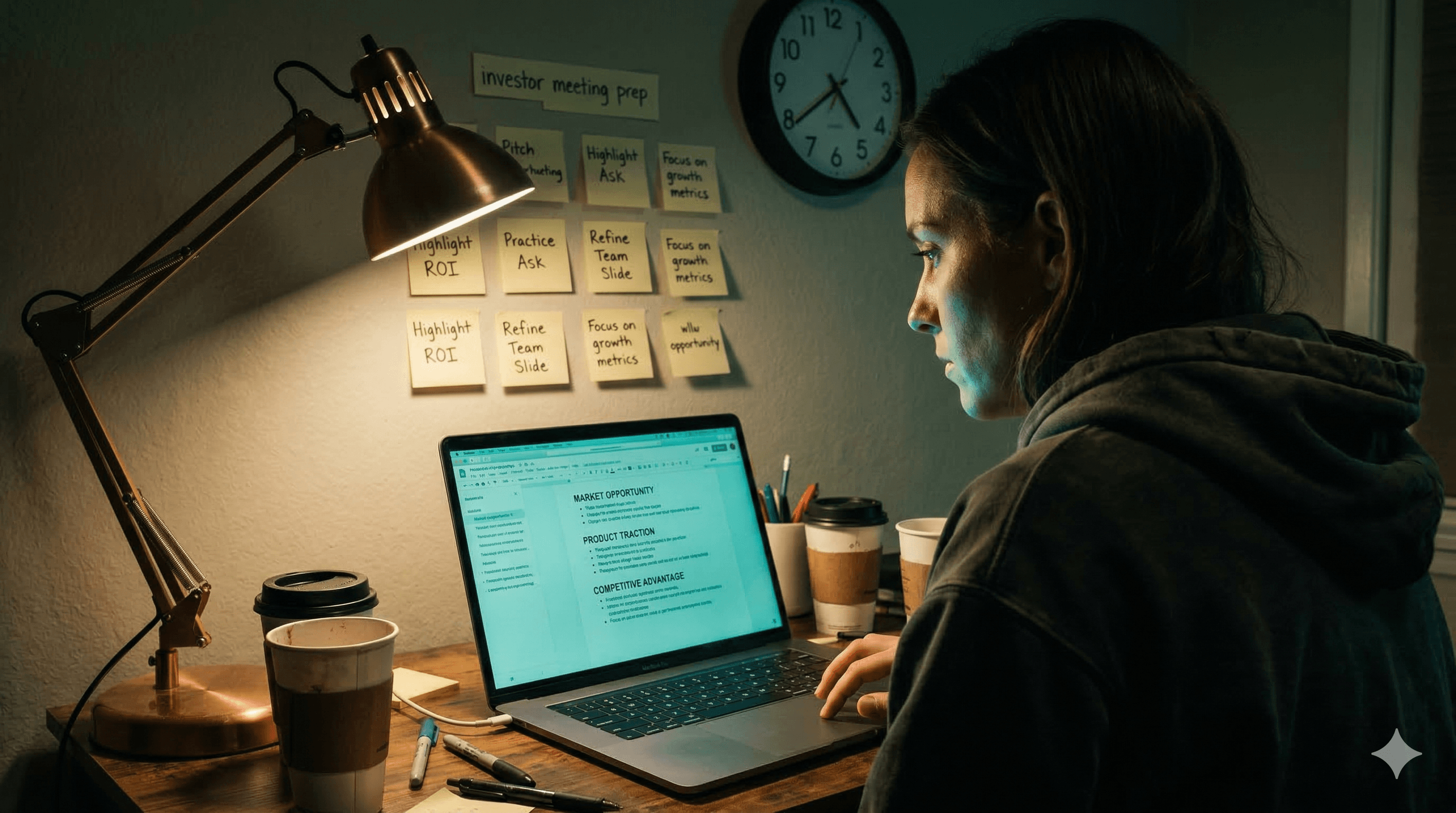
I had 48 hours to prepare for an investor conversation and zero fundraising experience. My newsletter archive had more VC advice than I realized. Here's how I turned it into a crash course.
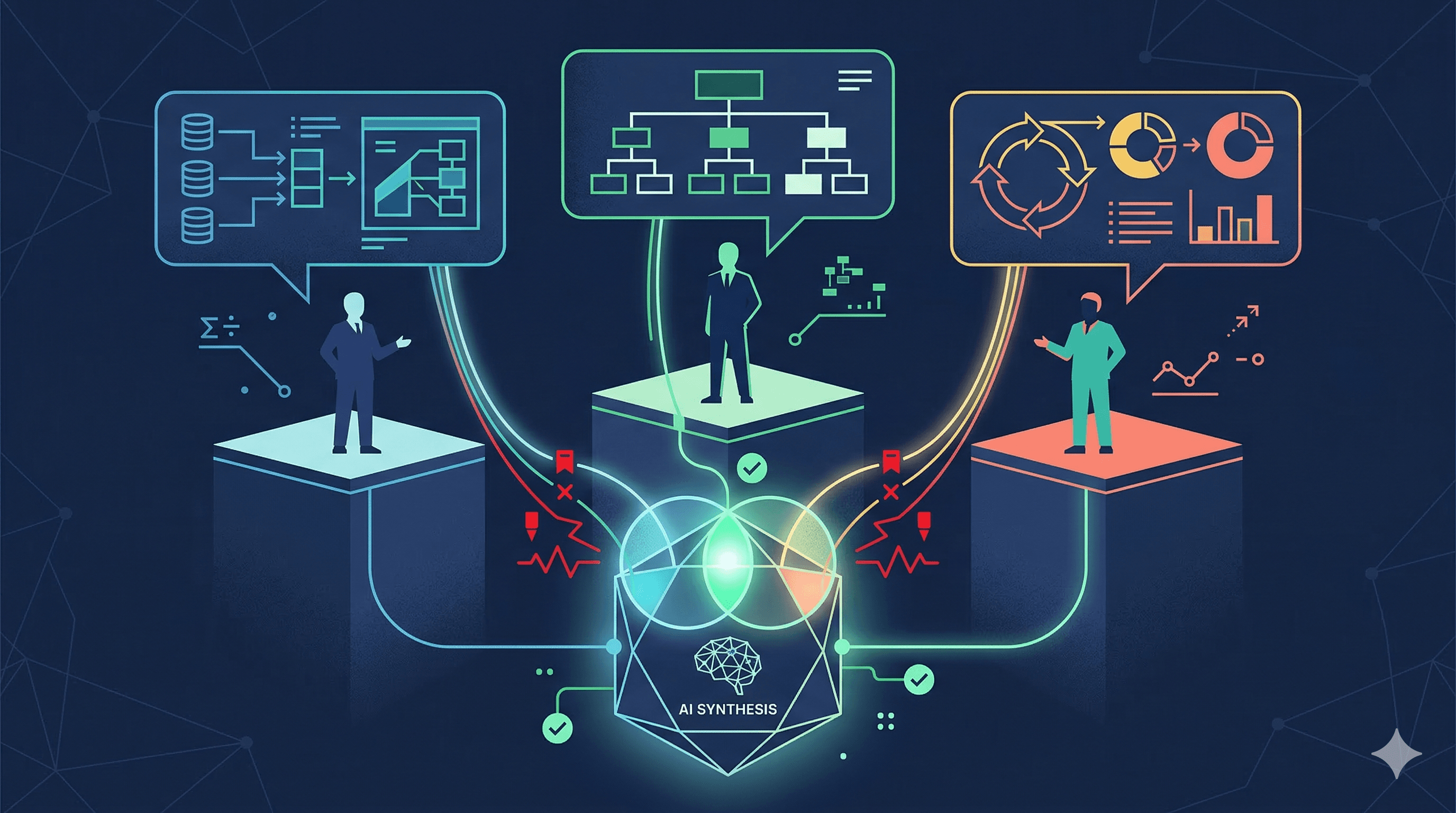
The most valuable thing about having multiple experts on one board isn't hearing what they agree on. It's finding where they disagree. Here's how I use Adviserry Chat to cross-reference advice.

I subscribe to 30+ newsletters and read maybe 3 per week. The daily digest from Adviserry tells me what I missed in 60 seconds. It's basically a newsletter about my newsletters.

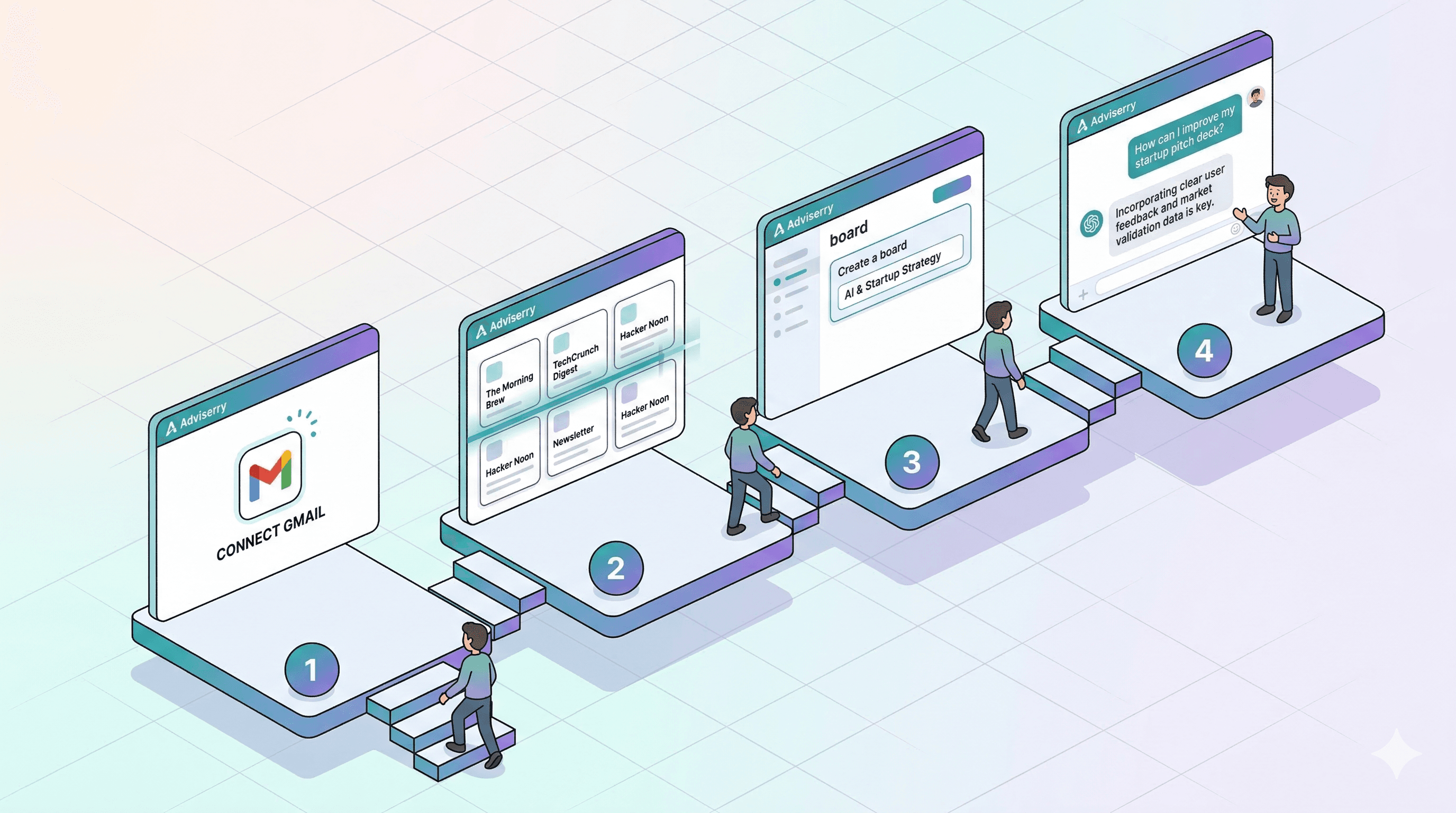
Five minutes from signup to asking your first question. Here's exactly how to set up your first Adviserry Board, with screenshots of every step.

I cancelled my $400/month coaching program and replaced it with an AI advisory board built from my newsletter subscriptions. Three months later, here's what actually happened.
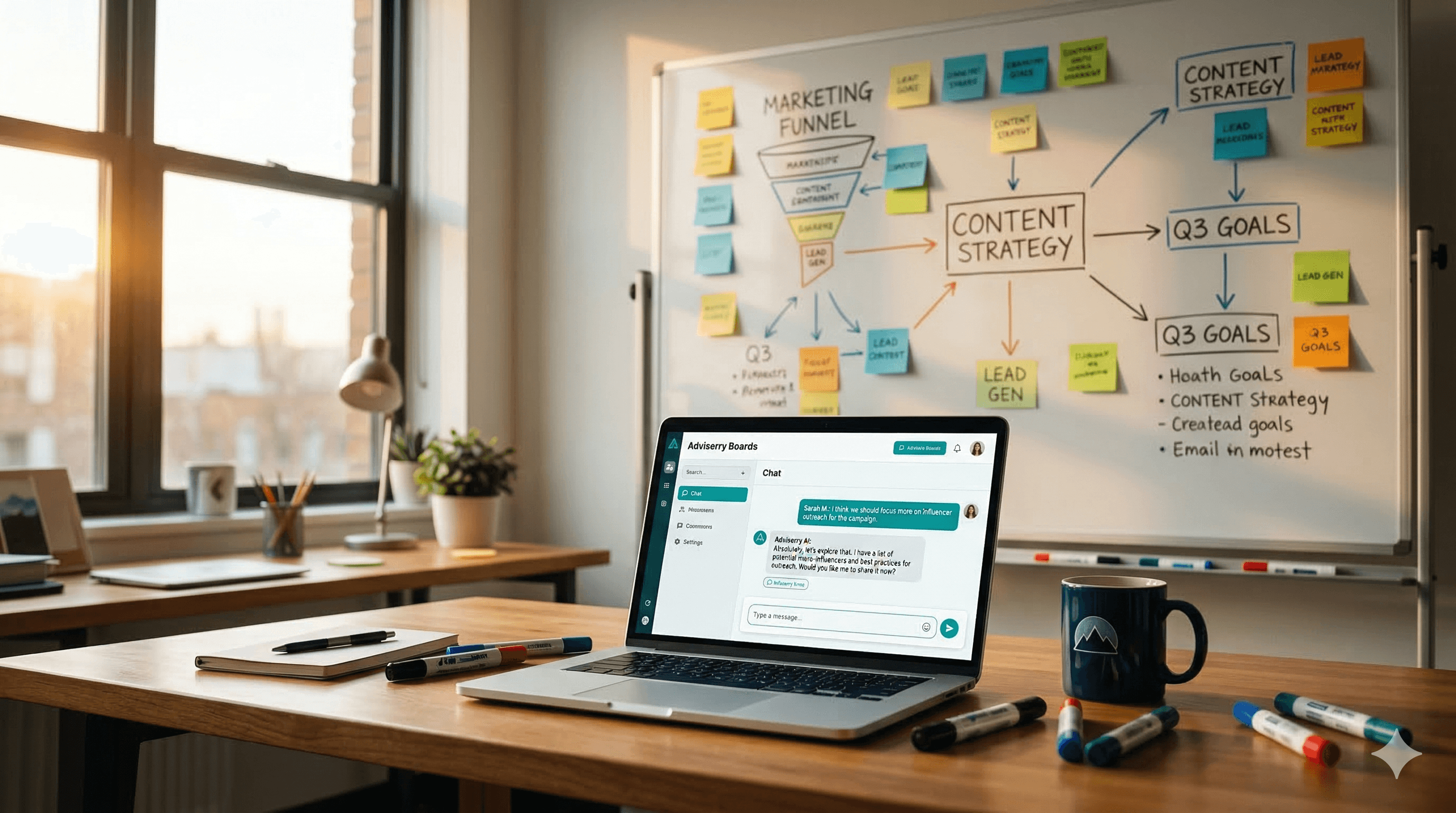
I had six marketing newsletters in my inbox and zero marketing strategy. So I dumped them all into an Adviserry Board and asked, "How should I launch this product?" Here's what happened.
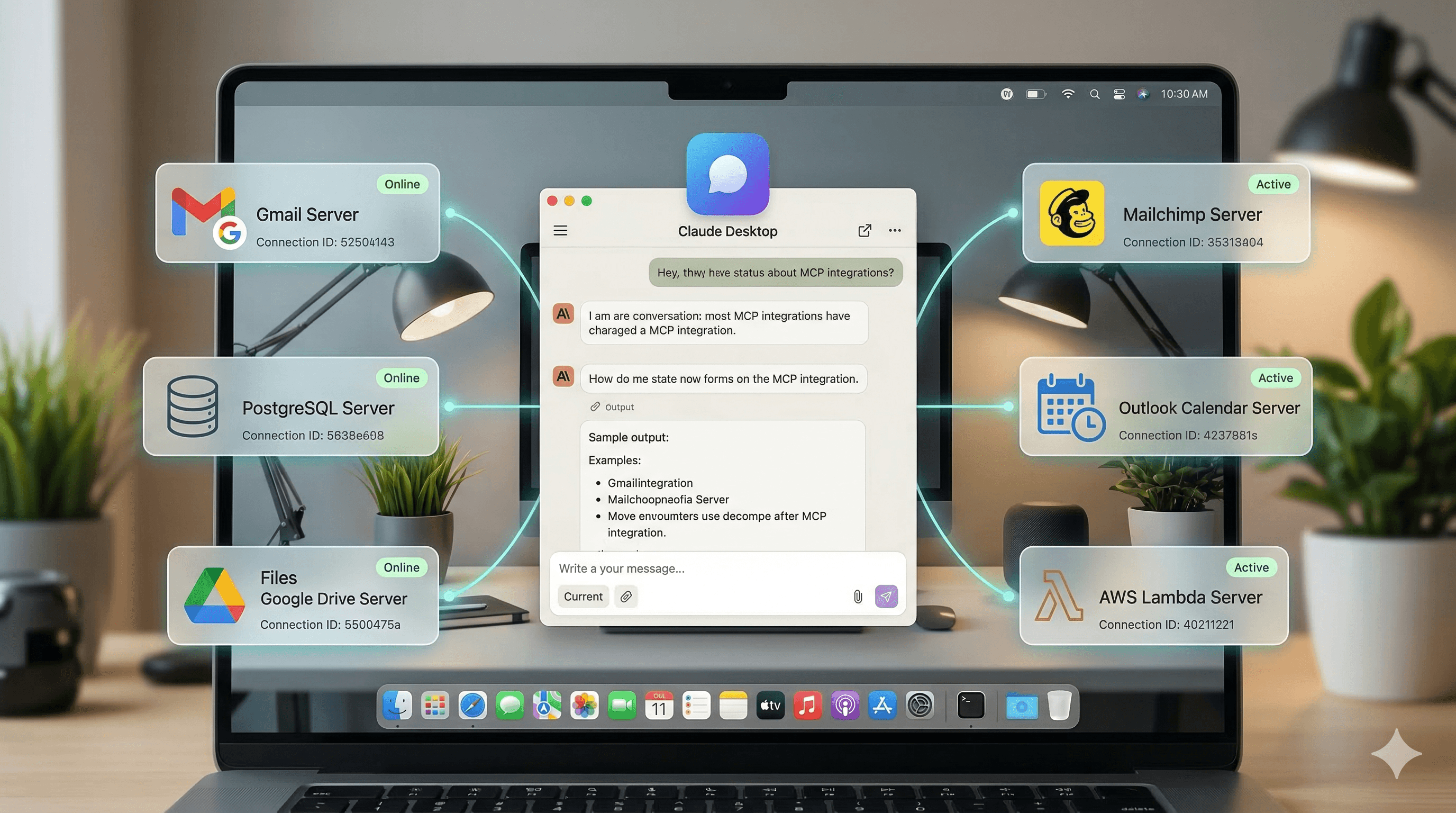
A good business advisor costs $500/hour and is available when they're available. AI advisors cost $20/month and are available at 2am when you're spiraling about a pricing decision. Here's how to use them well.
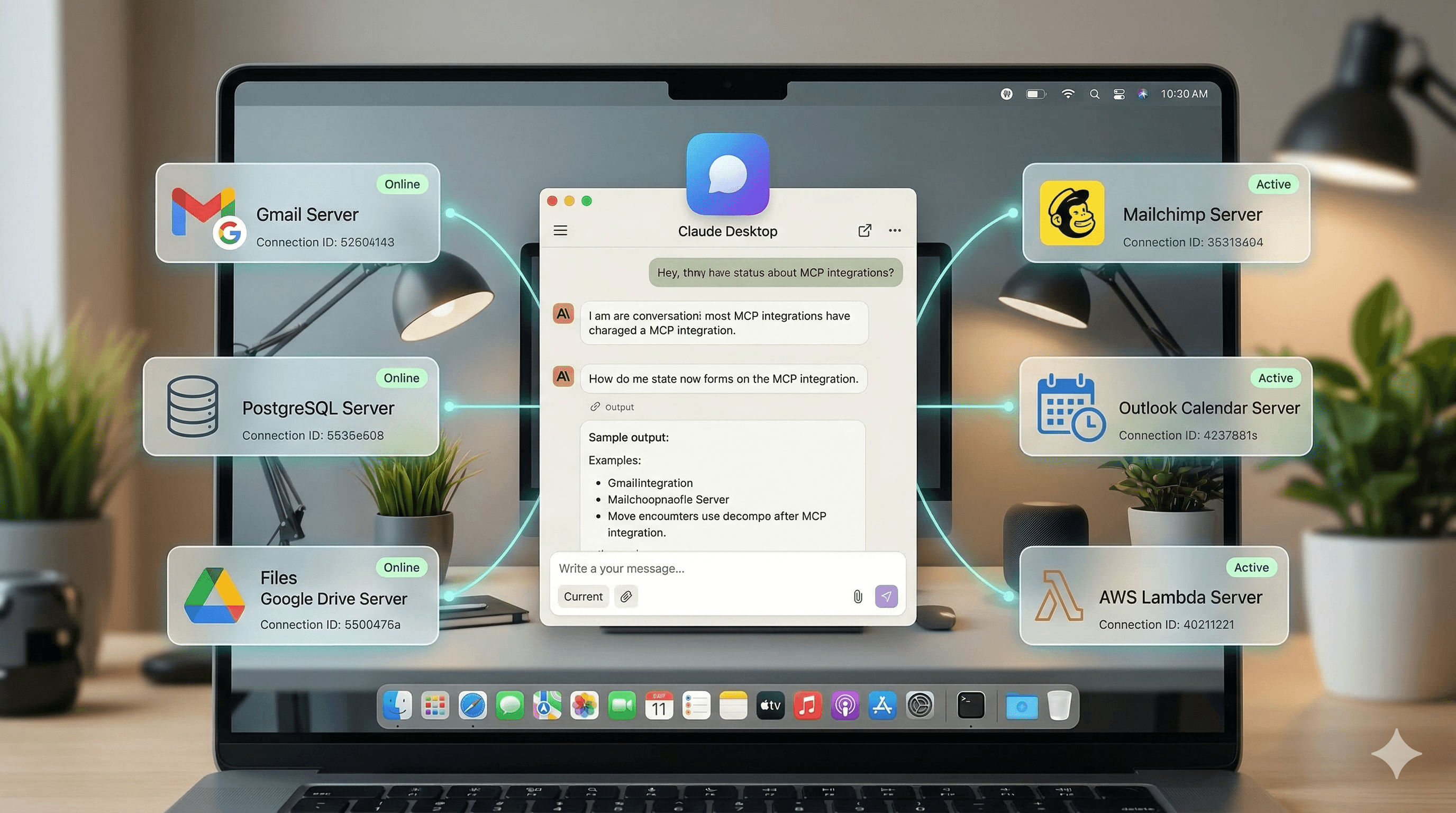
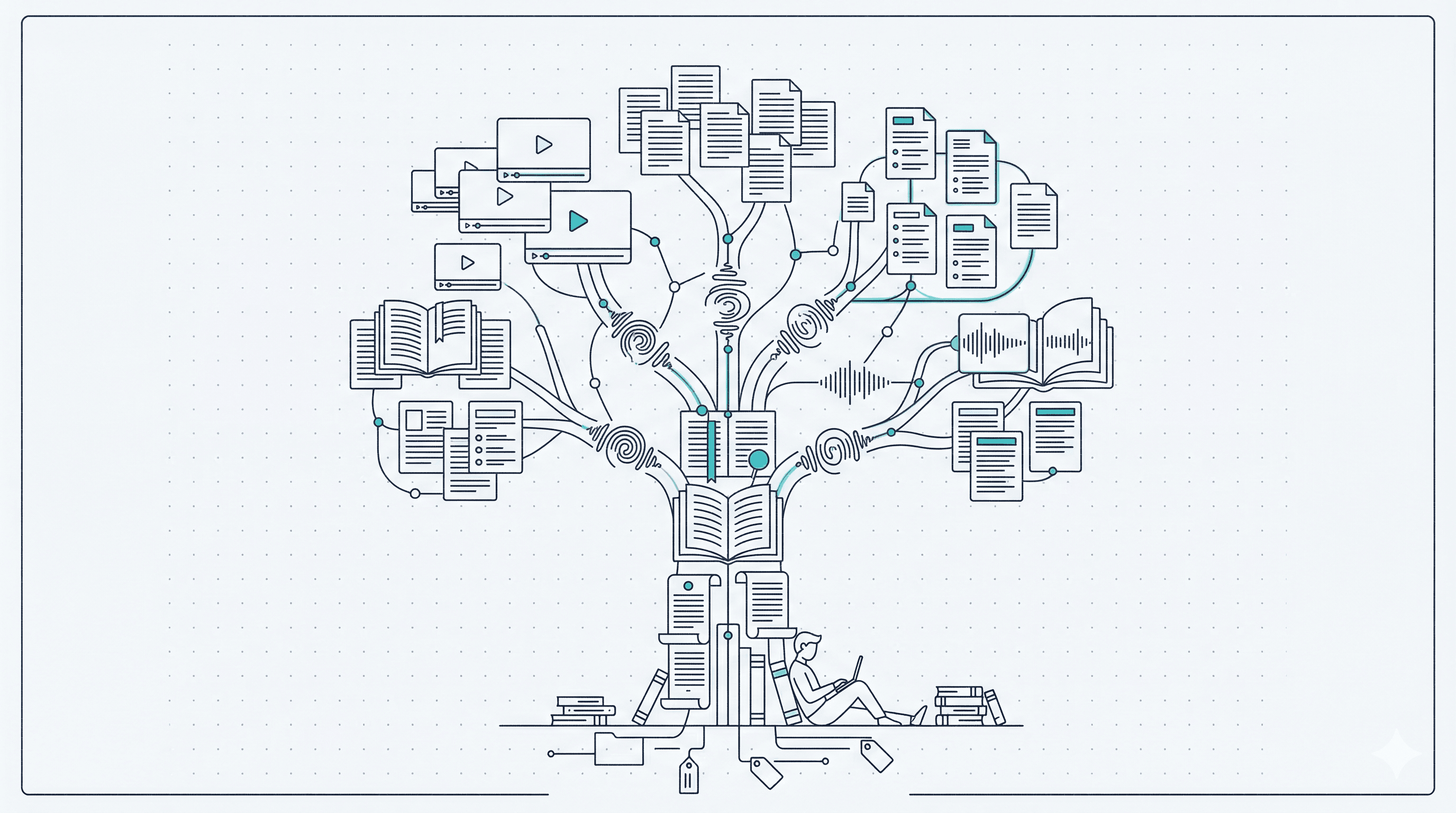
I've built and abandoned four personal knowledge bases in three years. The fifth one finally stuck, and it wasn't because I got more disciplined. The tool just stopped requiring discipline.
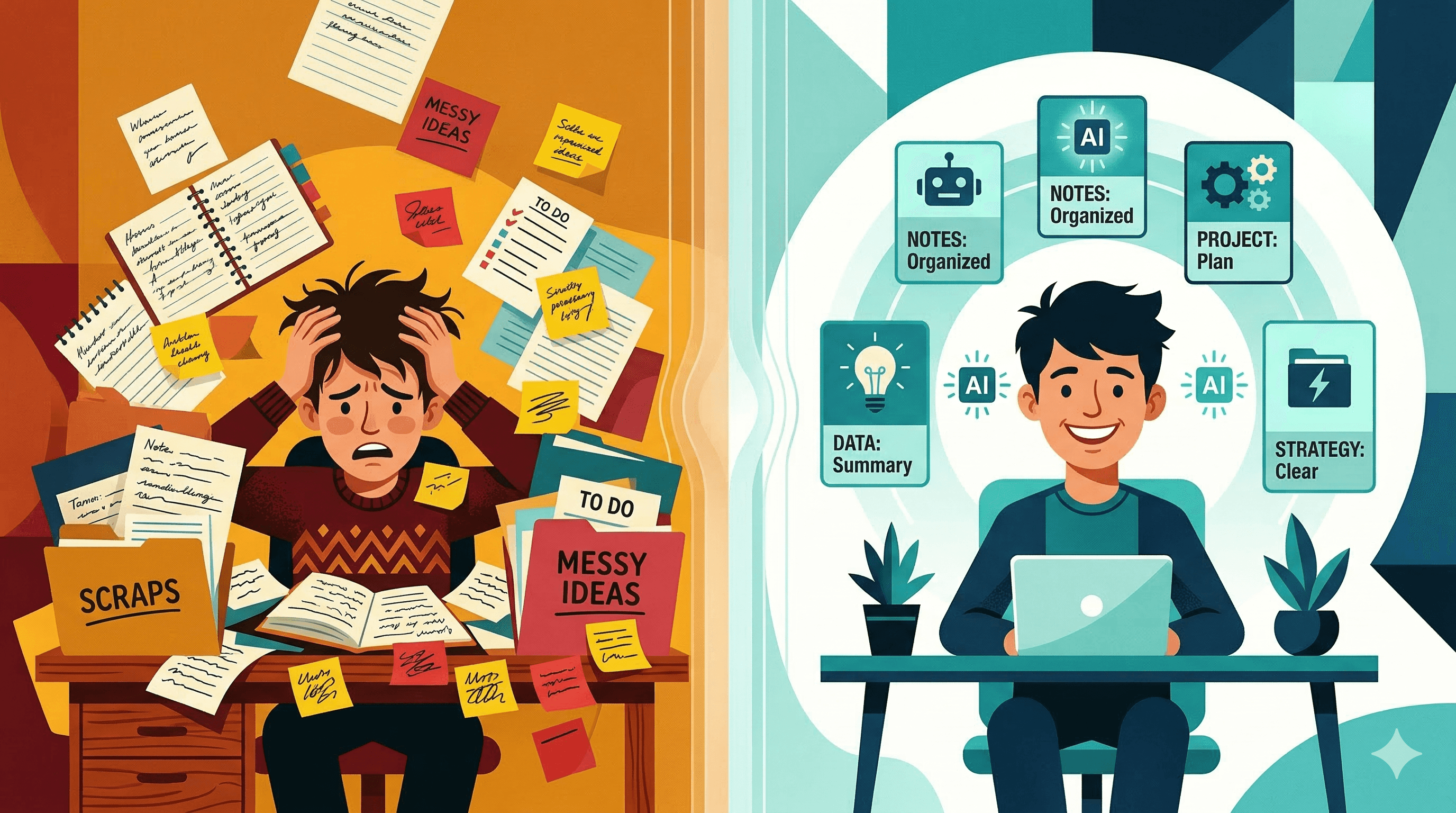
My note-taking system for podcasts was "pause, open Notes app, type three words I won't understand later, unpause." There has to be a better way. There is.
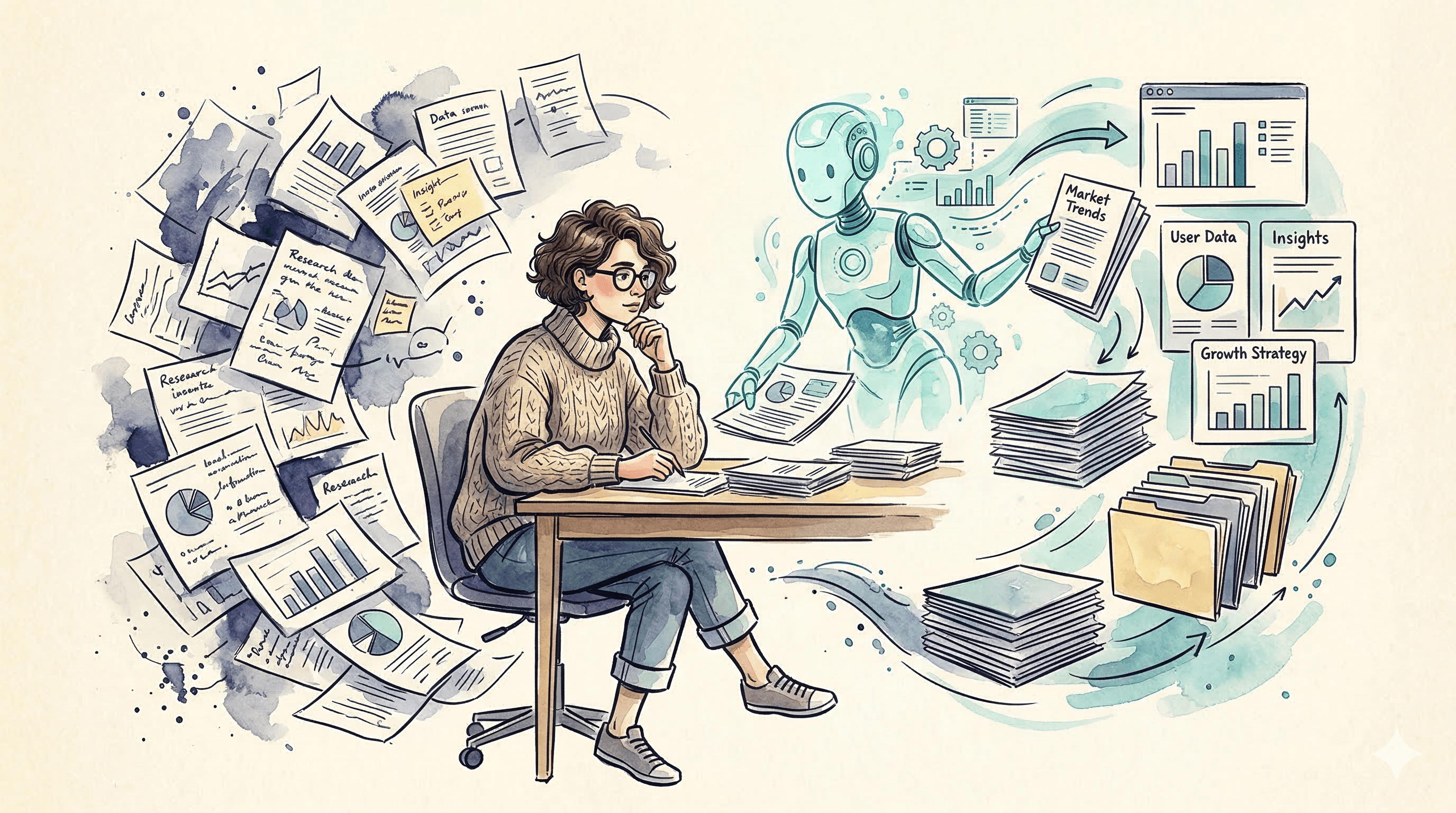
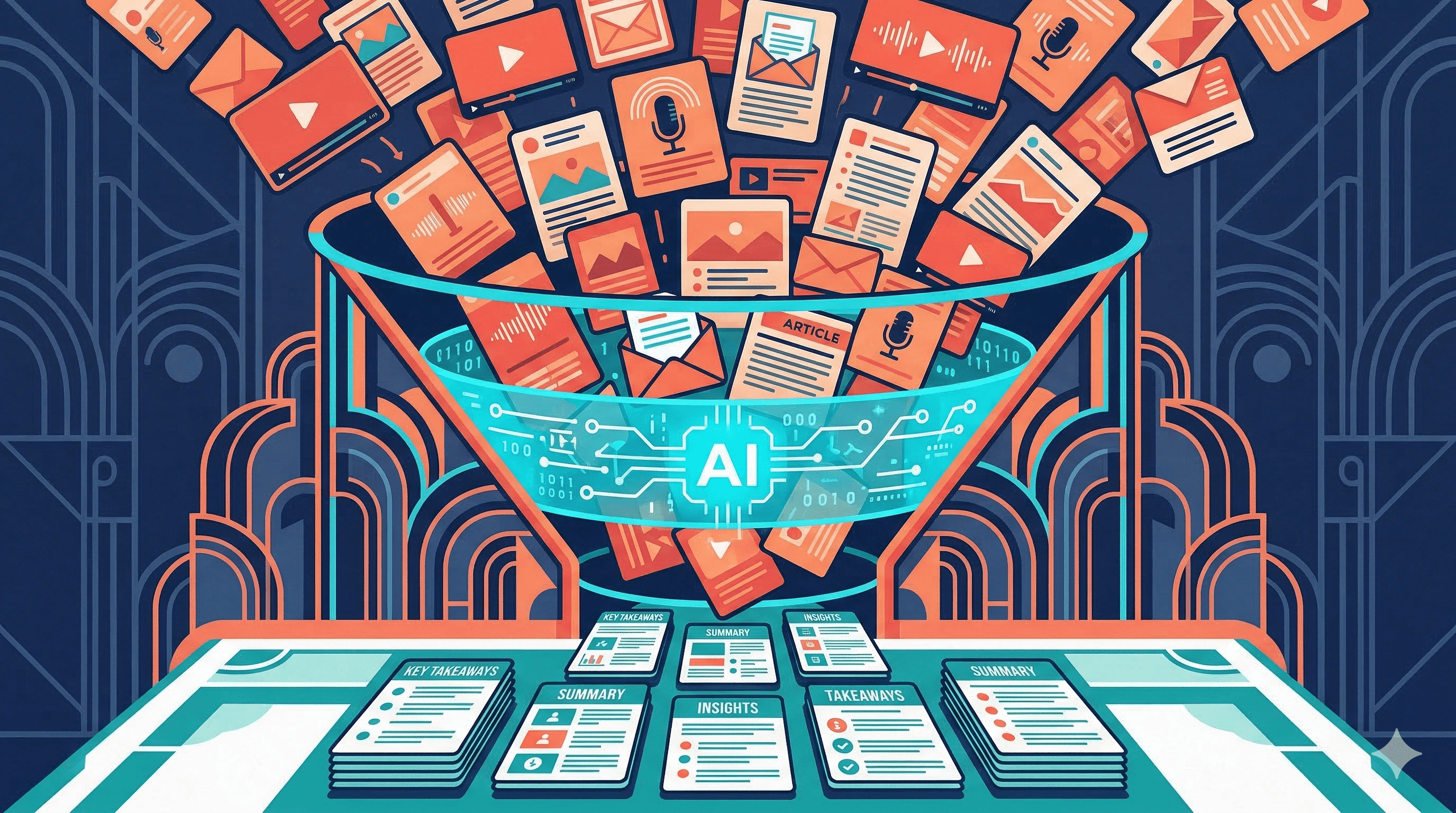
I follow about 50 content sources. I have time to actually read maybe 5 per week. Here are the AI tools that help me get the value from all 50 without the guilt of 45 unread tabs.
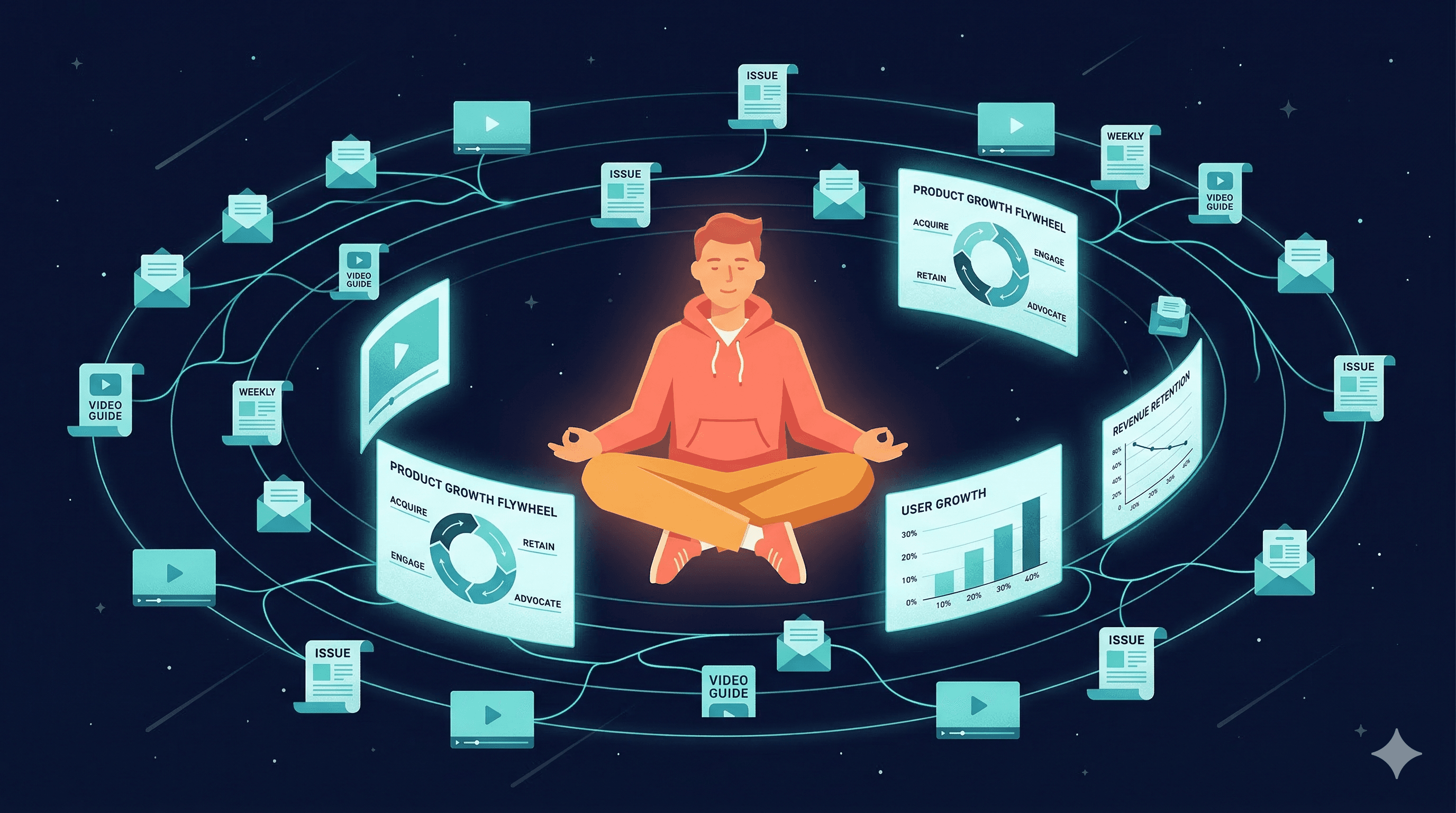
Lenny Rachitsky has published over 200 newsletter issues about product management. I couldn't remember any of them when I needed to. So I loaded them all into Adviserry and started asking specific questions.
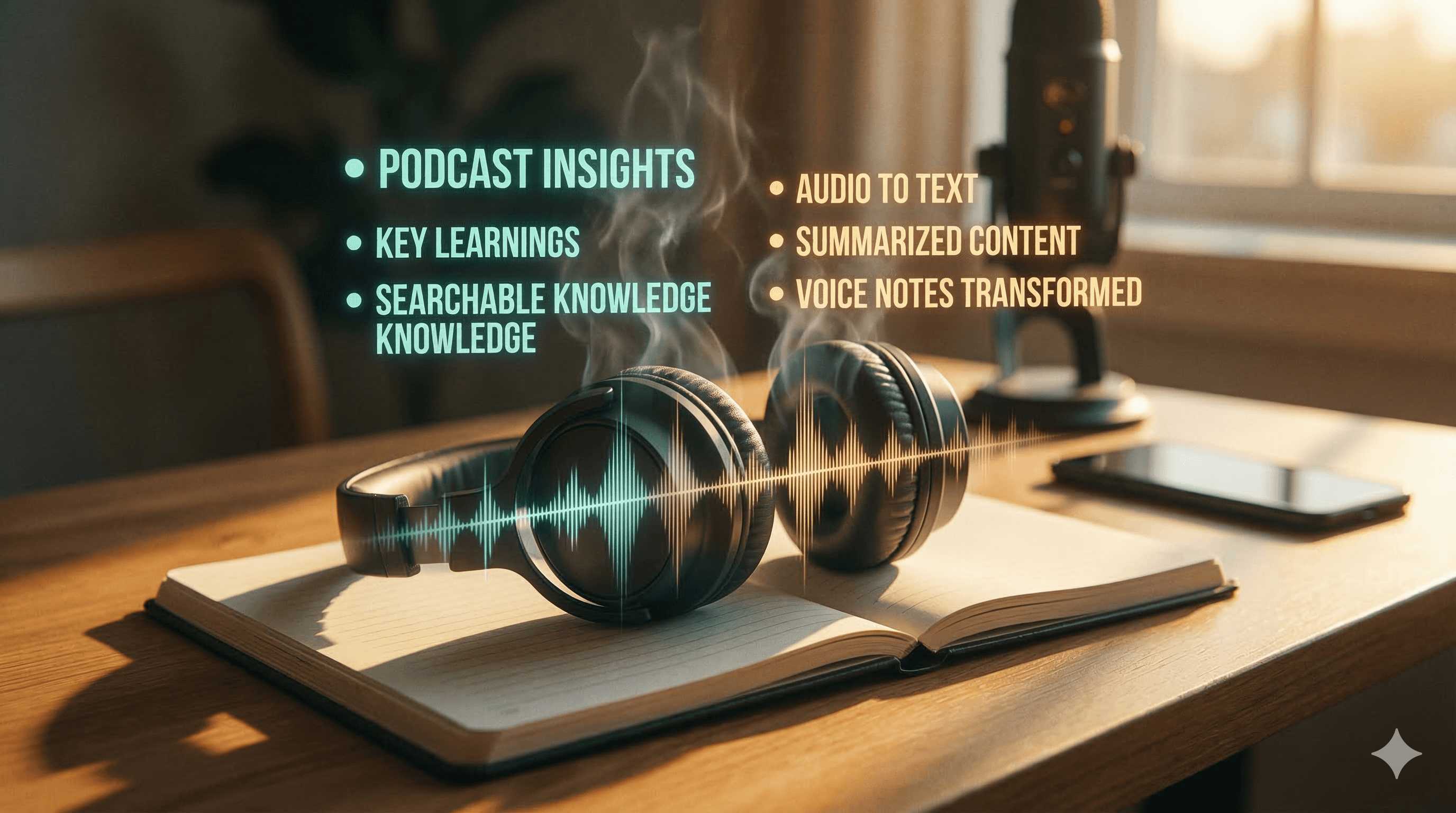
Five AI tools tested for turning podcasts into notes you can actually search: Adviserry, Snipd, NotebookLM, Otter.ai, and Recall.
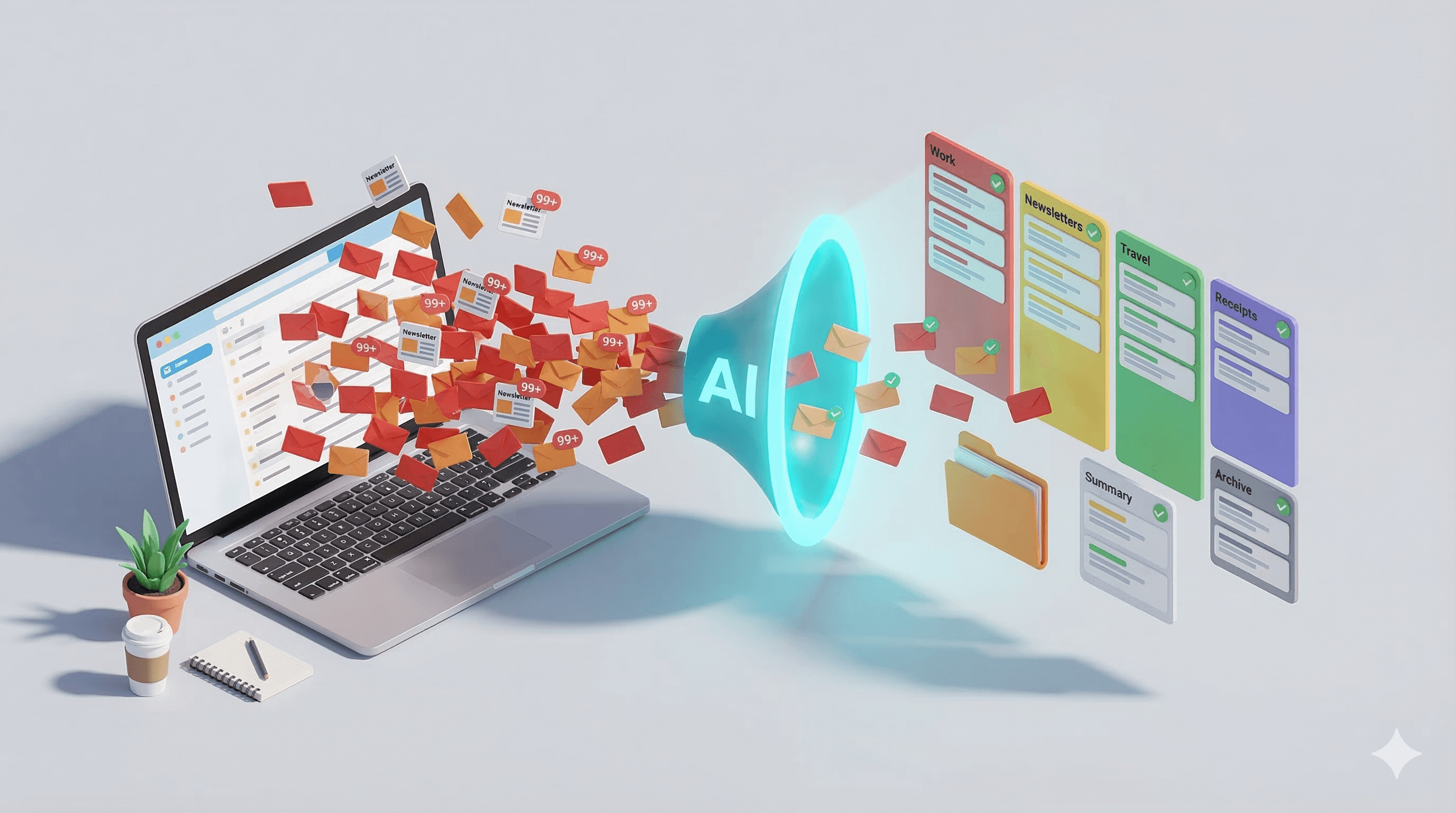
I subscribe to 47 newsletters. I know this because I recently connected my Gmail to a tool and it told me. I did not think it was forty-seven. Here's how to tame the chaos.
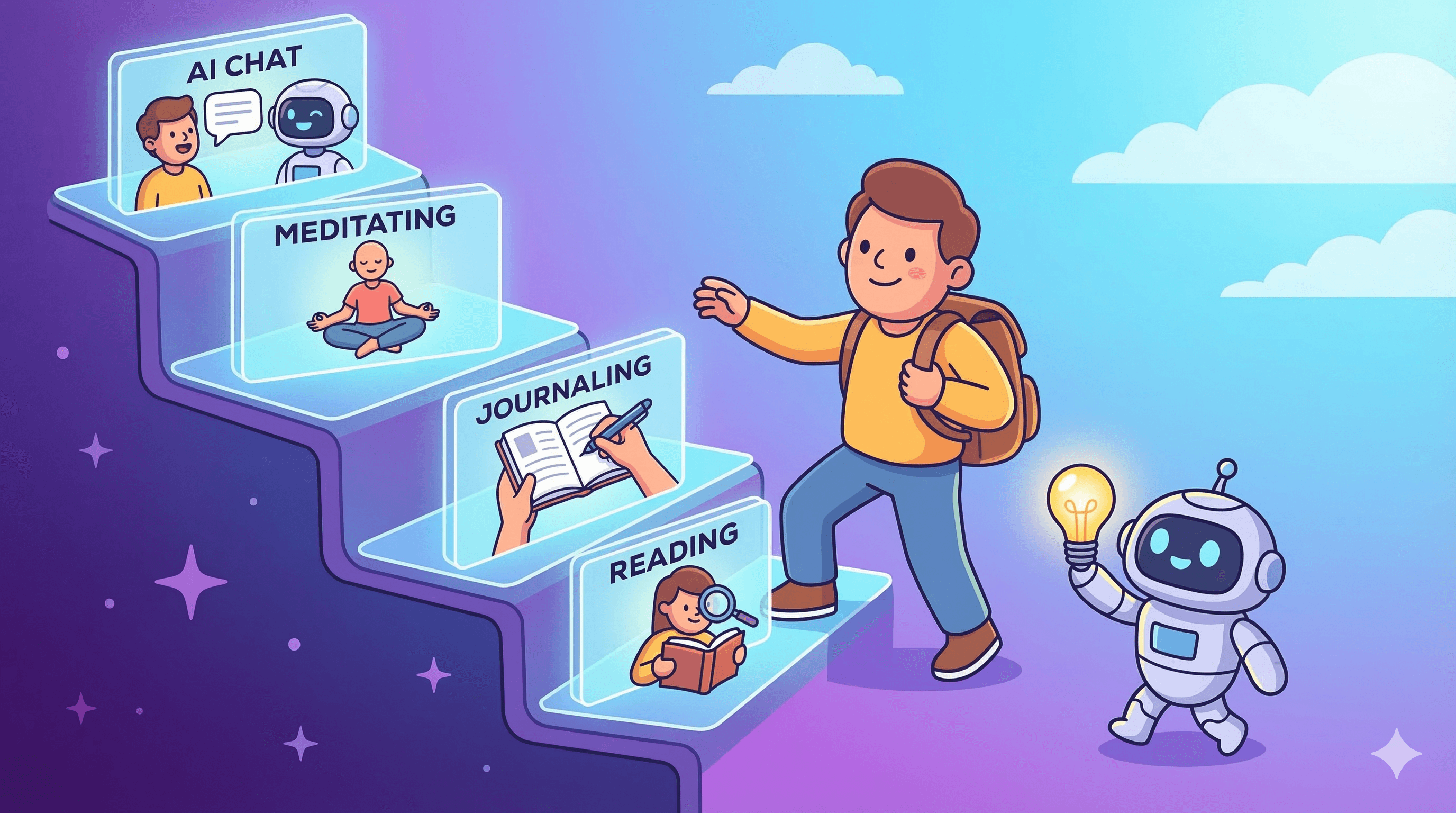
I made a resolution to read a book a week. I made it to February. Here are the AI tools that actually helped me learn more without requiring me to become a fundamentally different person.

An AI second brain captures what you read and answers questions from it later. Seven tools compared on capture, retrieval, and how much filing they demand.
I spent almost $5k on coaching last year and retained maybe 15% of it. So I went looking for AI tools that could hold onto the wisdom my brain keeps losing. Here's what I found.
Two quick checks, no signup. Both take under three minutes.