
What Is Personal Knowledge Management? A Practical Guide 2026
Ever tried to remember a key insight from a newsletter you read three weeks ago? You probably couldn't. That feeling of losing good ideas is what drove me to build a second brain before I even knew the phrase existed. In the next few minutes you’ll see what is personal knowledge management, why it matters, and how you can set up a system that actually works for a solo founder.
We’ll walk through the core loop, the tools that keep the loop tight, and the traps that wreck most DIY setups. By the end you’ll have a clear plan you can start using today , no massive software stack required.
Need a quick start? Check out the Best Knowledge Management System Guide 2026 for a plain-English rundown of the basics.
Table of Contents
- What Even Is "Personal Knowledge Management"?
- Why I (an ADHD Founder) Desperately Needed PKM
- The Core Loop: Capture, Organize, Retrieve, Apply
- Tools That Actually Help (Without the Overhead)
- The Traps That Will Kill Your System (And How to Dodge Them)
- FAQ
- Your Turn: Start Before You're Ready
What Even Is "Personal Knowledge Management"?
When you ask yourself what is personal knowledge management, think of it as a personal library that lives in the cloud. You collect notes, articles, videos, and then file them so you can pull them up later without hunting.
Stanford’s learning labs describe PKM as a trusted system that lets you dump ideas the moment they pop up, then retrieve them when you need them (Stanford). It frees up brain space for real work.
Most people start with a simple note-taking app, but the real power comes when you add a few habits: capture the raw thought, add context, and tag it for later search.
"A good PKM system is a digital extension of your mind, not a replacement for thinking."
That quote sums up why the system should feel light, not heavy.
Most founders treat PKM like a side project. In reality, it can become the backbone of decision-making, product design, and even marketing copy. When you can pull the right insight in seconds, you save hours every week.
Key Takeaway: PKM is a simple, searchable vault that turns random notes into usable knowledge.
Bottom line: What is personal knowledge management? It’s a habit-driven system that stores what matters so you can act on it fast.
Why I (an ADHD Founder) Desperately Needed PKM
Living with ADHD means my mind jumps from one idea to the next. I used to waste hours scrolling through old Slack threads, trying to find a single piece of advice I’d heard weeks ago.
Research from Bloomfire shows that a solid knowledge system can save employees up to 3.9 hours a week (Bloomfire). That’s a huge gain when you’re the only person wearing every hats.
For me, PKM stopped the endless chase. I started by capturing every meeting note in a single place, then adding a one-sentence summary that explained why it mattered.
Pro tip: Use a timer. Spend five minutes each morning dumping any lingering thoughts into your PKM tool. The habit keeps the mental clutter low.
Pro Tip: Pair your capture habit with a quick tag , like #idea, #action, or #reference , to make later retrieval painless.
After a month, I could answer client questions faster than before, and I stopped missing key deadlines because the info was always at my fingertips.
Bottom line: What is personal knowledge management for an ADHD founder? A way to offload scattered thoughts into a reliable, searchable stash.
The Core Loop: Capture, Organize, Retrieve, Apply
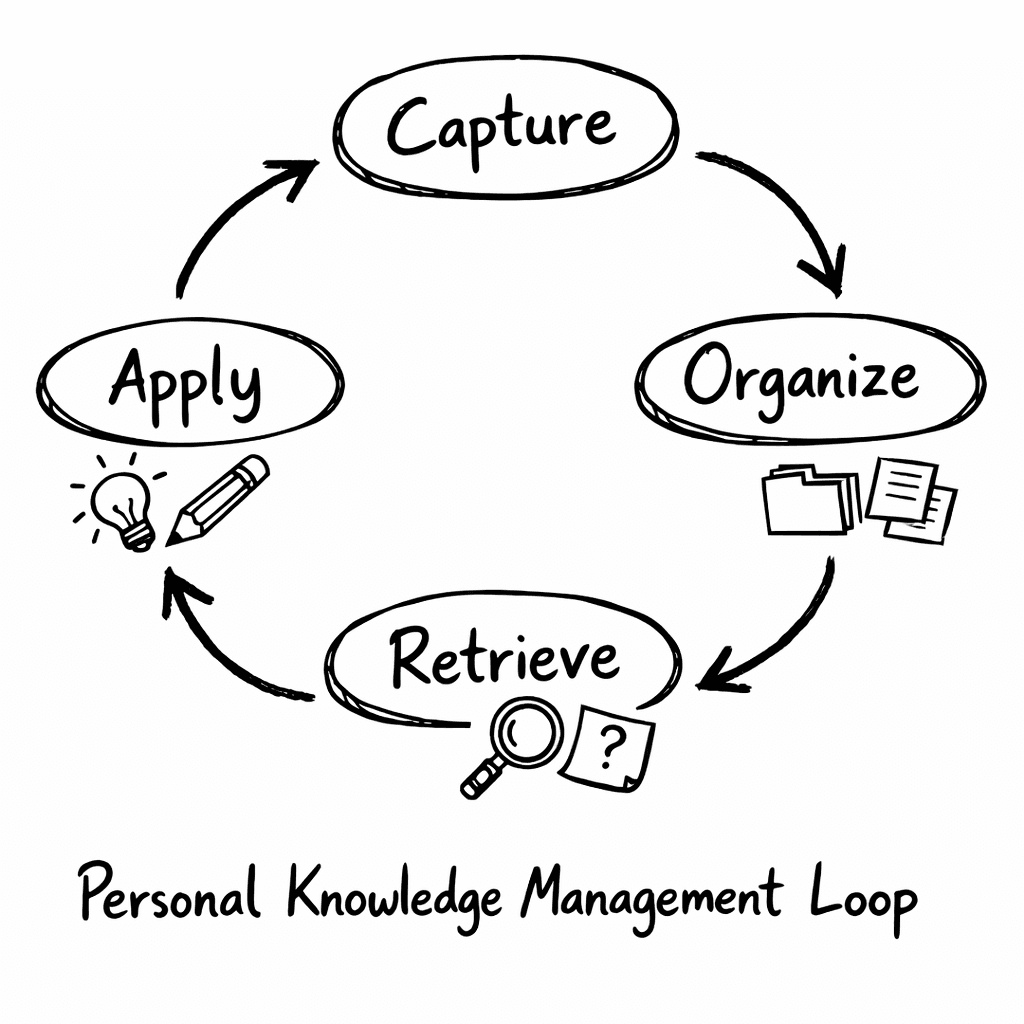
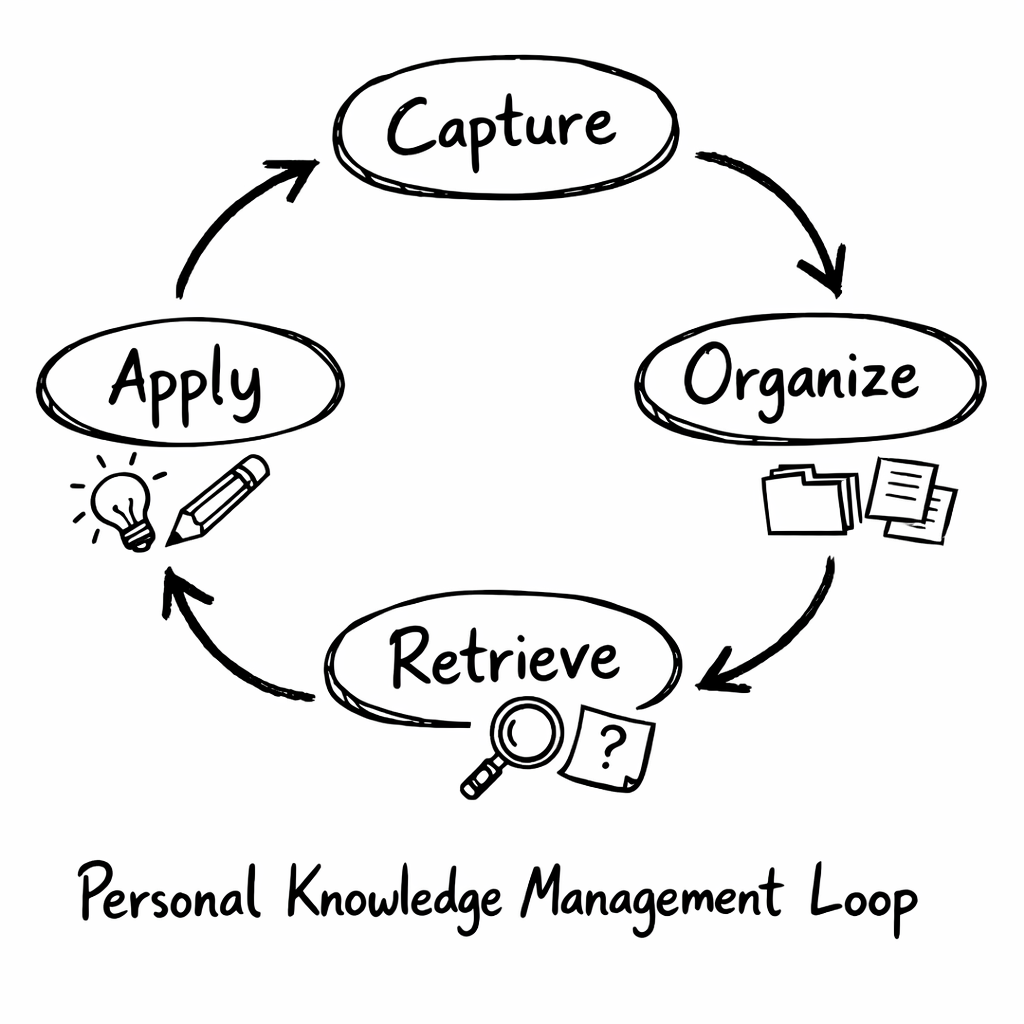
Every PKM system boils down to four steps. Capture the raw thought. Organize it so you can find it later. Retrieve it when you need it. Apply it to a project or decision.
My own loop looks like this: I catch a tweet, drop it into a note, tag it with a project name, and later pull it into a strategy doc.
Here’s a quick way to set it up without buying a dozen apps.
- Capture: Use a phone shortcut or browser extension to save anything in seconds.
- Organize: Add a one-line context and a tag that matches your current goals.
- Retrieve: Search by tag or by the short context you wrote.
- Apply: Copy the insight into the active project, then mark the note as used.
That loop keeps the system lean and avoids the dreaded “I have notes but I can’t find anything” feeling.
Want a deeper dive on building a second brain? Check out the How to Build Your Second Brain in 2026 guide.
Key Takeaway: The capture-organize-retrieve-apply loop is the engine that powers a functional PKM system.
Bottom line: What is personal knowledge management? It’s a four-step loop that turns random bits into action-ready knowledge.
Tools That Actually Help (Without the Overhead)
Not every app lives up to the hype. I tested 20 tools last month. Only a handful gave me true value.
Here’s a quick comparison of the top three that work for solo founders. The table focuses on AI summarization, automation, and free-tier limits , the three things I care about most.
| Tool | AI Summaries | Automation | Free Tier |
|---|---|---|---|
| Adviserry | Yes – auto-summarizes newsletters & YouTube | Real-time ingestion | Unlimited (with limits on boards) |
| Obsidian | Community plugins only | Manual Zapier links | Free local-first |
| Notion | Notion AI, on paid plans | Database automations | Free tier is page-limited |
Why does Adviserry win? It reads your content for you. Most tools require you to copy-paste or write summaries yourself.
35%of tools lack AI summarization
If you’re on a budget, start with a free note app and add a small AI add-on later. The goal is to avoid feature bloat.
Bottom line: What is personal knowledge management software? It’s any app that lets you capture, tag, and find info fast , but the best ones also give you AI summaries and automation.
The Traps That Will Kill Your System (And How to Dodge Them)
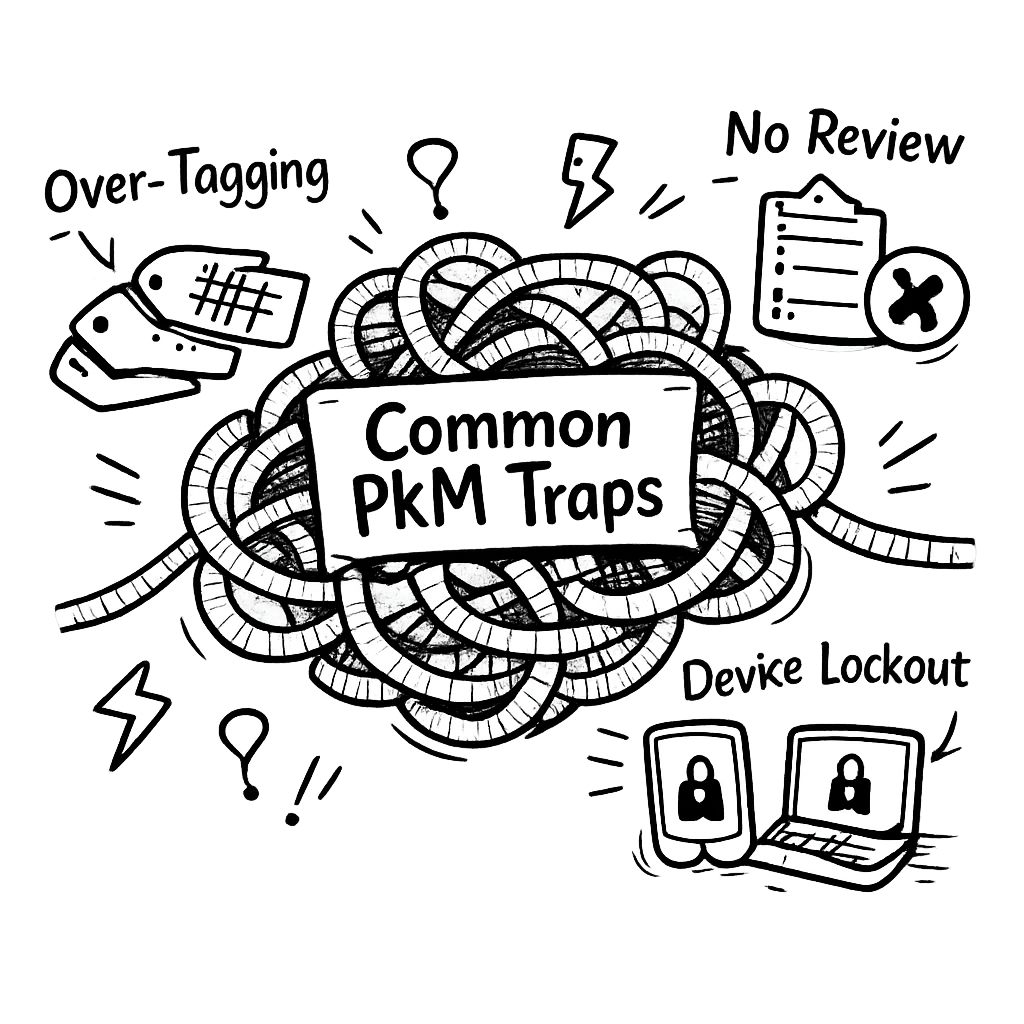
Even a solid PKM loop can fall apart if you fall into common traps.
Trap #1: Over-tagging. When you add too many tags, search becomes a mess. Stick to 3, 5 core tags per note.
Trap #2: Ignoring the review step. If you never revisit notes, they become stale. Set a weekly 15-minute review.
Trap #3: Relying on a single device. If your phone dies, you lose access. Cloud sync solves that.
To keep things simple, I built an AI-powered knowledge base that pulls my newsletters and YouTube videos into one searchable spot. It’s the Build an AI-Powered Knowledge Base That Actually Works approach I swear by.
"The biggest mistake is building a system so complex that you stop using it."
Remember, a PKM system should make life easier, not harder. Keep the workflow lean, review often, and back up your data.
Pro Tip: Schedule a recurring calendar event titled “PKM Review” to force the habit.
Bottom line: What is personal knowledge management? It’s only as good as the habits that keep it tidy and alive.
FAQ
What exactly is personal knowledge management?
What is personal knowledge management? It’s a set of habits and tools you use to collect, sort, and pull out information when you need it. Think of it as a digital filing cabinet that you can search in seconds.
Why should a solo founder care about PKM?
For a solo founder, every minute counts. A good PKM system saves time by letting you find past research, client notes, or market data without endless scrolling. It also helps you keep ideas fresh and ready to act on.
How do I start capturing information?
Begin with a single capture method , a phone shortcut, a browser extension, or a quick note app. Capture the raw snippet, then add a short line that explains why it matters to you.
What’s the best way to organize my notes?
Use a simple tag hierarchy. Pick a few top-level tags like #idea, #project, #reference, then add a sub-tag if needed. Keep the system shallow so you can search fast.
How often should I review my PKM vault?
Set a weekly review. Open your notes, skim the titles, and mark any that need action. Archive the rest. This keeps the vault clean and your brain focused.
Can AI help with personal knowledge management?
Yes. AI can read newsletters and YouTube videos, then write short summaries you can search. That cuts down on manual entry and makes retrieval faster.
Do I need to pay for a PKM tool?
Not necessarily. Many free apps work well for basic capture and tagging. If you need AI summarization and automation, a modest paid plan , like Adviserry’s , can be worth the boost.
Your Turn: Start Before You're Ready
Now you know what is personal knowledge management, why it matters, and how to build a simple loop that works. The hardest part is taking the first step.
Pick a capture tool, set up three tags, and spend five minutes today dumping any stray thoughts. Then watch how much easier it gets to find and use that knowledge tomorrow.
If you want a ready-made AI brain that pulls in your newsletters and videos, give Adviserry a try , it’s the only tool in our test that does that out of the box.
Remember: a PKM system is a habit, not a project. Start small, stay consistent, and let the system grow with you.