Building a Research Routine Around an AI Assistant
For about two years my "research routine" was refreshing three inboxes and a YouTube feed until I felt vaguely informed. That's not a routine. That's a nervous tic with a browser attached.
The problem wasn't effort. I was putting in plenty of effort, just in the least useful shape possible: constant, reactive, and impossible to repeat. Every day looked different depending on what happened to land and what I happened to notice. There was no version of "I did my research" that I could actually point to and say, yeah, that's done. So it was never done. It just went on forever, in the background, low-grade.
A routine beats effort, because a routine you can finish and effort you cannot. The whole point of building one around an AI assistant isn't to research harder. It's to make research a thing with a start and an end, that takes twenty minutes, that you can do the same way every week and then walk away from. Here's the one I settled on. It has three questions and that's the entire system.
Question one: what dropped
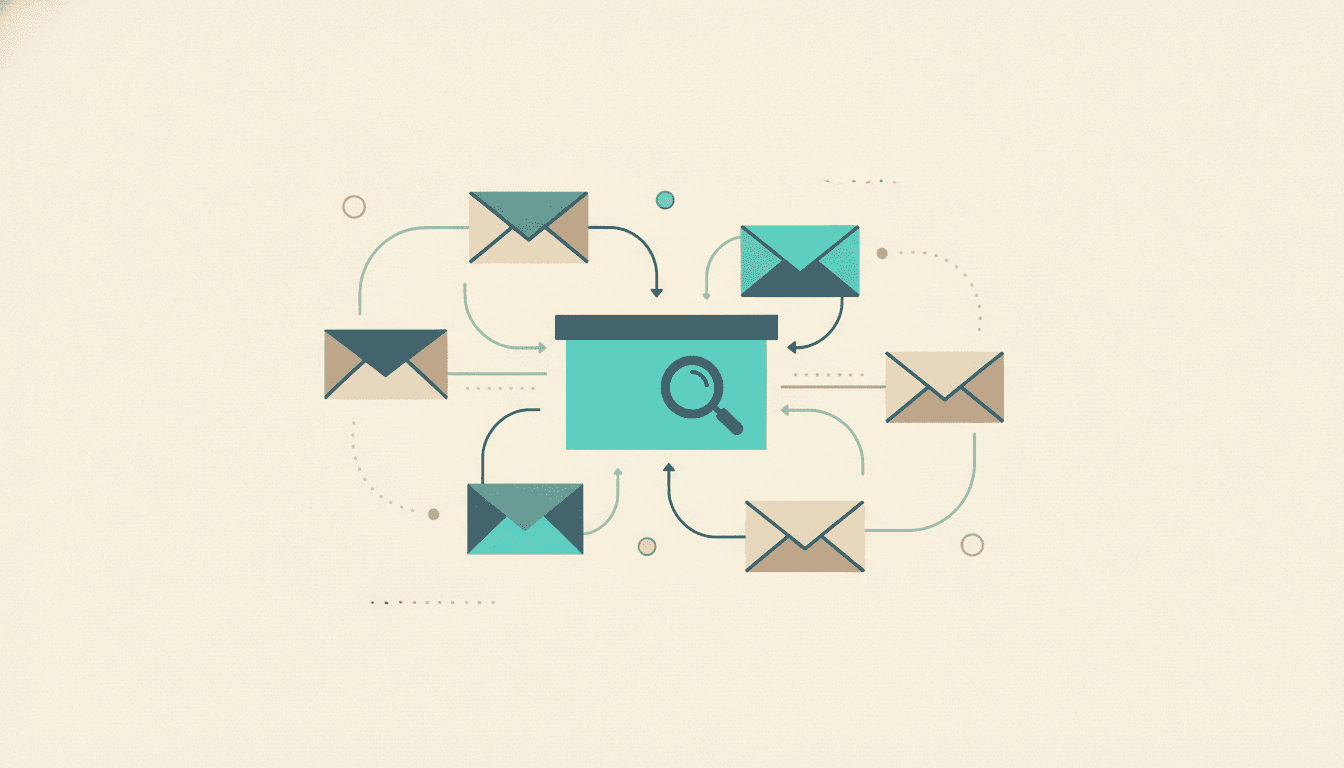
The first move each week is just taking inventory of what landed. Not reading it all, taking inventory. Which newsletters actually published, which channels posted, roughly what the volume looked like. A heavy week and a quiet week call for different amounts of attention, and you can't tell which you're in if everything's buried in an inbox with your receipts.
The AI's job here is boring and essential: it looks at your archive and tells you what came in. You ask something like "what did my creators publish this week and what topics came up most." You get a map. Not the territory, a map. Now you know a couple of themes got heavy coverage and the rest was quiet, and you've spent two minutes instead of forty scrolling.
This step used to not exist for me at all, which is why the other two never worked. You can't reason about your inputs if you've never once looked at them as a set.
Question two: what did my creators say
This is the heart of it and the part the AI is genuinely good at. For whichever one or two themes actually got attention this week, you ask what the people you follow said about them. Plainly. "What did the creators I follow say about small caps this week." And you get their takes, in their own words, attributed to who said them and when.
The thing I want to stress is what this question is not. It is not "what should I do about small caps." It's not asking the machine for a view. It's asking it to gather the human views you already chose to trust into one place so you can read them side by side. Sometimes they agree, which is its own tell about where attention is going. Sometimes two of them flatly disagree, and seeing the disagreement laid out is worth more than any tidy consensus, because now you know it's contested and you can hold the question open instead of pretending it's settled.
I read those passages, I note who's saying what, and I move on. I'm not trading off a chatbot. I'm reading what smart humans wrote, faster, in one spot, without hunting through twelve inboxes for it. The AI is a librarian, not an oracle. Keep it in that lane and it's incredibly useful. Ask it to be the oracle and you've wandered somewhere you shouldn't.
If you've never asked an AI about your own creators instead of about the market, this step is the one that'll feel like magic the first time. It's the difference between a generic paragraph and your actual people's actual words.
Question three: what changed
The last question is the one almost nobody asks, and it's my favorite. What's different from last week. Did someone who was cautious warm up. Did a theme that was loud go quiet. Did a name that nobody mentioned suddenly show up in three places.
You ask the assistant to compare. "Has anyone I follow shifted their tone on the dollar compared to a few weeks ago." What comes back is descriptive: this person wrote X in June and Y this week, here are both. That's it. Not "so they turned bullish, you should too." Just the two data points, dated, so you can see the change yourself and decide whether it means anything.
Change is where the useful stuff hides. A static snapshot of opinion is mildly interesting. A shift in opinion, from someone whose thinking you respect, is the thing worth actually noticing. And you can only see shifts if you've got an archive that remembers what they said before, which your inbox emphatically does not, because your inbox is where memory goes to die.
Why bolt it to an assistant at all
You could do all three questions by hand. Read everything, keep notes, flip back through old issues. People did it that way for decades. But you won't keep it up, and neither will I, because the manual version depends on future-you being disciplined and future-you is a flake. The whole reason the routine survives is that the tedious parts, the gathering and the remembering and the comparing, get done by something that doesn't get tired or bored or busy.
That's what I built Adviserry to do. It pulls your trading newsletters and YouTube channels into one archive and lets you ask exactly these three questions in plain language, either in the app or right inside Claude Desktop or ChatGPT over a connector. What dropped, what did my creators say, what changed. It answers with their words, attributed and dated, and it never crosses the line into telling you what to do with any of it. That restraint is deliberate. The routine works because the tool gathers and I decide, not the other way around.
The honest result isn't that I'm smarter. It's that I have a version of research I can actually finish. Twenty minutes, three questions, done, close the laptop. The nervous tic is gone, replaced by something with an off switch. And a routine with an off switch is the only kind that lasts. If your inputs are still scattered across a dozen places that don't talk to each other, start by getting them into one searchable archive, because the routine only works once there's a single place to point it at.
Adviserry is an educational and research aggregation tool, not a registered investment adviser. Nothing here is financial advice or a recommendation to buy, sell, or hold any security. Summaries reflect what creators you follow have published. Past performance and creator commentary do not predict future results.