How I Used Adviserry to Prepare for Investor Meetings Using Startup Newsletter Content
How I Used Adviserry to Prepare for Investor Meetings Using Startup Newsletter Content
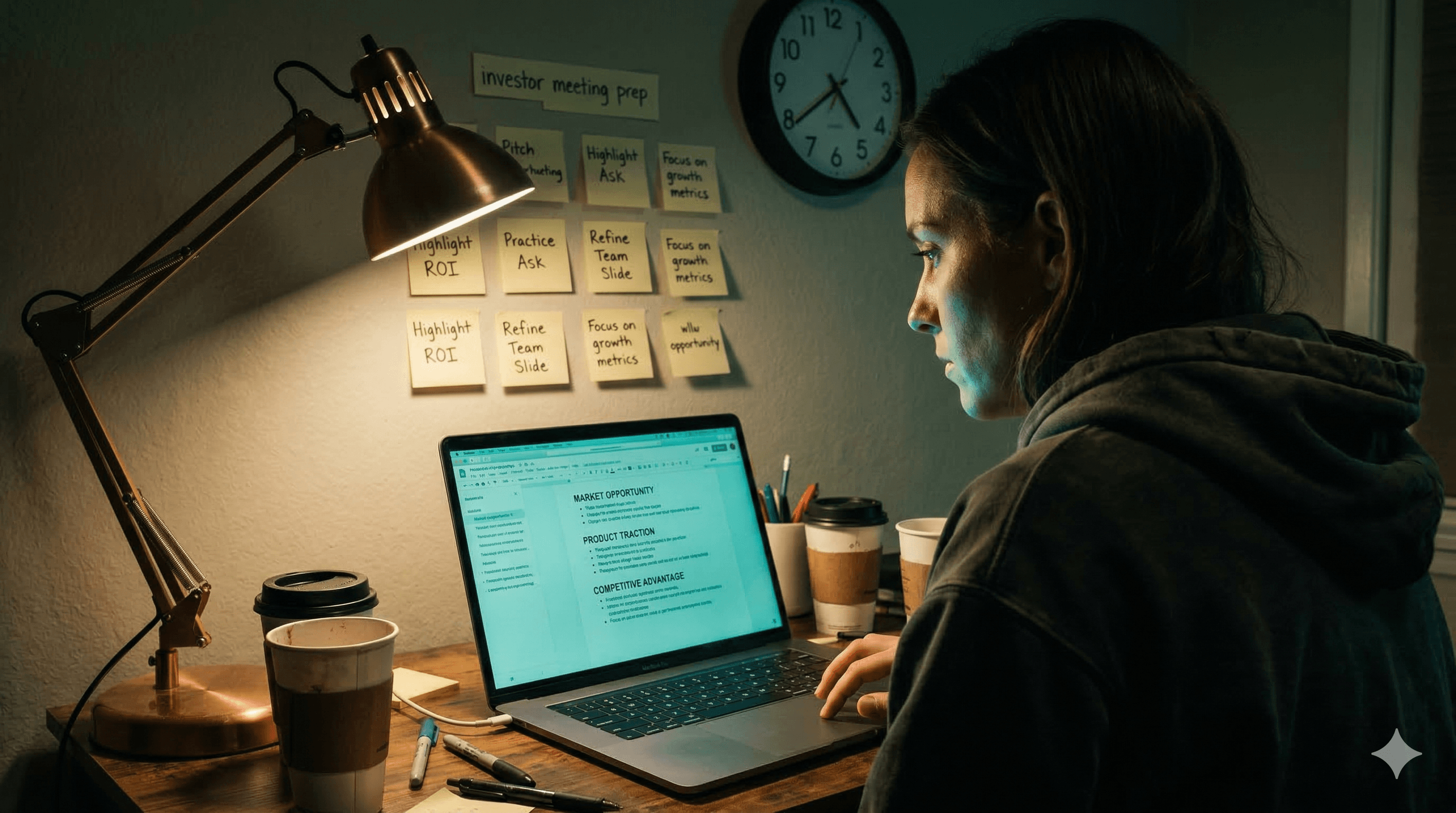
I got an email from an investor contact on a Tuesday saying they wanted to have a casual conversation about Adviserry on Thursday. "Casual" in investor-speak means "we're evaluating you and you should be prepared."
I had 48 hours. I had zero fundraising experience. I had never pitched a VC.
What I did have: a "Startup Strategy" board in Adviserry with two years of newsletter content from Lenny Rachitsky, SaaStr, First Round Review, and a few other startup-focused sources. And somewhere in those archives were dozens of articles and podcast episodes about fundraising that I'd glanced at and moved on from because, at the time, I wasn't raising.
Time to put that board to work.
Hour 1: "What should I expect from a first investor conversation?"
I started broad. Asked my Adviserry board what my sources said about first meetings with investors. The response pulled from a Lenny interview with a VC partner and a SaaStr post about what VCs look for in first meetings. Key takeaway I hadn't known: the first meeting is about the problem and market, not your solution. Investors want to know you understand the space deeply. The product demo comes later.
This reframed my entire prep approach. Instead of building a polished pitch deck, I focused on being able to articulate the information overload problem (which I lived every day) with data and specificity.
Hour 3: "What metrics do investors care about for pre-revenue SaaS?"
I was pre-revenue with beta users. Surely that's a hard sell? My board pulled from three different sources and actually made me feel better. The metrics that matter at this stage: user engagement (how often do people use it?), retention (do they come back?), wait list demand (is there pull?), and founder-market fit (why are you the person to build this?). Revenue is nice but not expected at the earliest stages. One source specifically said that showing you understand your metrics, even if the numbers are small, is more impressive than big numbers you can't explain.
Hour 5: "What are the biggest mistakes founders make in investor meetings?"
This was the most useful question I asked. The synthesis from multiple sources: talking too much about features and not enough about the problem, not having a clear ask, not knowing your competitive landscape, getting defensive about weaknesses, and trying to be something you're not instead of being genuine about where you are.
I printed out the list and kept it next to my laptop during the meeting.
Hour 7: "What questions should I be prepared for?"
I asked my board to generate a list of likely investor questions based on what my sources had covered. The AI pulled from several "how to survive an investor meeting" articles and gave me about 15 questions to prep for, including "what's your unfair advantage?", "why now?", and "what's the biggest risk to this business?" For each one, I drafted a concise answer using the frameworks from my board's content.
The meeting:
It went well. Not because I was some fundraising expert (I very clearly was not), but because I'd done enough prep to have coherent answers to the standard questions, and I could articulate the problem and market opportunity with specificity. The investor appreciated that I wasn't hand-wavy about the business.
Did I close a deal? No. Was it a productive conversation that opened a door? Yes. And honestly, walking in prepared instead of panicked was worth the entire exercise.
What I'd do differently:
Start a dedicated "Fundraising" board earlier, even if you're not raising. Add content from a16z, First Round, Y Combinator, and other VC-adjacent newsletters. Let the archive build up over time. When you need it (and if you're building a startup, you will eventually need it), you'll have a deep library of fundraising wisdom ready to query.
Also, upload context about your specific company (pitch deck, metrics, competitive landscape) to the board's Context tab. This gives the AI more to work with when you ask application-specific questions.
The 48-hour crash course worked, but a 6-month head start would have been better. Start building the board now. Future-you-with-an-investor-meeting-in-two-days will be grateful.