
Four Small Tools I Actually Kept Using
Most tools I sign up for get opened once. These four, all from tiny teams, stuck: Yap, MySpec, Startup Empire, and SongFlip, with where each falls short.
Adviserry
Most tools I sign up for get opened once. These four, all from tiny teams, stuck: Yap, MySpec, Startup Empire, and SongFlip, with where each falls short.
The best AI daily briefing tools in 2026, compared honestly: open-internet news briefs vs digests built from the newsletters and YouTube channels you chose.
An AI chief of staff triages your inbox, guards your calendar, and tells you what deserves attention today. Seven tools compared, with what each actually does.
A summary tells you what an expert said. An action item needs to know what you're working on too. Here's the pipeline that connects the two.
Yes, AI can turn YouTube videos into action items. Here's the paste-a-URL way, the automatic pipeline way, and when each one actually makes sense.
You finish a great podcast episode buzzing with ideas, and by your next coffee they're gone. Here's the setup I use so the good stuff sticks around long enough to actually use it.
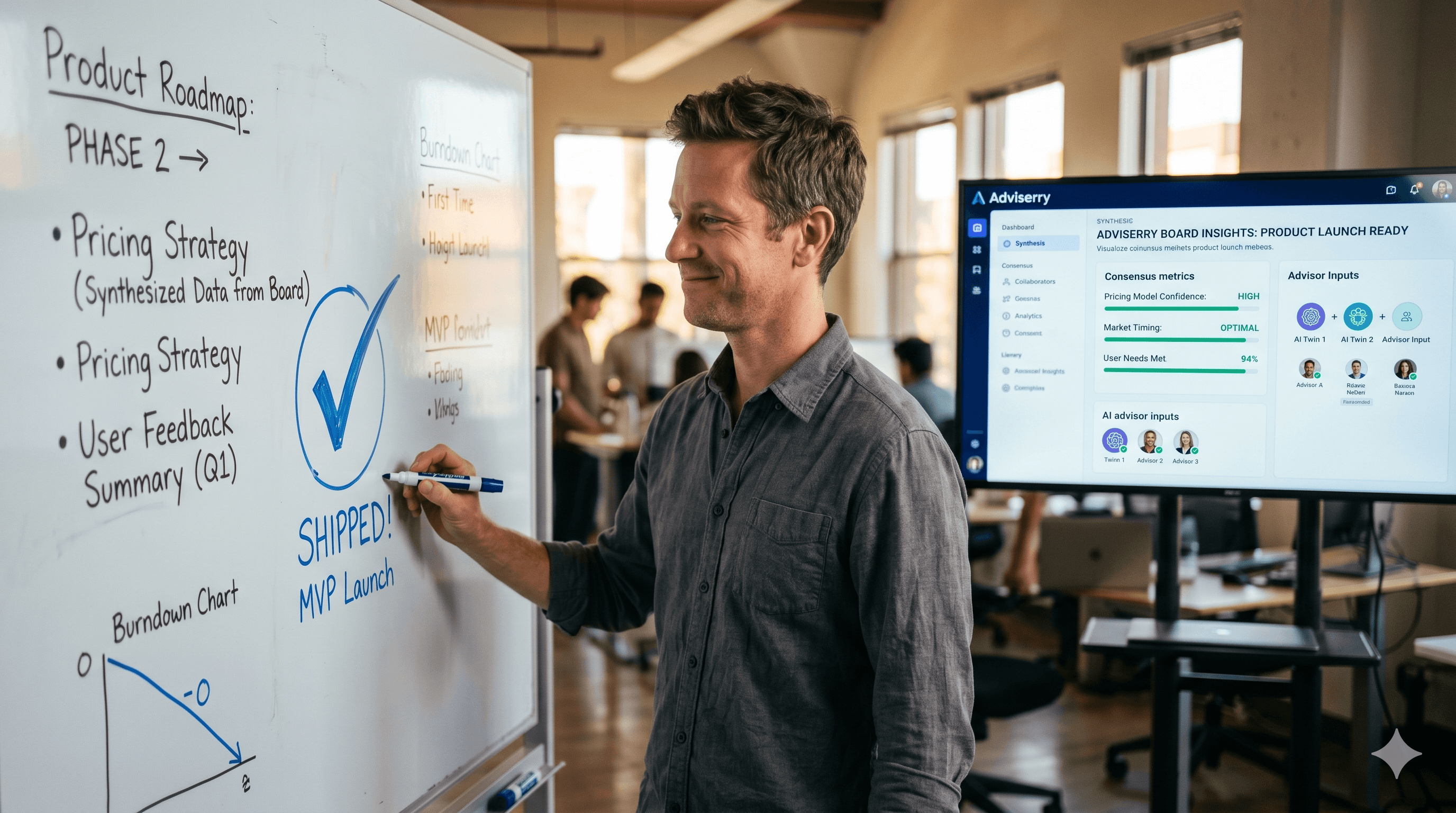
Decision fatigue is real, and it compounds. Here's how having expert-backed answers on demand stops the second-guessing spiral and changes what you actually ship.
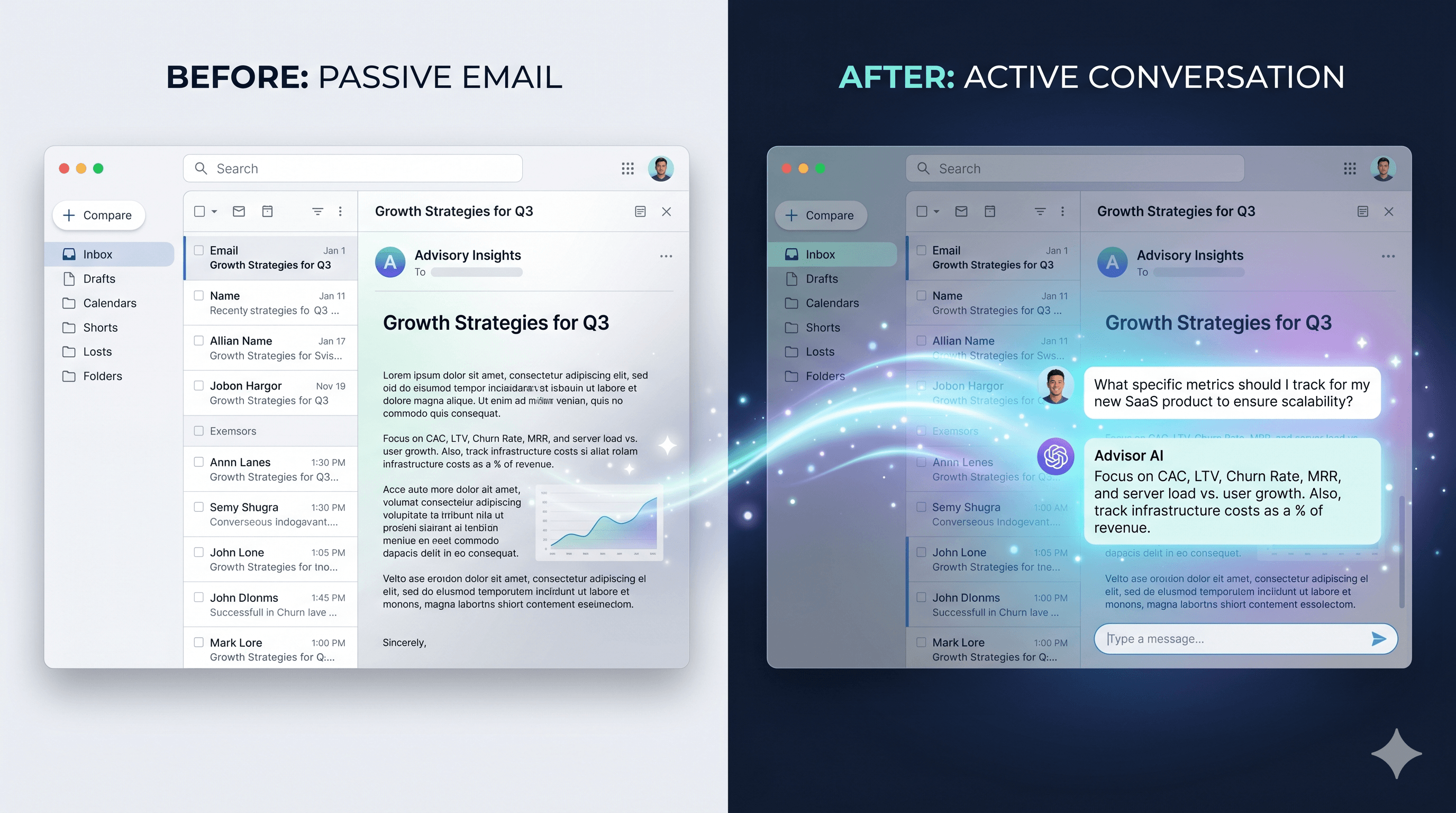
You subscribe to 30 newsletters and read maybe 20% of them. The other 80% is expert knowledge sitting in your inbox doing exactly nothing for your business.
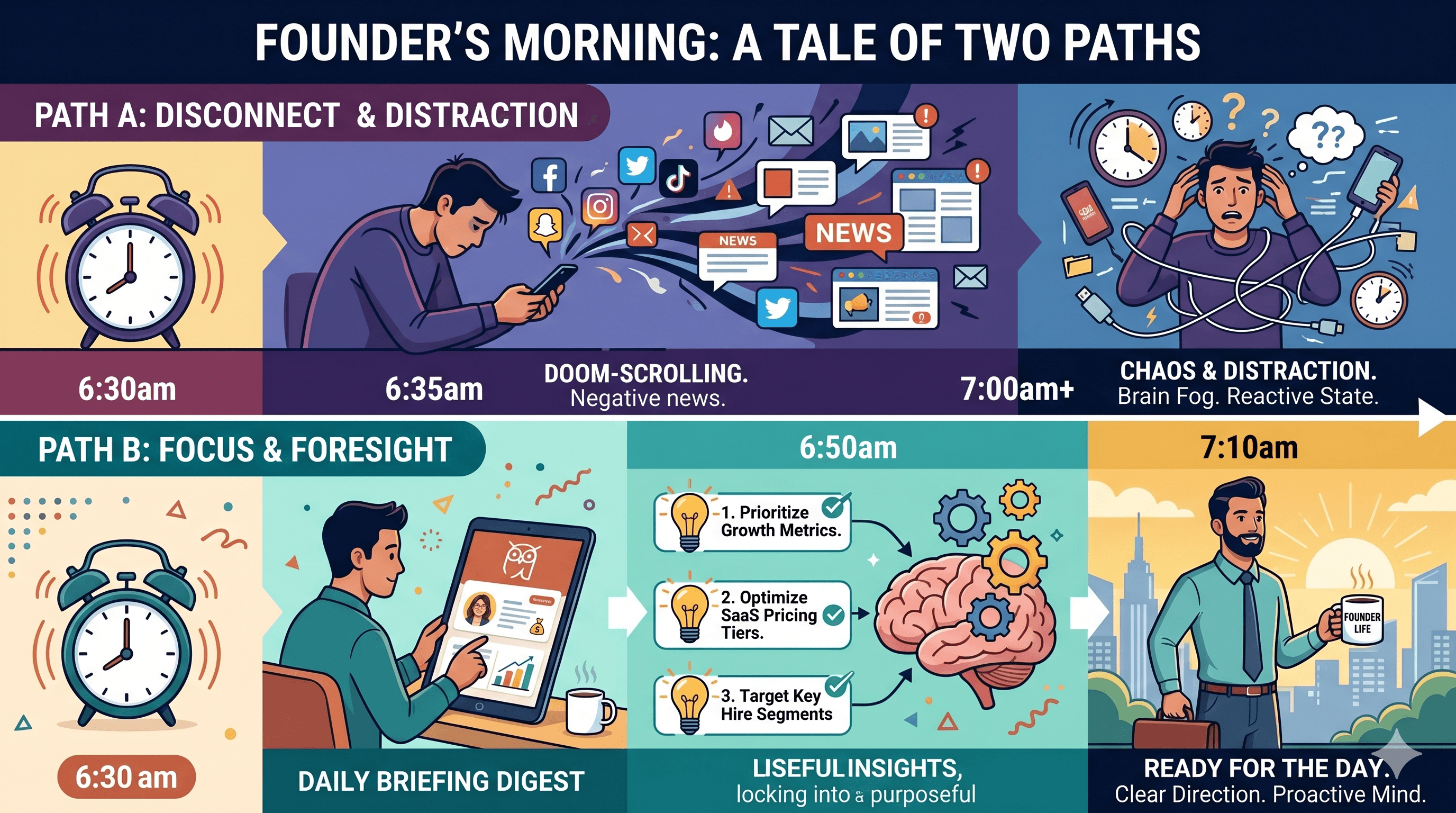
I replaced my morning doom-scroll with a daily briefing from my AI advisory board. Here's what it actually contains and why it changed my first 30 minutes.
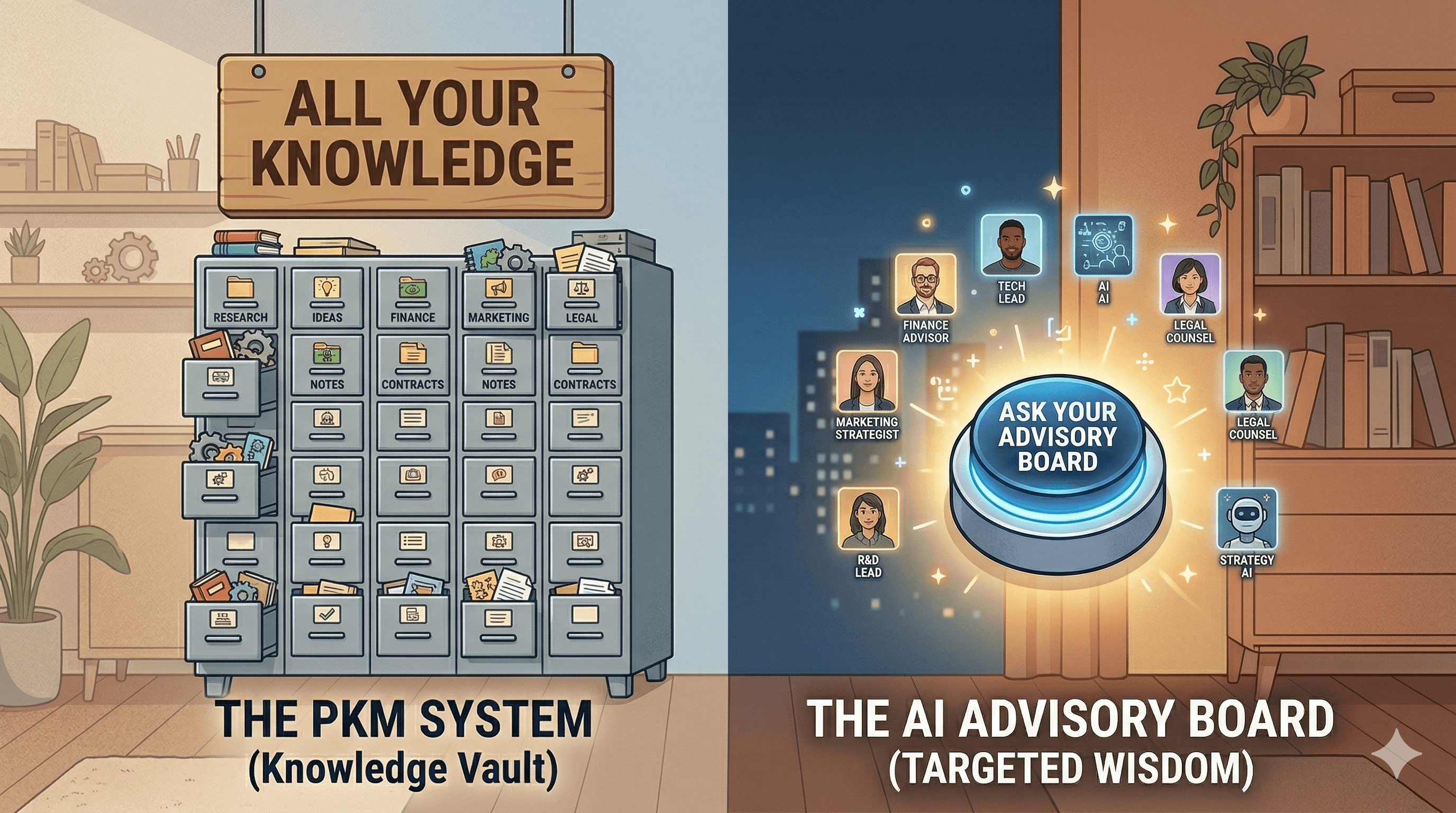
Notion AI helps you organize your notes. Mem helps you find them again. Readwise reminds you they exist. None of them tell you what to do with any of it.
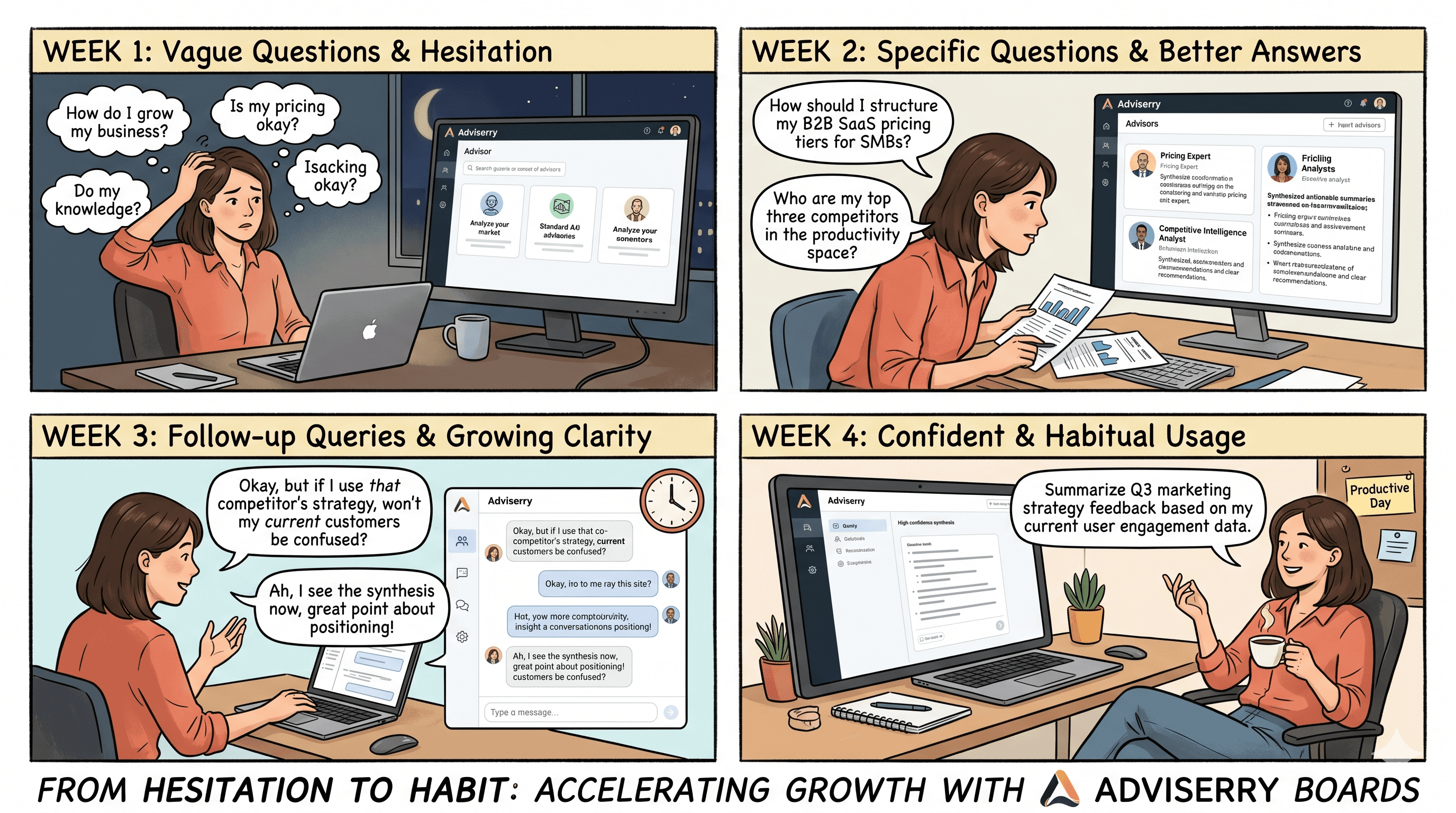
What actually changes over a month: the setup takes a day, week one is unlearning search-engine habits, and week two is where the context work pays off.
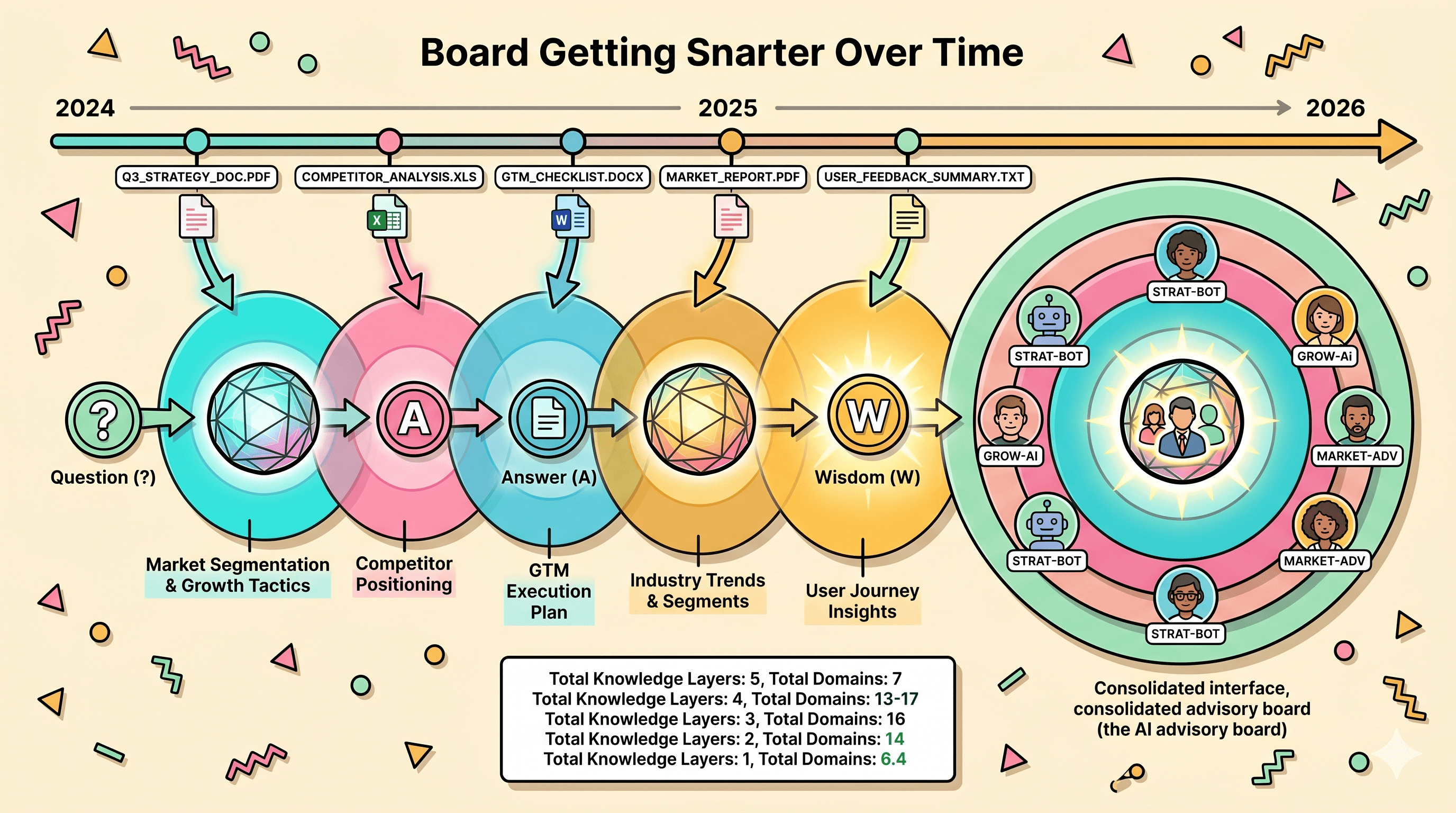
Unlike a search engine, an AI advisory panel remembers your pricing model, ICP, and challenges, so it gets more useful over time. How panel memory works.
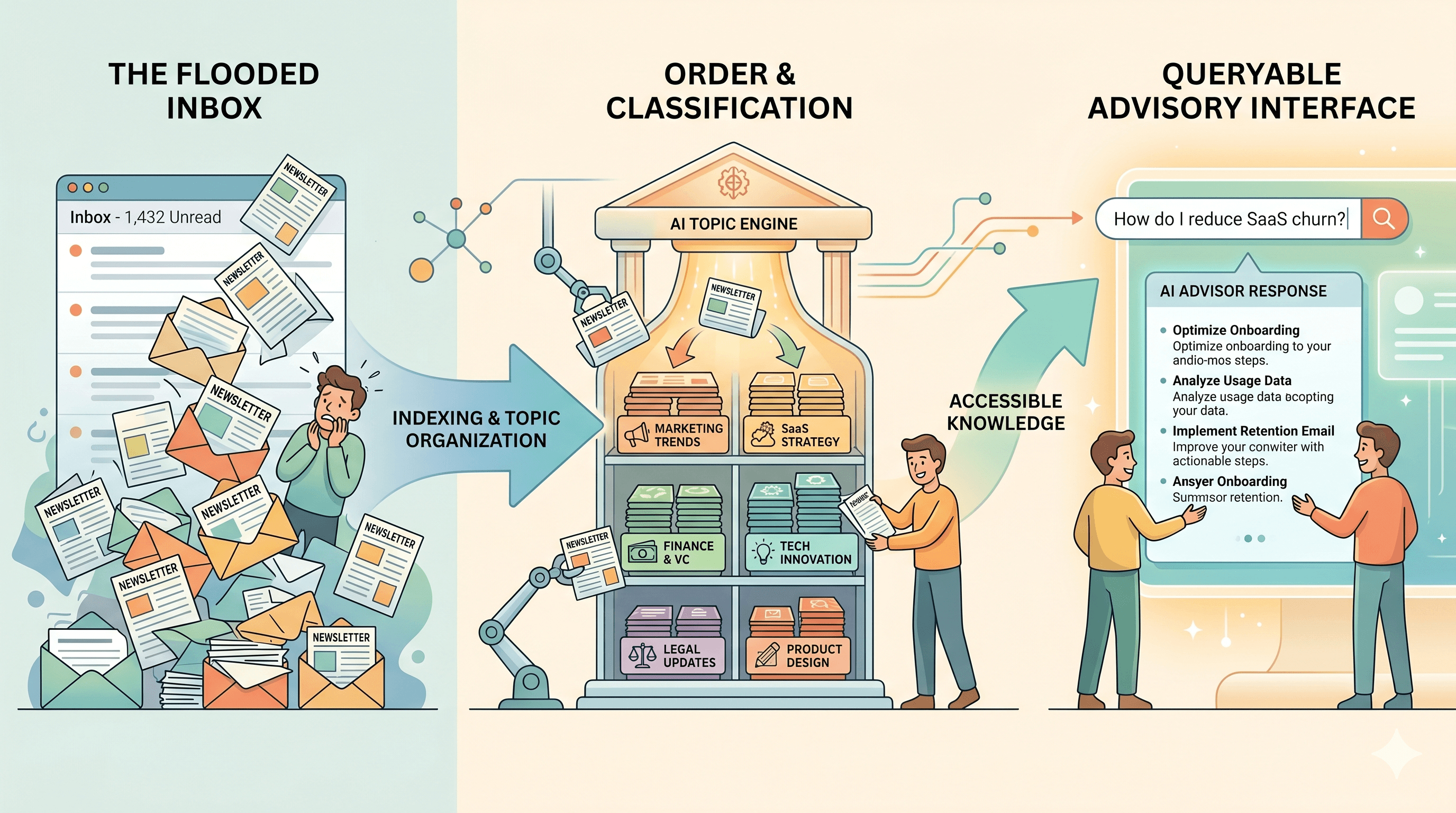
Knowledge workers subscribe to 13 newsletters on average but read only 20%. Why the consumption model is broken, and what works instead.
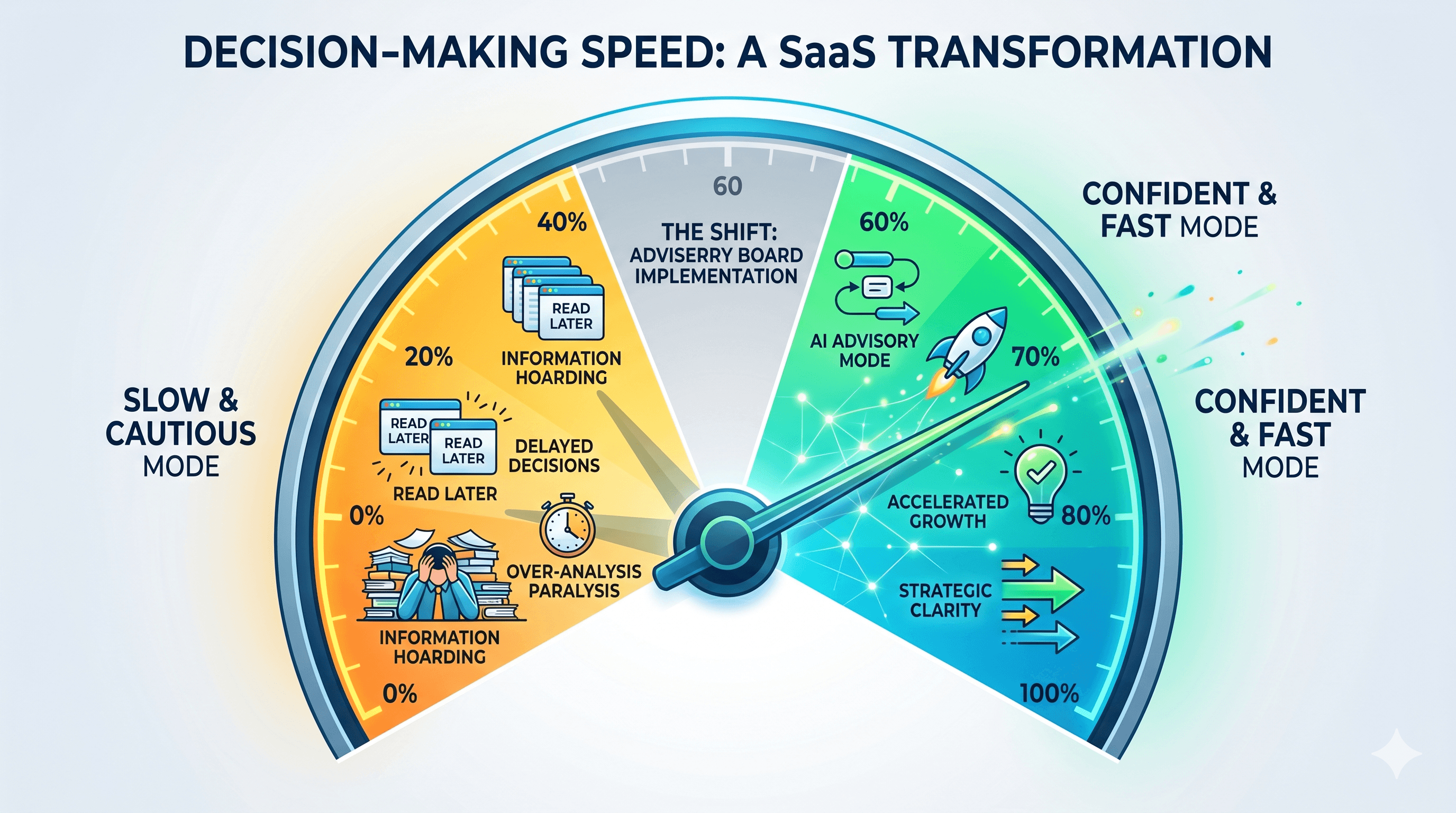
The shift from consuming more information before deciding to having expert perspectives on demand, and how it changes founder operating speed.

Your Tuesday 2pm coaching call is not when your biggest decisions happen. They happen at 3am, on a Sunday, in the middle of a crisis. Here's why that matters.
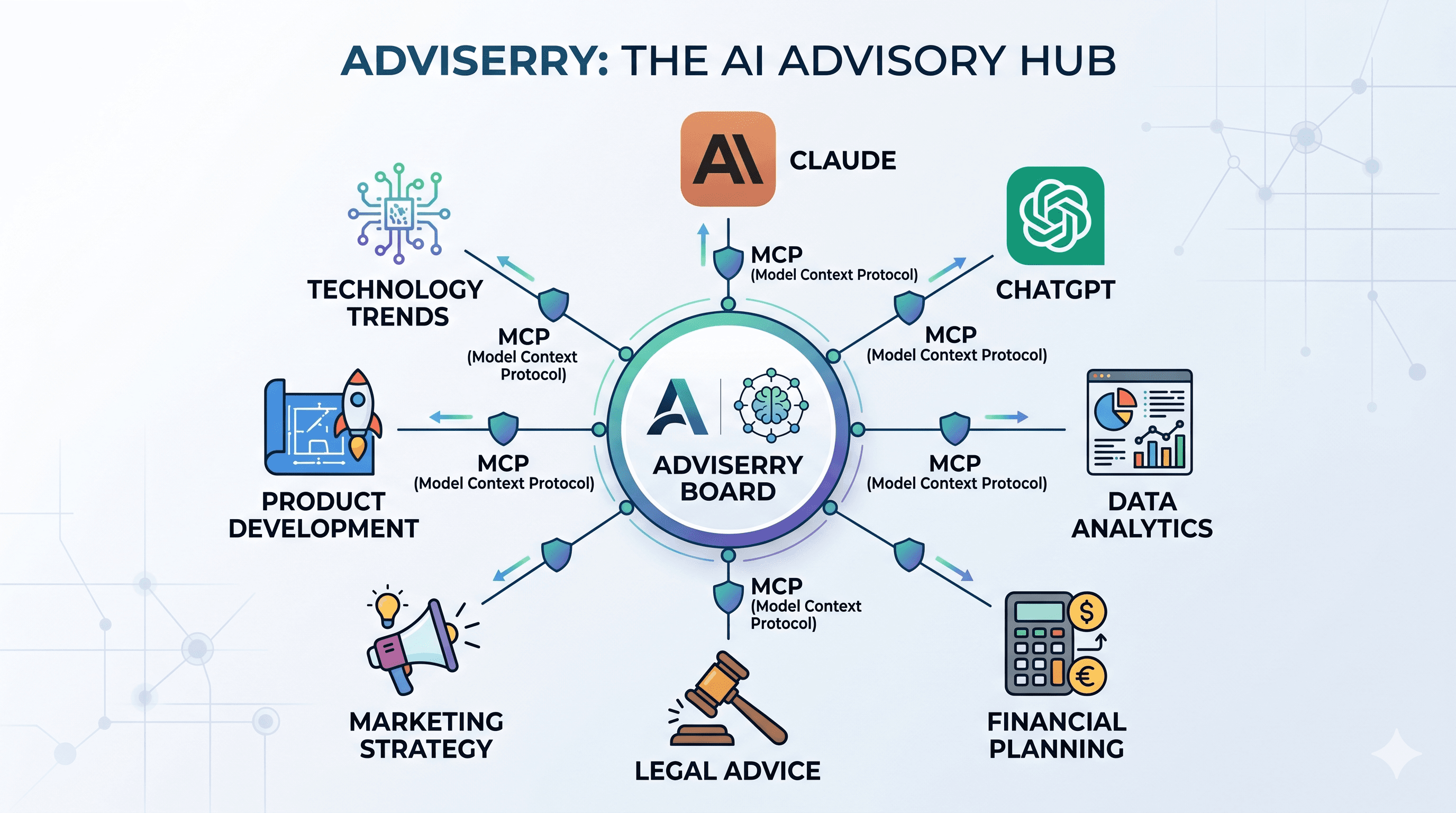
Model Context Protocol lets you query your AI advisory panel from the tools you already use: Claude, ChatGPT, and more. What that means in practice.
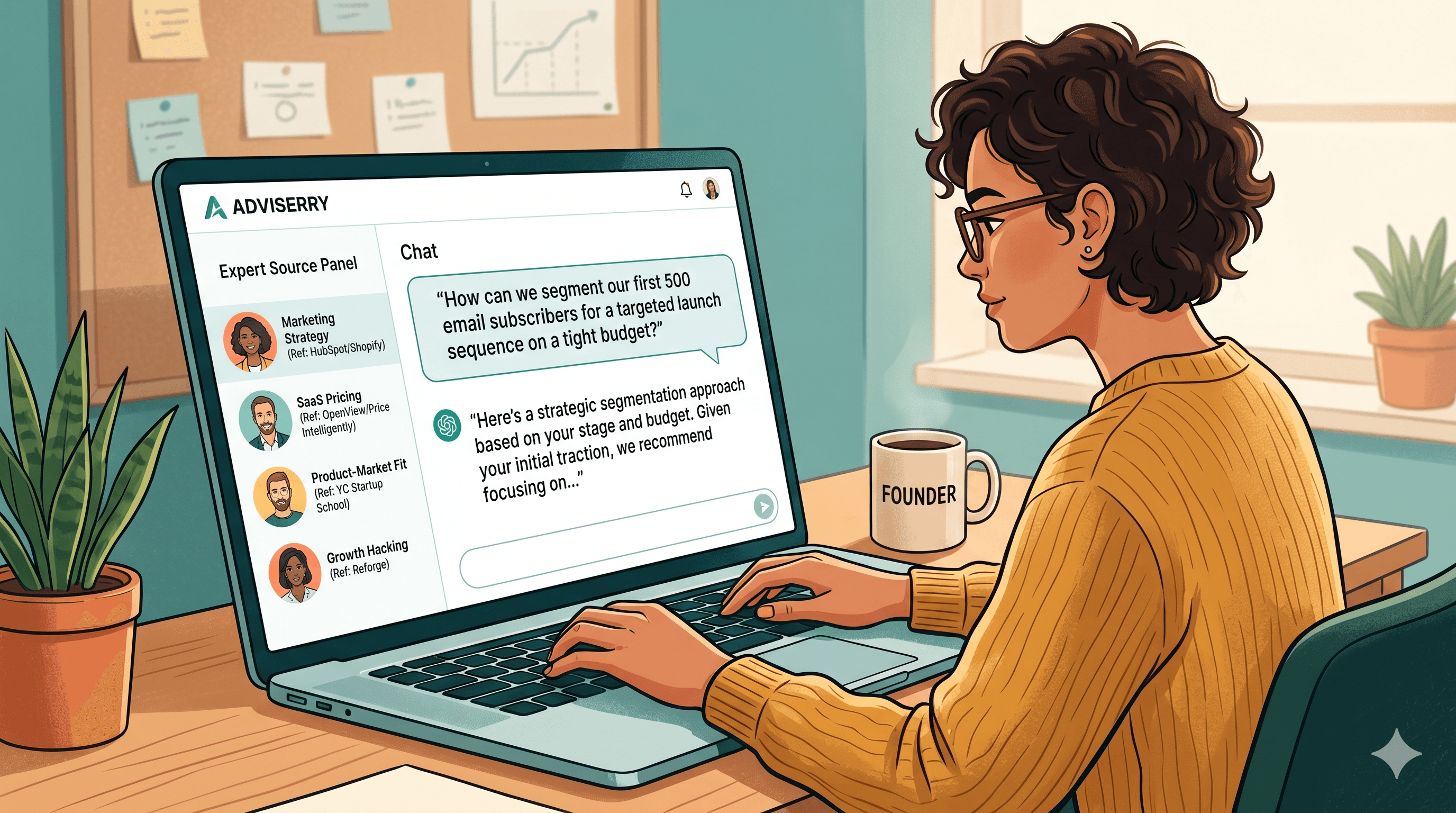
10 specific prompts for getting real strategic value from an AI advisory board, from pricing decisions to churn diagnosis to fundraising timing.
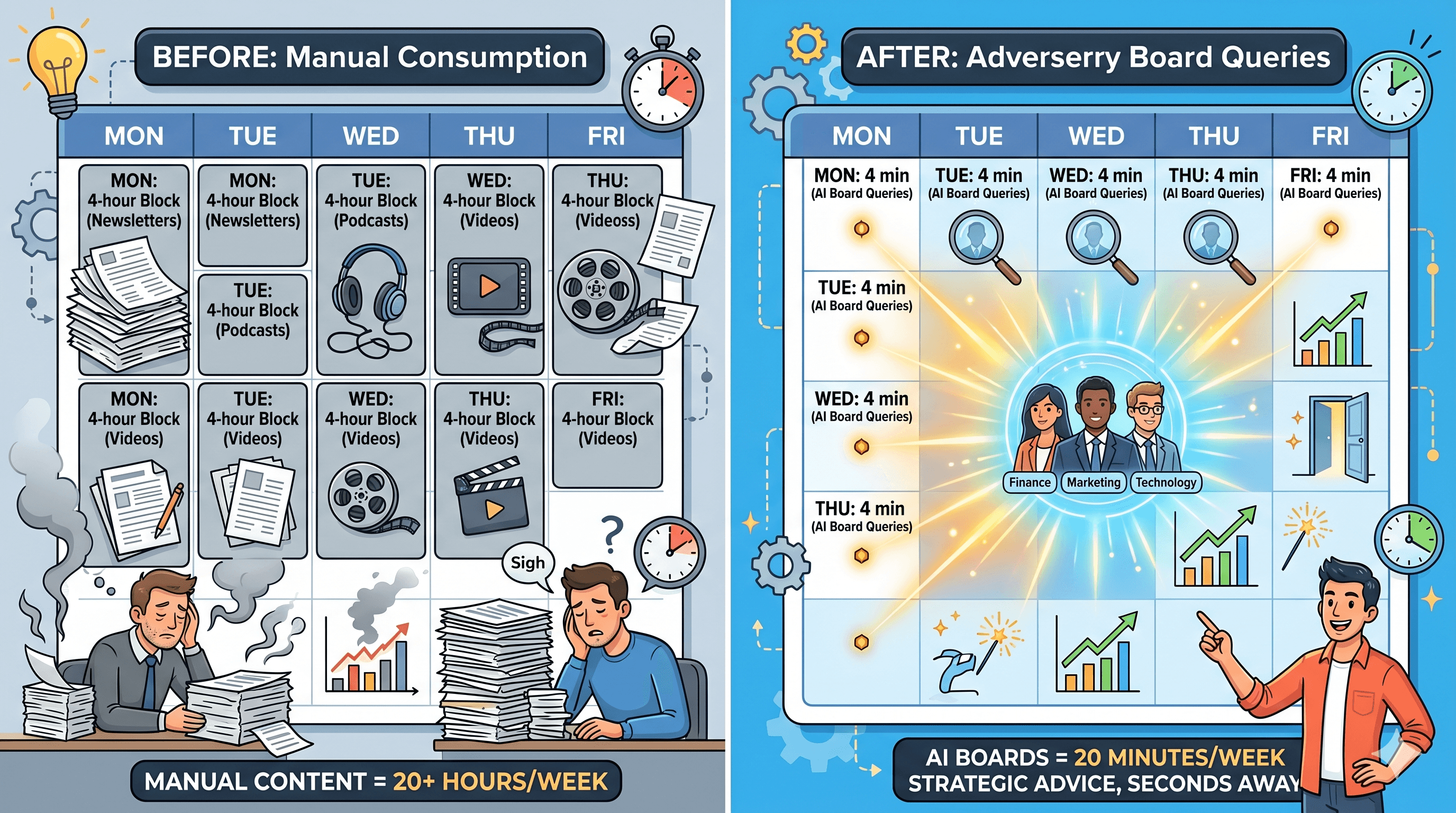
Consuming expert content is not the same as being able to use it. What changes when the archive becomes queryable instead of something you hope you absorbed.
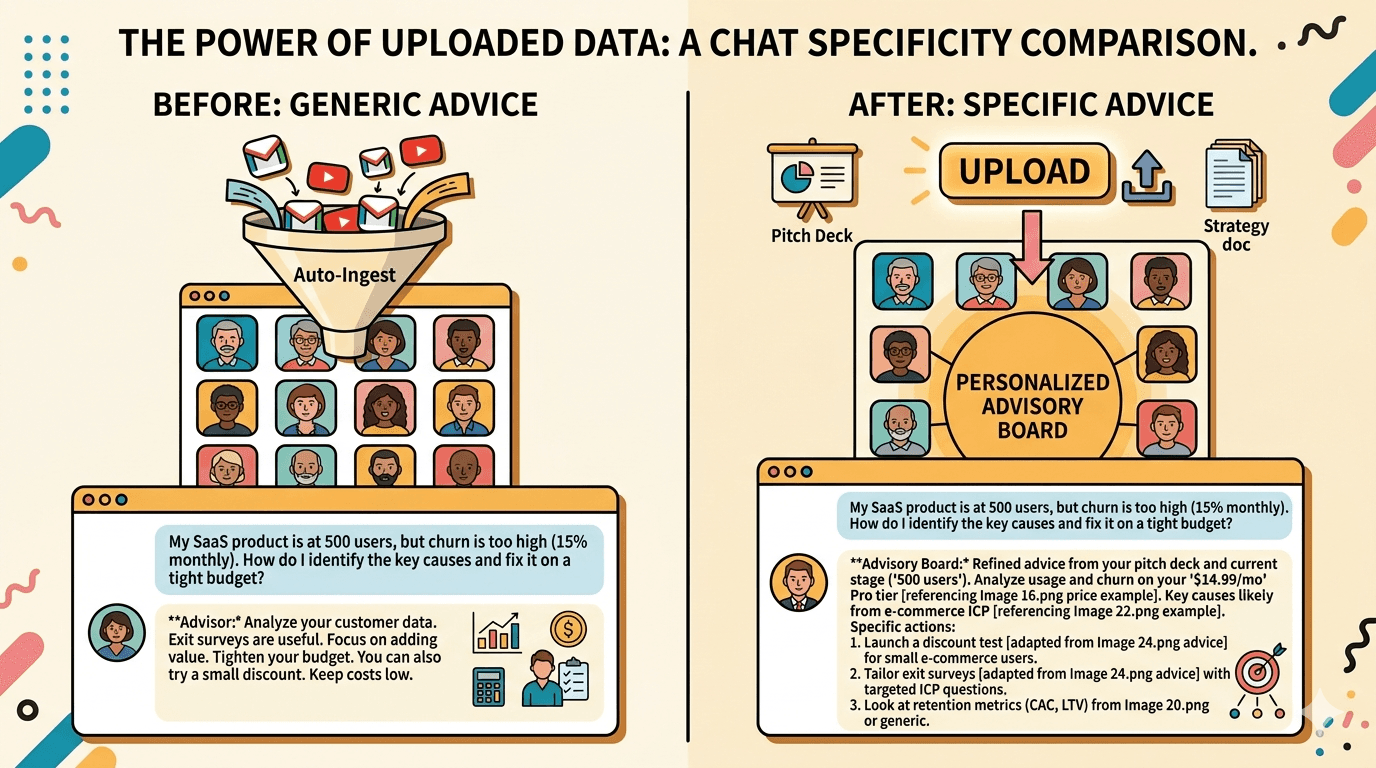
Uploading business documents gives your AI advisory panel the context a real advisor would need, which changes every conversation that follows.
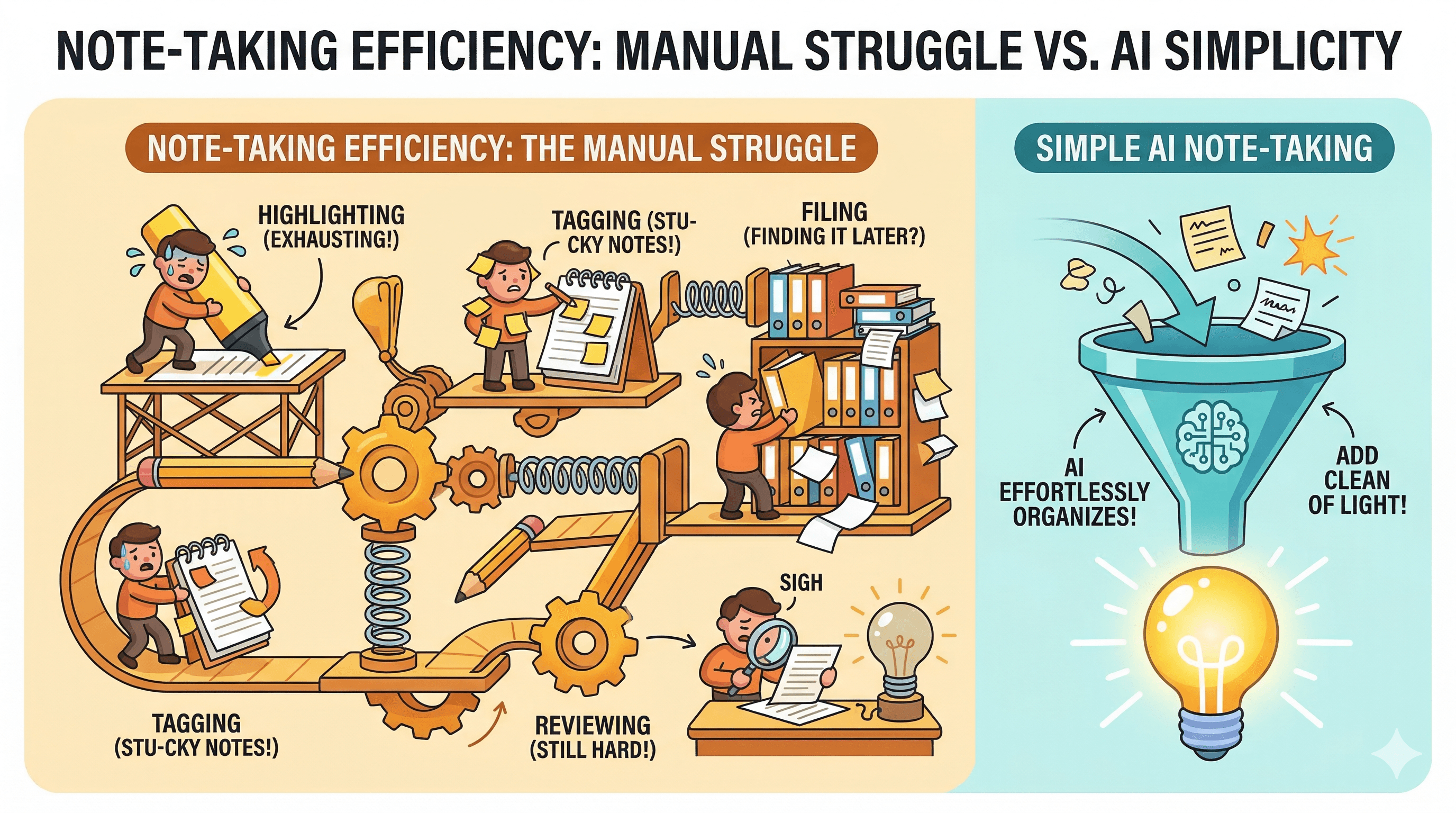
I've built and abandoned three second brains. The concept is right. The execution is wrong. They all require you to do the hardest part: and that's exactly where everyone gives up.
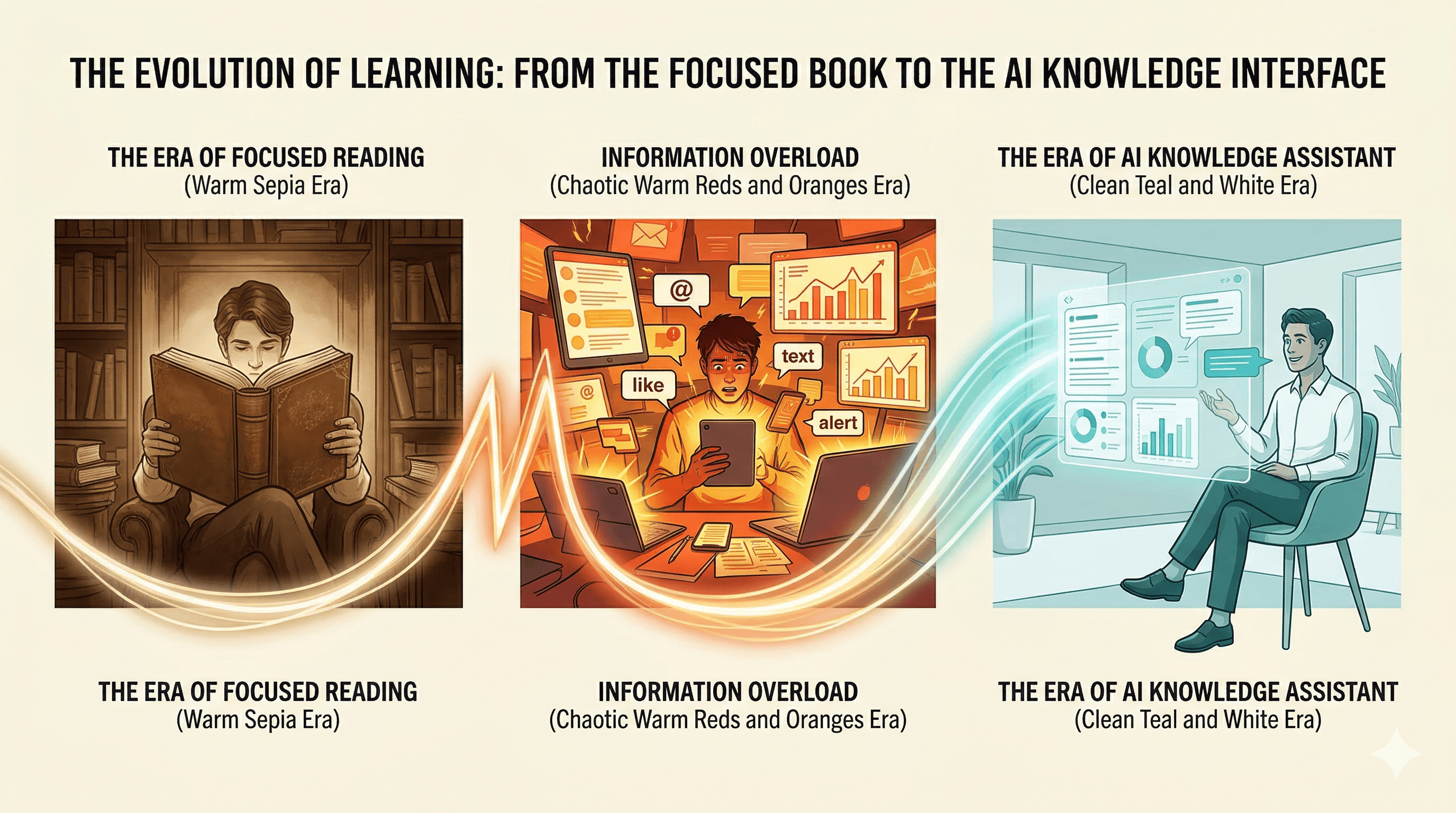
The way we've been learning from online content is fundamentally broken. Read, forget, repeat. AI changes the equation by making knowledge permanently accessible instead of temporarily consumed.
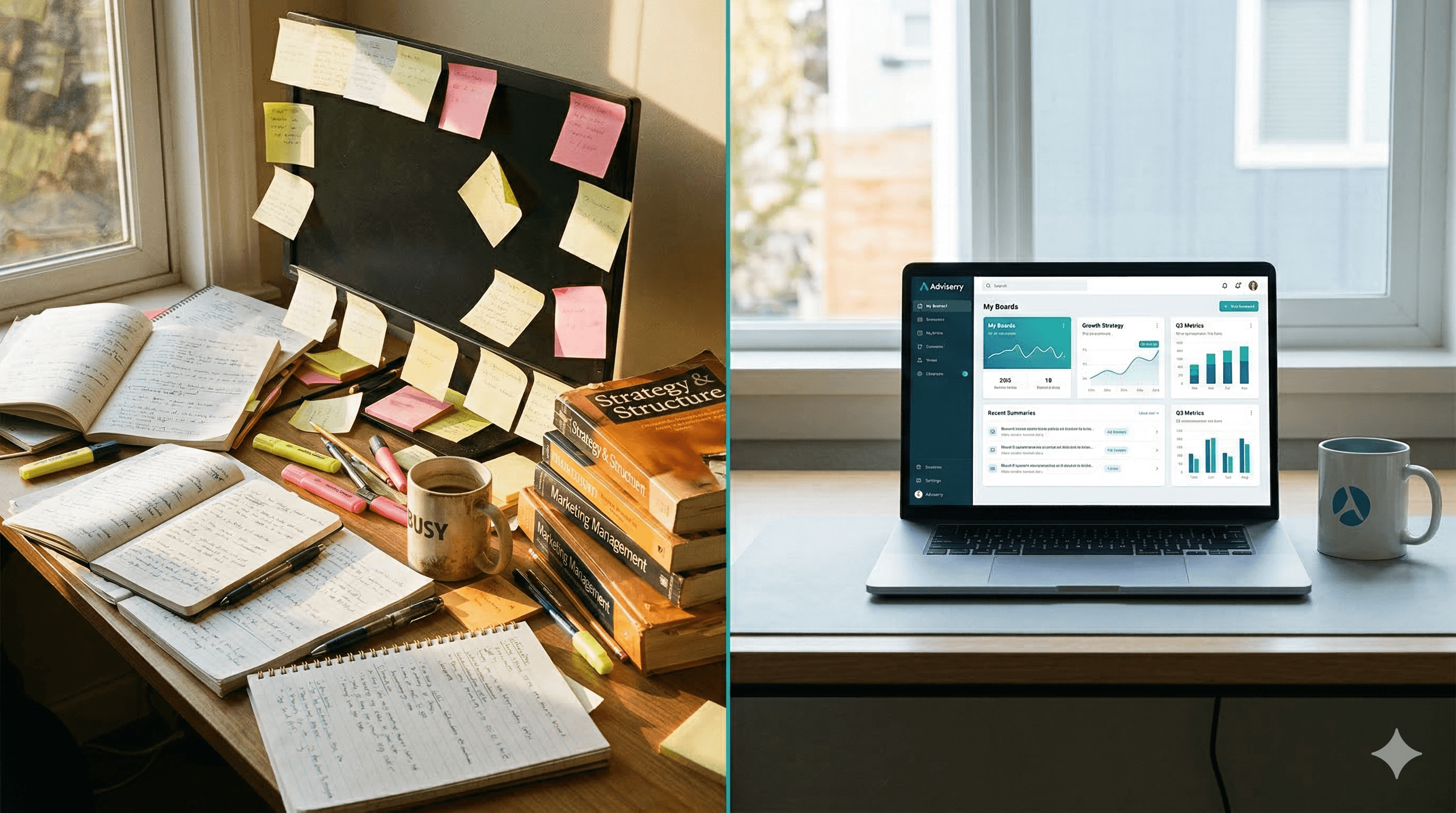
I tried manual note-taking for years. It worked great when I did it and I almost never did it. Here's an honest side-by-side comparison from someone who's been on both sides.
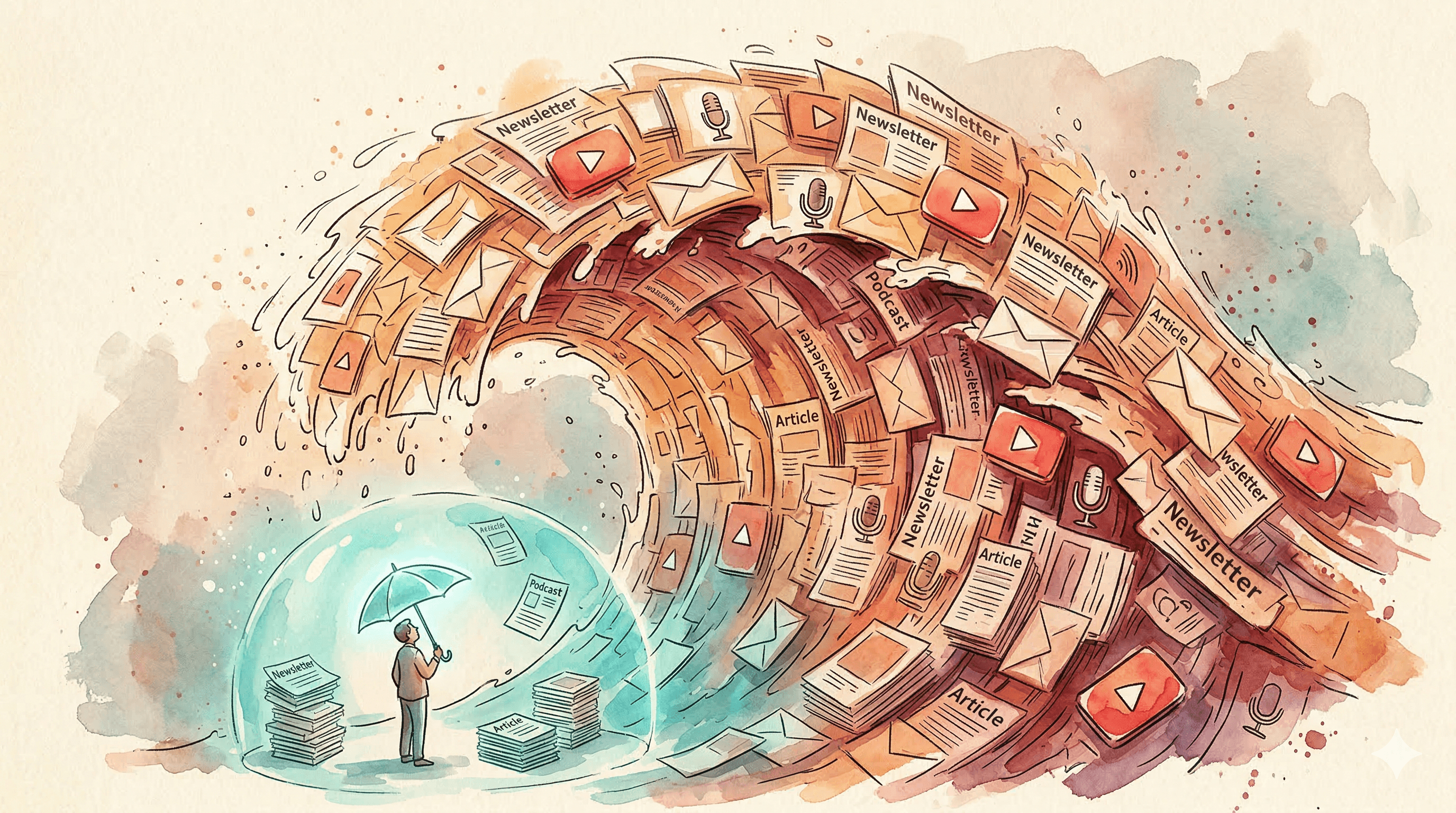
You're subscribed to the smartest people on the internet. You're retaining almost nothing they say. The problem isn't the content. It's the gap between subscribing and actually learning.
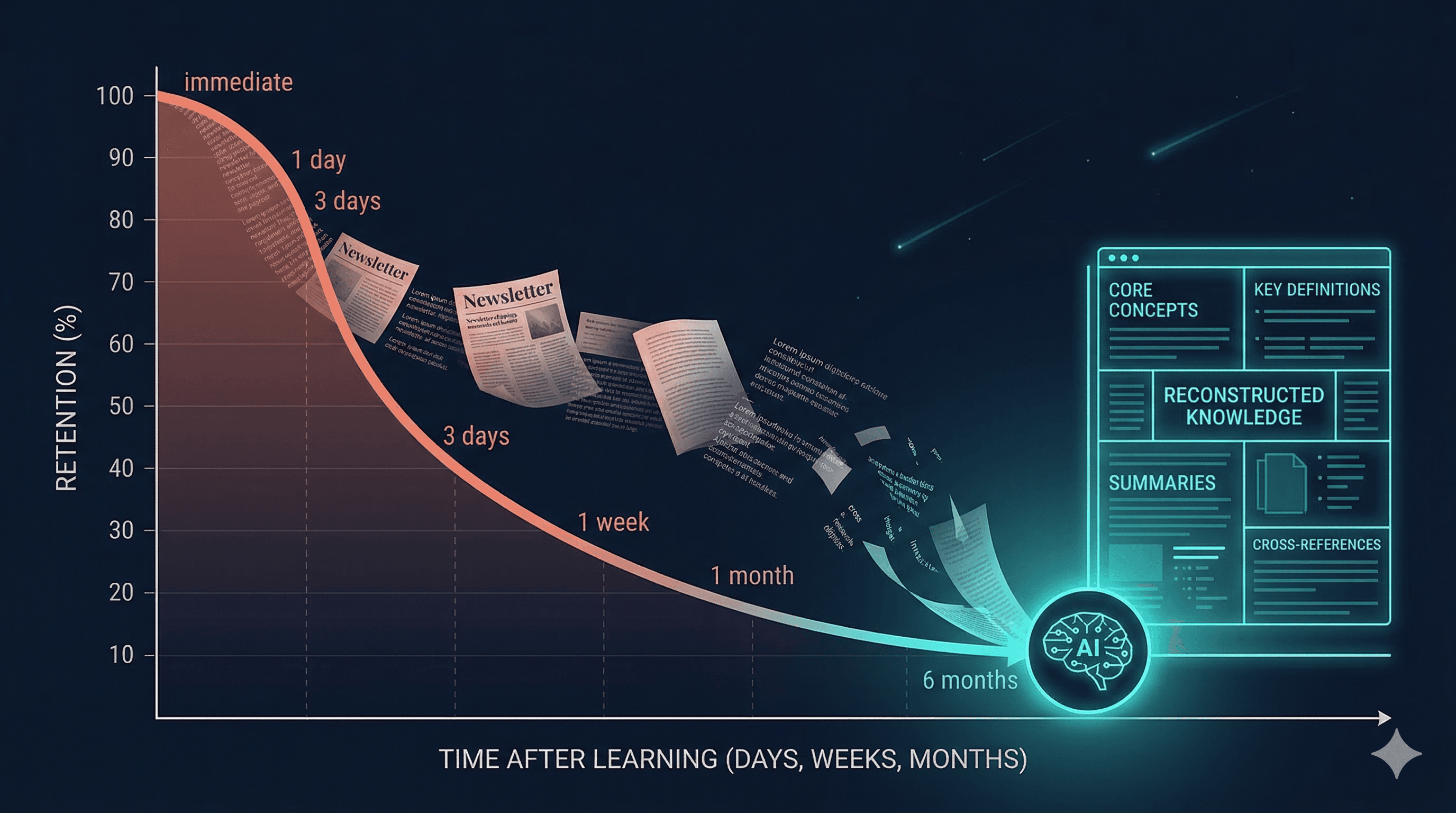
You're not lazy or stupid. Your brain is just optimized for survival, not for remembering that pricing framework from last Tuesday's newsletter. Science says so. Here's the fix.

I subscribe to 30+ newsletters and read maybe 3 per week. The daily digest from Adviserry tells me what I missed in 60 seconds. It's basically a newsletter about my newsletters.
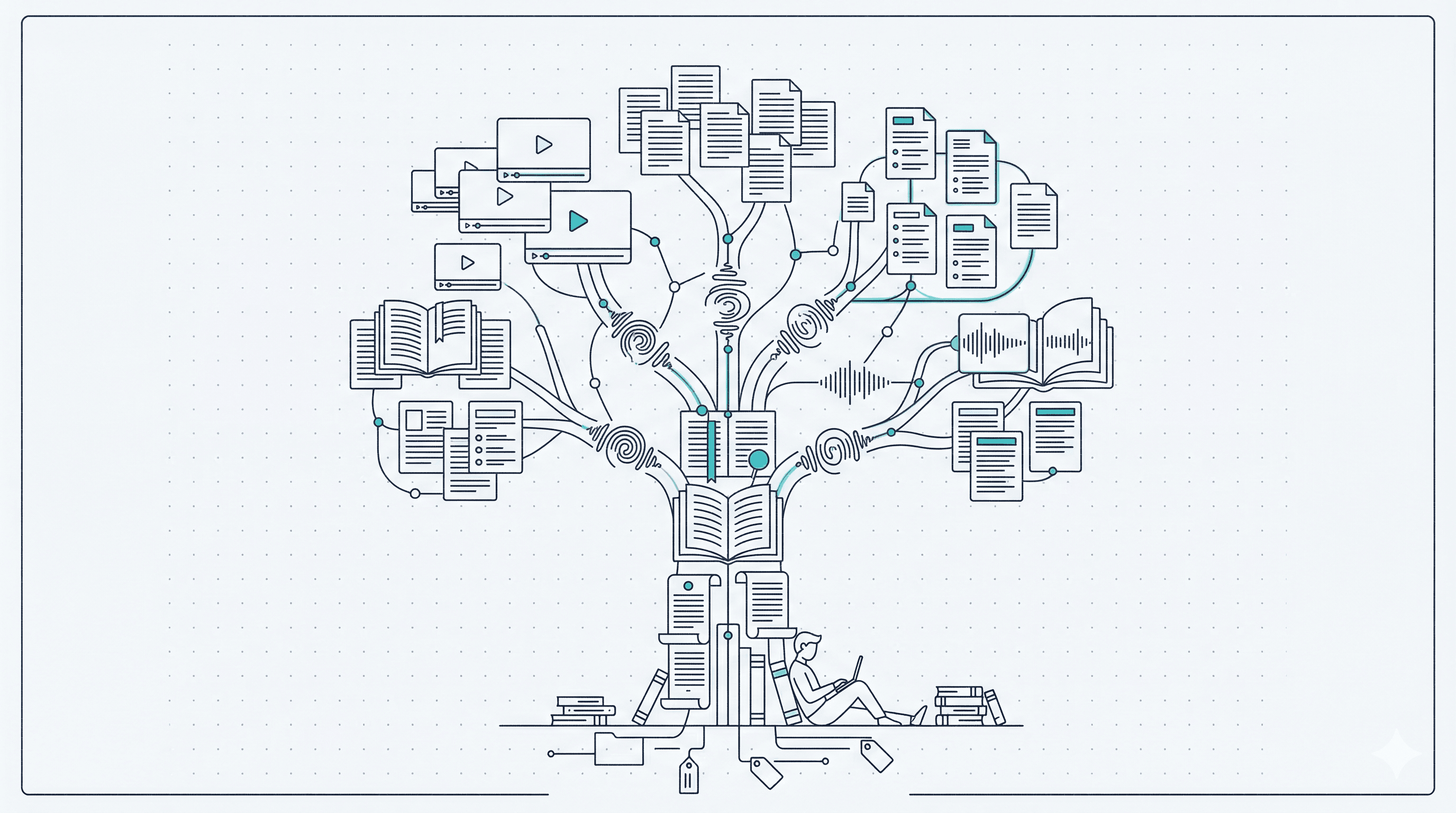
I've built and abandoned four personal knowledge bases in three years. The fifth one finally stuck, and it wasn't because I got more disciplined. The tool just stopped requiring discipline.
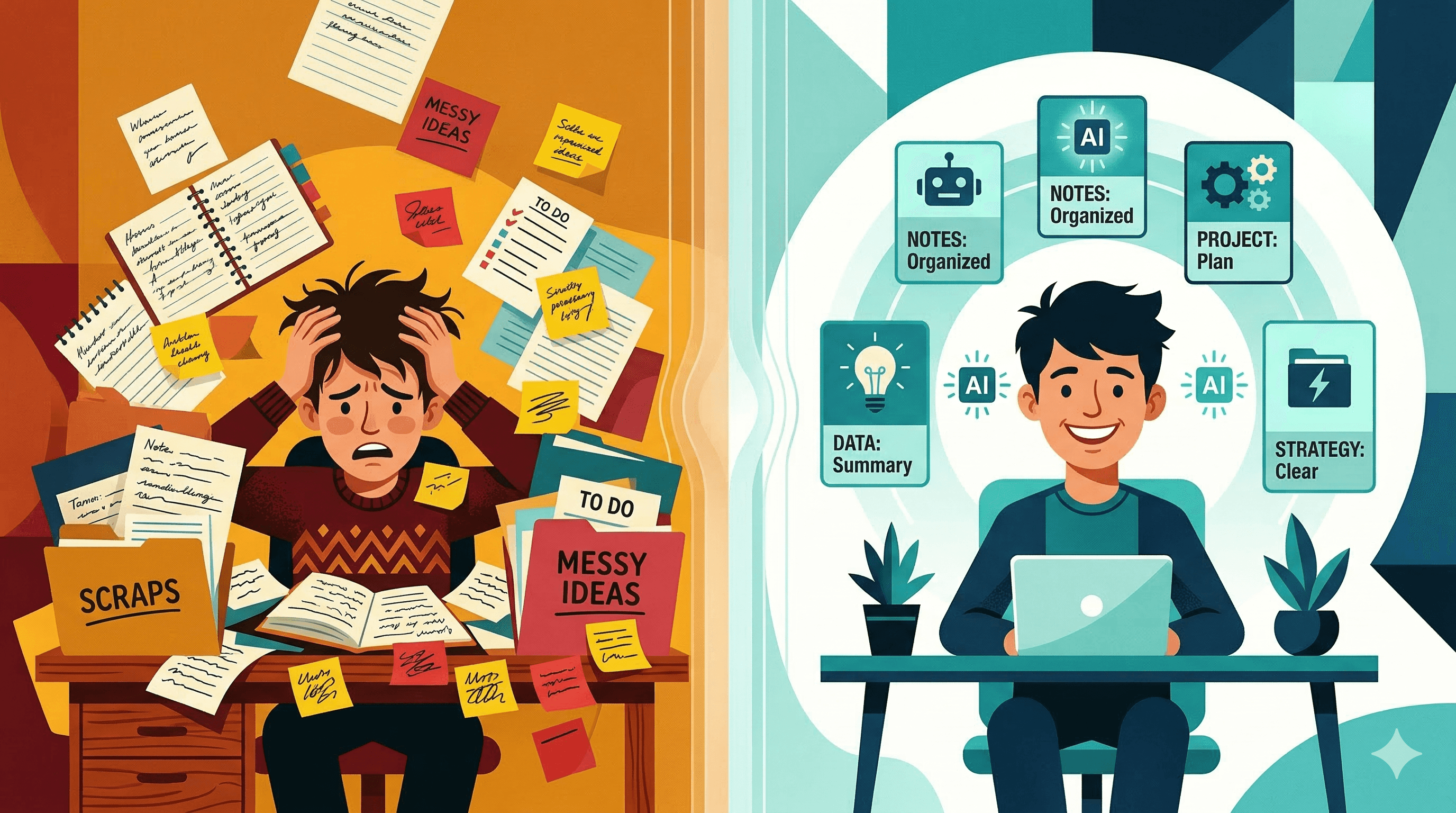
My note-taking system for podcasts was "pause, open Notes app, type three words I won't understand later, unpause." There has to be a better way. There is.
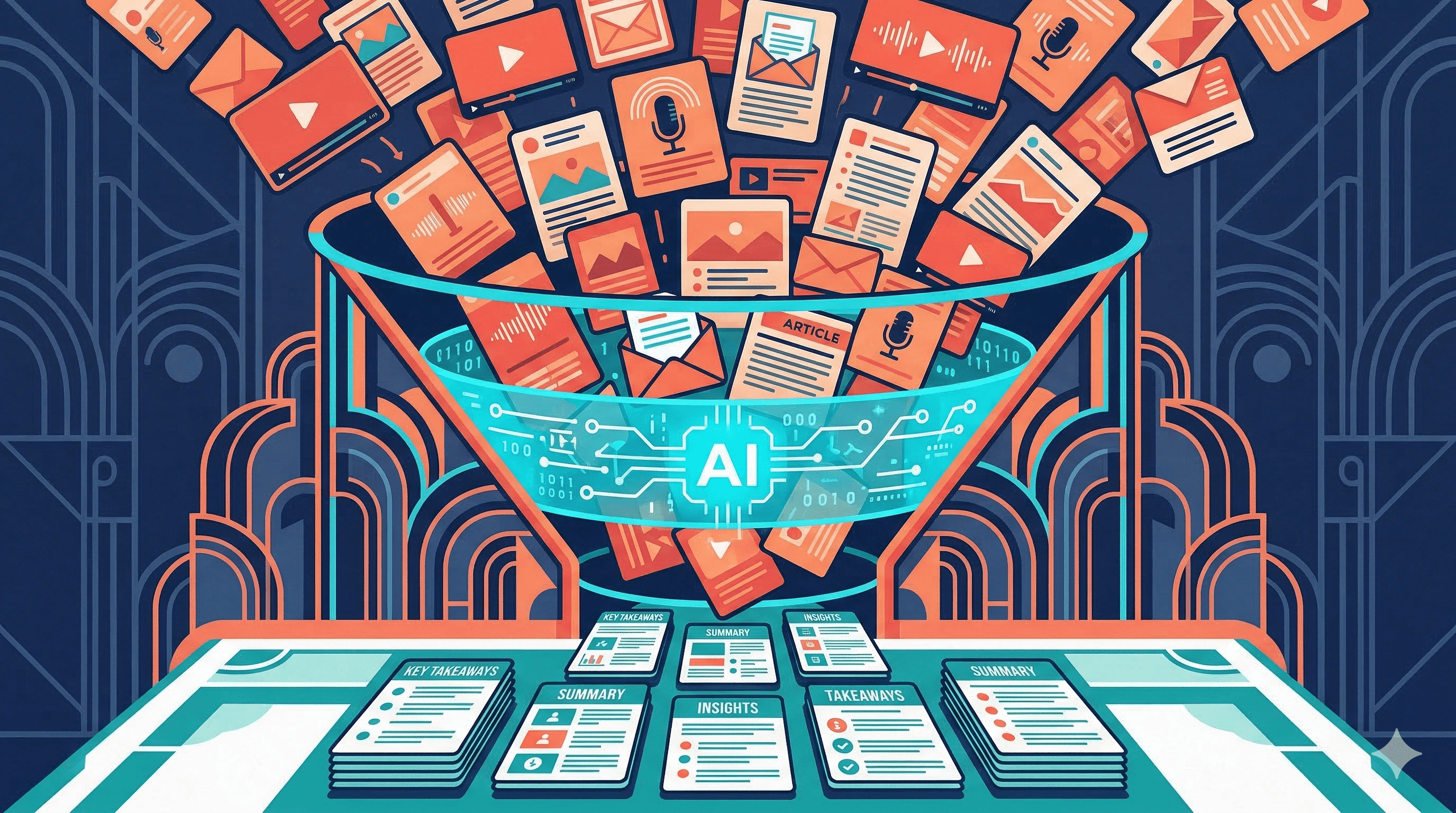
I follow about 50 content sources. I have time to actually read maybe 5 per week. Here are the AI tools that help me get the value from all 50 without the guilt of 45 unread tabs.
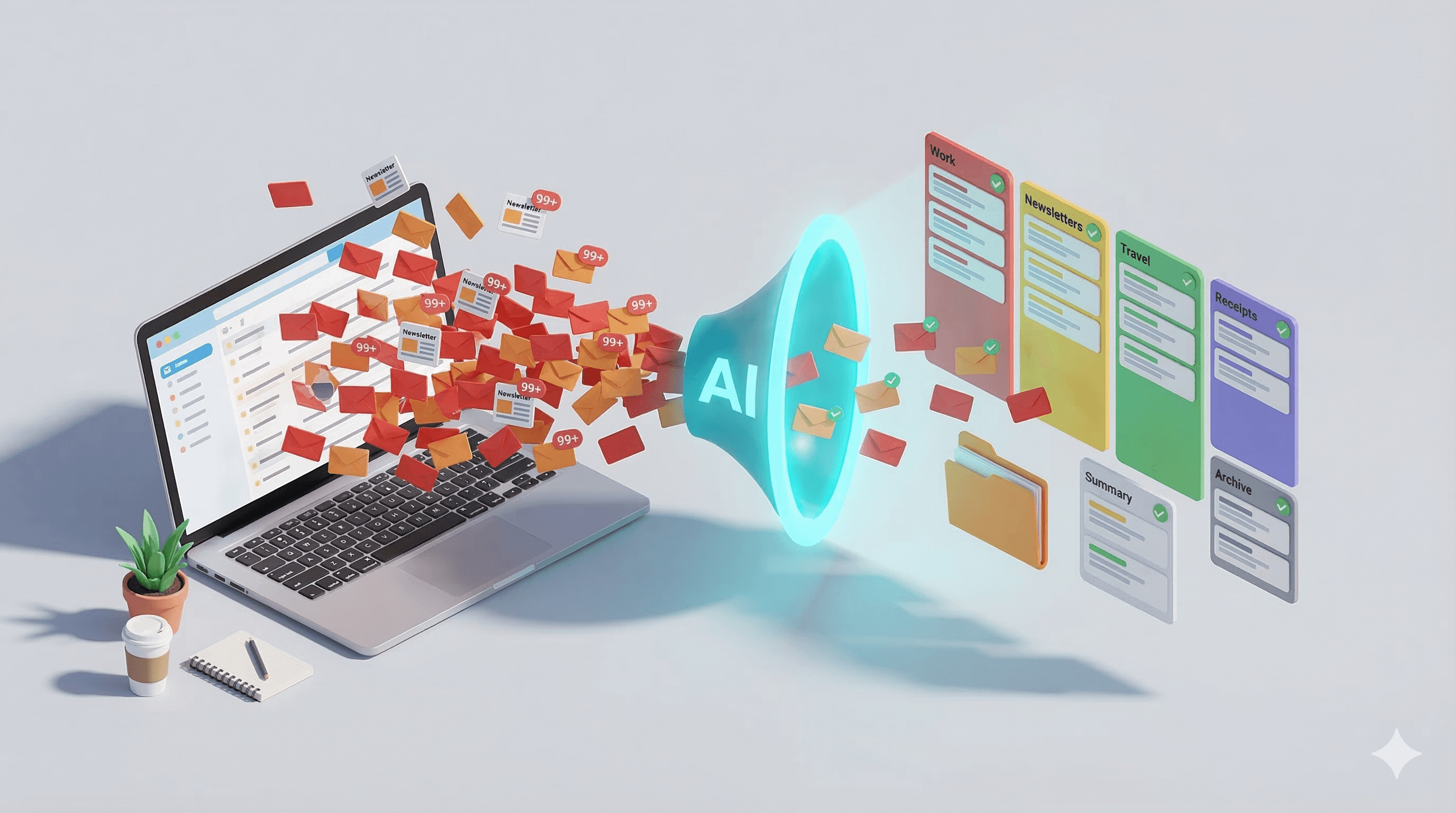
I subscribe to 47 newsletters. I know this because I recently connected my Gmail to a tool and it told me. I did not think it was forty-seven. Here's how to tame the chaos.
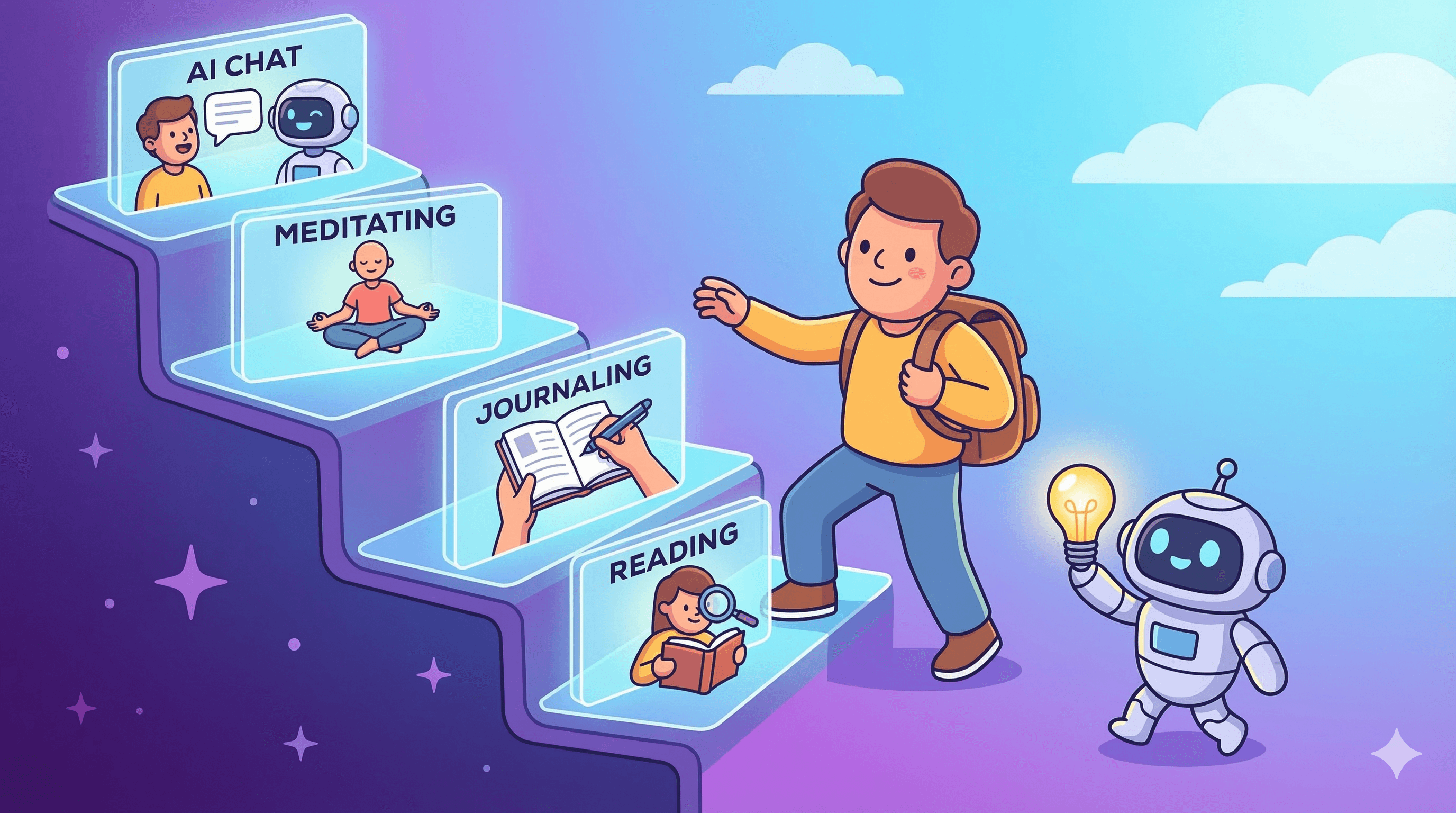
I made a resolution to read a book a week. I made it to February. Here are the AI tools that actually helped me learn more without requiring me to become a fundamentally different person.
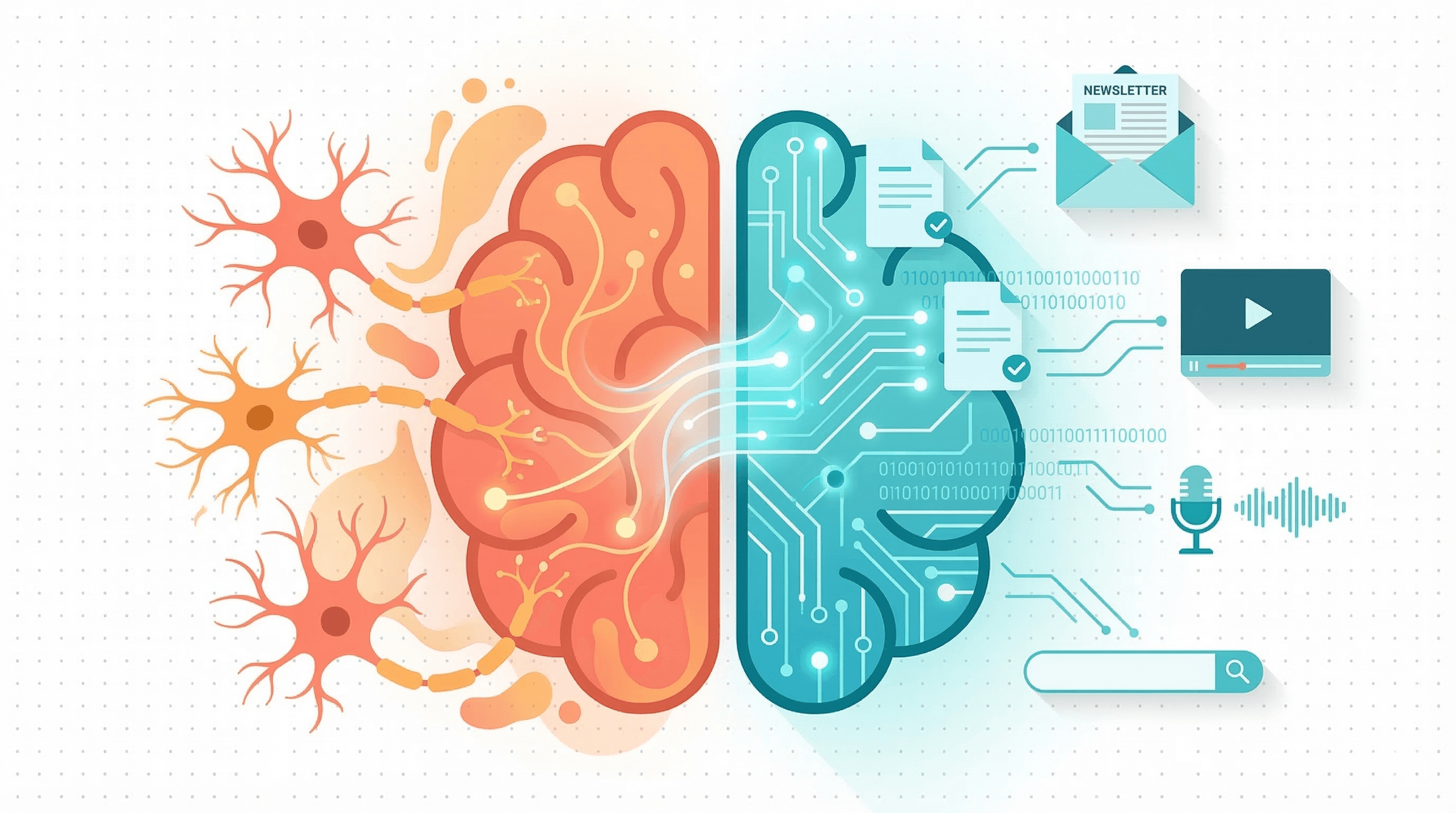
An AI second brain captures what you read and answers questions from it later. Seven tools compared on capture, retrieval, and how much filing they demand.