The Daily Briefing That Replaced My Morning Scroll
The Daily Briefing That Replaced My Morning Scroll
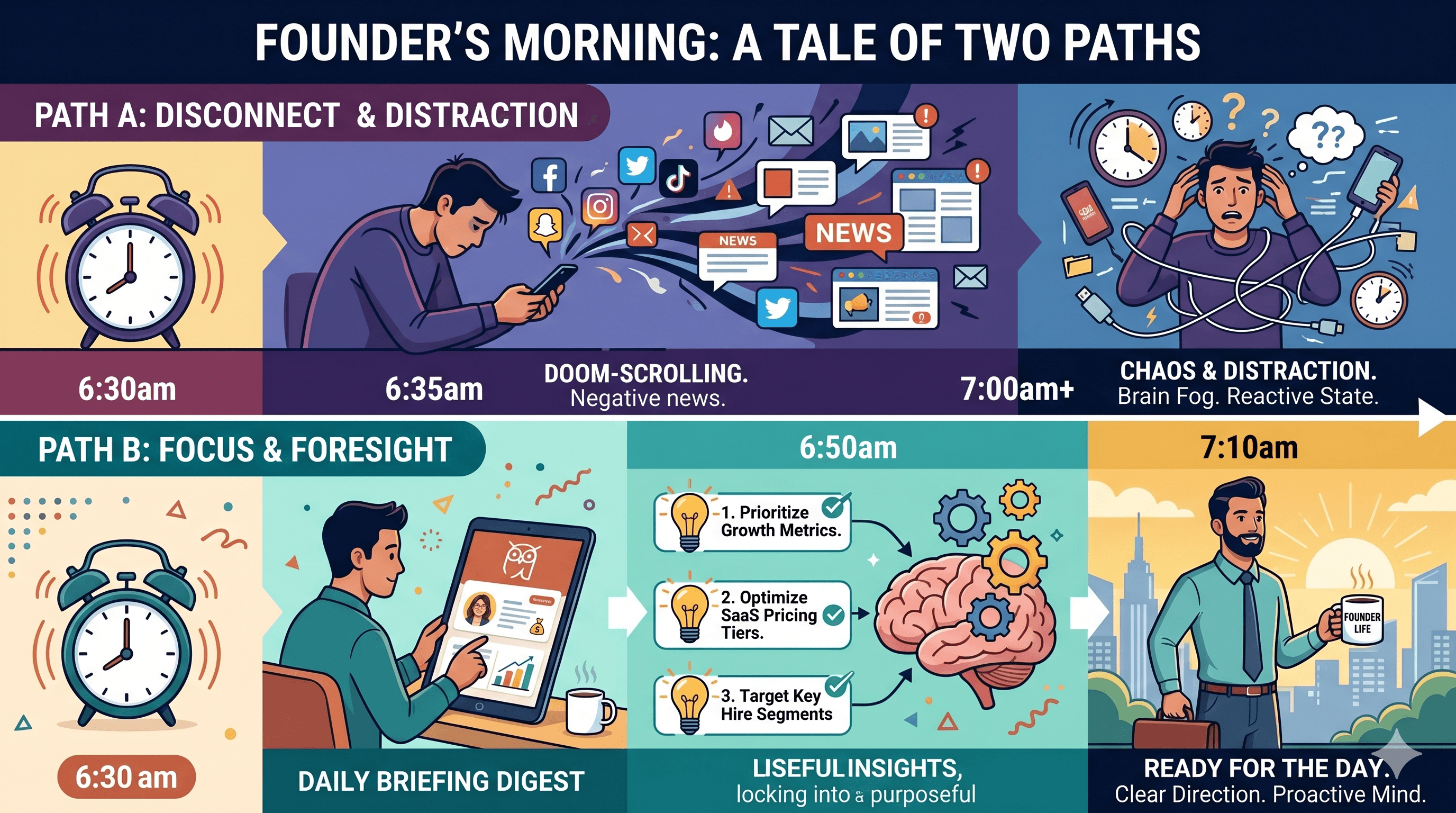
I used to start every day the same way. Phone on the nightstand, alarm goes off, scroll Twitter for fifteen minutes, feel vaguely worse than when I started, open email, stress about the work ahead, occasionally find something useful buried in a newsletter I barely remembered subscribing to.
Productive? No. Changing it was hard? Also no. The habit was just the path of least resistance, and I was tired when I woke up.
The thing that eventually replaced it wasn't discipline. It was a better feed.
The problem with the morning scroll.
I don't think Twitter/X is evil. I don't think Hacker News is destroying your focus. I think they're optimized for engagement rather than utility, and engagement and utility are two very different things. The content that makes you click, react, and keep scrolling is almost never the content that makes you a better operator.
The expert newsletters I subscribe to are different. They're not optimized for virality. They're written by people who have thought carefully about a specific domain and want to share that thinking. The problem is that they arrive when they arrive, which is not necessarily when I'm ready to absorb them or when they're relevant to my current challenges.
What a daily briefing from your advisory board actually looks like.
Every morning, a summary email. Not a dump of everything your sources published: a curated digest of the most relevant insights from your board, filtered by what's applicable to your current business context and challenges.
If you've flagged pricing as a current focus, insights related to pricing surface. If you've noted that you're thinking through your first sales hire, content about early-stage GTM and hiring appears. It's not what's newest. It's what's most relevant to you, right now.
The fifteen-minute scroll still happens sometimes. But I don't start there anymore. I start with the briefing. Which means I start the day with signal instead of noise, with expert insight instead of hot takes, with something that actually connects to the decisions I need to make.
What "connected to your actual business" means in practice.
This is the part that sounds marketing-speak-y until you experience it. "Connected to your actual business" just means: you uploaded context about what you're working on, and the system uses that context to filter and prioritize what it surfaces.
If three newsletters this week published something about pricing strategy and you're actively working through a pricing decision, those insights bubble up. Not because the AI is doing anything magical. Because you told it what matters to you, and it remembered.
That's the version of a morning reading habit that actually pays off.
Keep Reading:
- How I Use My Daily Digest to Stay on Top of 30+ Newsletters: the practical daily digest setup
- 8 Best Ways to Organize Your Newsletter Subscriptions with AI: newsletter organization strategies
- The Information Overload Problem: why passive consumption doesn't work