How to Build a Personal Board of Advisors for Under $15/Month
How to Build a Personal Board of Advisors for Under $15/Month
Traditional advice on building an advisory board goes something like this: attend conferences, make connections, offer equity, schedule quarterly calls, repeat. This process takes 6-18 months, requires a network you may or may not have, and typically produces a board of 3-4 people you see four times a year.
Here's a different way. You can have it set up by Thursday.
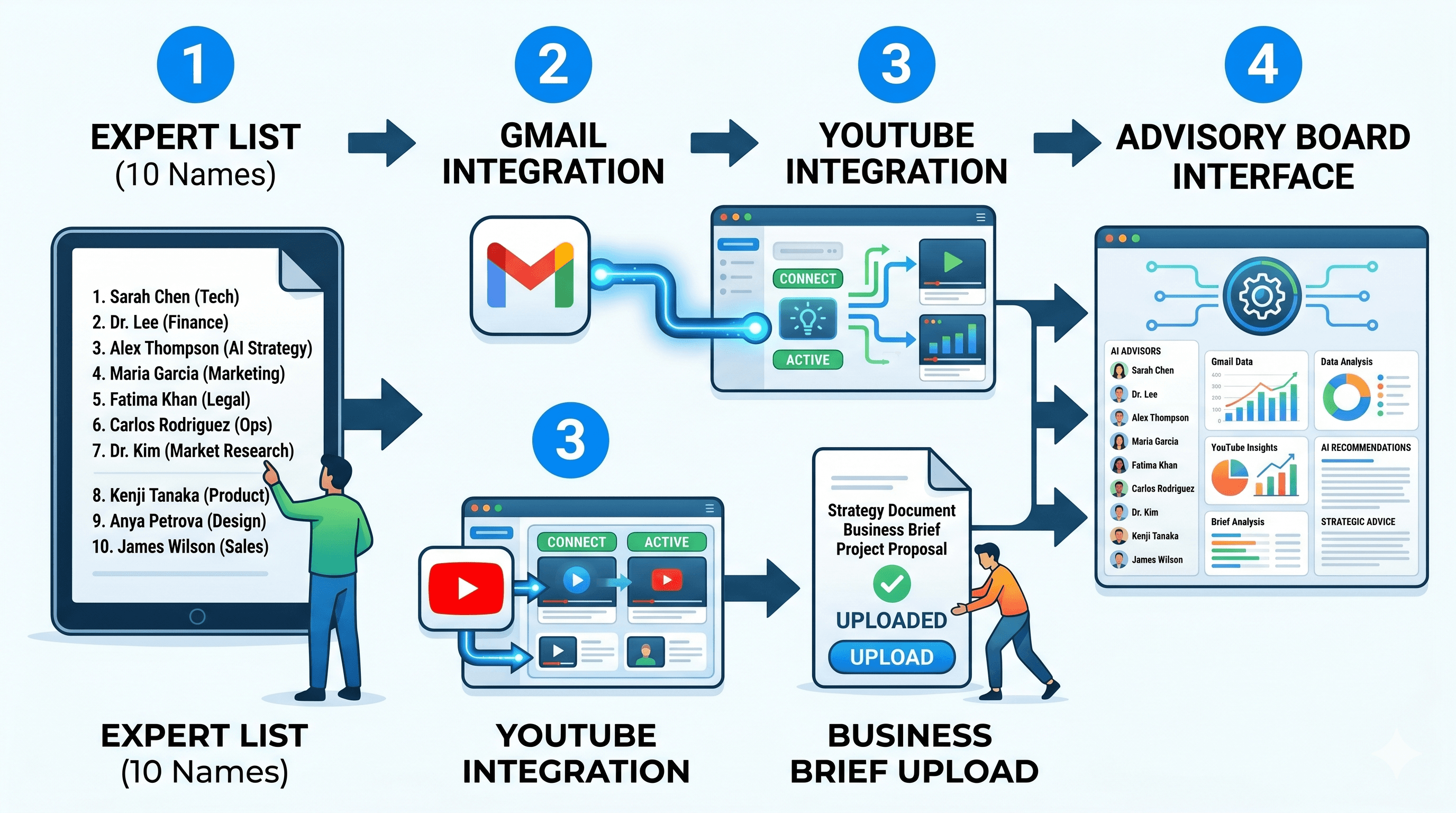
Step 1: Pick your 10 experts.
Start with the people whose thinking you already trust. Not generically admire: actually trust with specific types of decisions. Who do you turn to (mentally) when you're thinking about pricing? About hiring? About marketing? About fundraising?
For most founders I know, this list already exists in the form of newsletter subscriptions, podcast follows, and saved YouTube channels. You're already following your advisory board. You just haven't organized it that way yet.
Write down 10 names. Don't overthink it. You can always swap people out later.
Step 2: Connect your email.
If your experts publish newsletters, connect your Gmail. That's it. The content they send you, which you were already receiving and probably not fully reading, becomes part of your board's knowledge base.
This step takes about 90 seconds. You're not giving up your inbox. You're giving your advisory board access to the content that's already arriving.
Step 3: Add YouTube channels.
Most of the best founders and operators are on YouTube. If someone in your expert list publishes video content (Hormozi, Lenny's podcast clips, whatever your specific corner of the internet looks like), add their channel. Transcripts become part of the knowledge base.
Step 4: Upload your context doc.
This is the step most people skip and the one that makes the biggest difference. Write a one-page brief about your business. Include: what you sell, who you sell it to, your current revenue stage, your biggest current challenges, and any context that would be useful for an advisor to know before you ask a question.
Your board can answer generic questions without this. With it, they answer your questions.
Step 5: Ask your first question.
Pick a real decision you're sitting on right now. Not a hypothetical. An actual thing you've been trying to figure out. Ask your board.
The first time you get back a response that draws on three different sources, cites specific frameworks, and actually addresses your situation, that's when it clicks. You've built an advisory board. It knows your business. It's available whenever you are.
Most founders go years without access to this kind of strategic input. You just compressed that timeline to a Thursday afternoon.
Keep Reading:
- How to Set Up Your First Adviserry panel in 5 Minutes: the detailed setup walkthrough
- How to Build a "SaaS Founder" Advisory Board: a specific board-building example
- How to Turn Your YouTube Subscriptions Into a Searchable Knowledge Base: adding YouTube to your board