I Replaced My $3,000/Month Business Coach: What Happened
I Replaced My $3,000/Month Business Coach: Here's What Happened
The check cleared on a Tuesday. $3,000 for four sessions a month, plus a retainer for "strategic availability." I remember sitting at my desk afterward thinking, okay, this has to work now. I'd just made it official: I was the kind of founder with a coach.
Six months later, I fired him.
Not because he was bad. He wasn't. He was genuinely smart, well-intentioned, and asked good questions. But somewhere around month three, I noticed something uncomfortable: I knew what he was going to say before he said it. He had one framework. One decade of experience. One playbook. And I'd already absorbed most of it.
That's when I started experimenting with something different.
The math alone should have stopped me sooner.
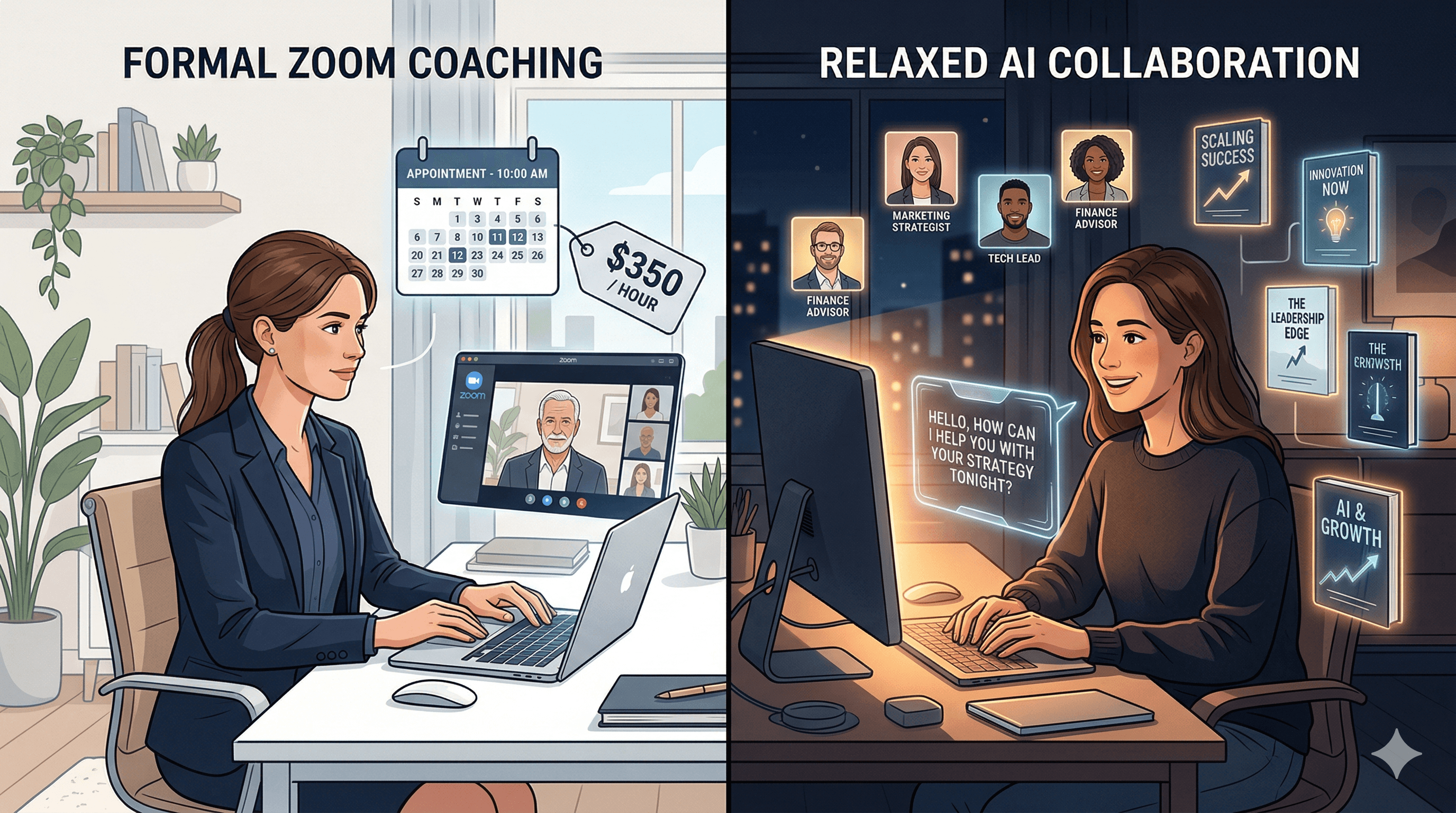
$3,000 a month is $36,000 a year. For that, I got four hours of structured conversation, some async Slack messages when he remembered to check in, and the persistent anxiety that I wasn't asking the right questions in our limited time together. The opportunity cost was brutal. Every month I was paying for a single perspective when I had 15 newsletters sitting unread in my inbox from people like Alex Hormozi, Lenny Rachitsky, and Sahil Bloom, each of whom had thought deeply about the exact problems I was wrestling with.
The issue wasn't the coach. The issue was the model.
A coach can only know what a coach knows.
My coach had built and sold two companies. Good ones. But when I asked him about pricing strategy for a SaaS product with a freemium model, he gave me a framework from his B2B services experience and then said, "you'll need to test it." When I asked about newsletter monetization, same answer. When I asked about AI product positioning: blank look, honest shrug.
Compare that to an AI advisory board that draws on Lenny's breakdown of freemium conversion benchmarks, Hormozi's pricing frameworks from $100M Offers, and a half-dozen other experts who've published specifically on these topics. Not one person's best guess. A synthesis.
I'm not saying AI replaces the human element. It doesn't. My coach was good at the things humans are good at: noticing when I was deflecting, pushing back on the story I was telling myself, being genuinely invested in my success. That matters. If you're in a personal crisis or need someone to hold you accountable week over week, a human coach is still worth it.
But if what you need is fast, specific, expert-sourced answers to tactical business questions? The math stops working.
What six months of comparison actually showed me.
I kept notes. When I went to my coach with a specific question ("should I raise prices on my mid-tier plan?"), he'd typically give me a framework and push it back to me. Good coaching. But I'd walk away with homework instead of answers. Then I'd spend another week reading and researching before I could act.
With an AI advisory board, I ask the same question and get: here's what Hormozi says about pricing anchoring, here's Lenny's data on B2B SaaS price sensitivity, here's a counterargument from the First Round Review piece on pricing strategy. I still make the decision. But I make it faster and with better information behind it.
The reactivation time alone paid for the switch inside a week.
The thing I didn't expect.
My coach was available for four hours a month. My biggest decisions didn't happen in those four hours. They happened at 10pm on a Wednesday when a potential partner sent a weird email. They happened on a Sunday when I was staring at a spreadsheet and couldn't tell if the numbers were good or terrifying. They happened at 3am, which is, apparently, when I do my best catastrophizing.
An AI advisory board is available exactly then. No scheduling. No "let's pick this up next session." No $3,000 retainer.
I still think coaching has a place. For certain founders, at certain stages, a great coach is irreplaceable. But I built Adviserry because I couldn't afford to pay $36K a year for one person's opinion, and I suspected a lot of other founders felt the same way. Turns out I was right.
The check doesn't clear anymore. I sleep fine.
Keep Reading:
- How I Replaced My $5,000/Year Coaching Program With an AI Advisory Board: a similar coaching-to-AI transition story
- Why Every Founder Needs a Personal Board of Advisors: building your own advisory board for free
- How to Set Up Your First Adviserry panel in 5 Minutes: get started today