Stop Reading Newsletters. Start Getting Advised by Them.
Stop Reading Newsletters. Start Getting Advised by Them.
I have 31 newsletter subscriptions. I've read maybe 35% of what's arrived in the past 90 days. The other 65% (which represents, conservatively, dozens of hours of writing by some of the smartest operators and investors in the industry) is sitting in an archive folder, unread, slowly becoming irrelevant.
The weird part? I keep subscribing. Because I know the content is good. I know that if I did read it, I'd probably learn something useful. The problem isn't the quality of what I'm subscribing to. The problem is the mechanism.
Newsletters are not the problem. The delivery mechanism is.
Here's what I've noticed about how I actually use newsletter content. I read it, I find something useful, I think "I should remember this," and then I don't. Or I don't read it at all, which is more honest. Or I read it, think it's interesting in the abstract, and can't recall it three weeks later when I'm facing the exact problem it would have solved.
The consumption model (subscribe, receive, read, forget): is broken for busy founders. Not because the content is bad, but because there's a fundamental mismatch between how information is delivered (scheduled, at the publisher's convenience) and how decisions are made (on-demand, in moments of urgency or uncertainty).
The newsletter lands on Tuesday. The decision happens on Friday. You can't remember which issue had the relevant framework. You end up googling and finding a mediocre article from 2019 instead.
What it would look like to actually use your subscriptions.
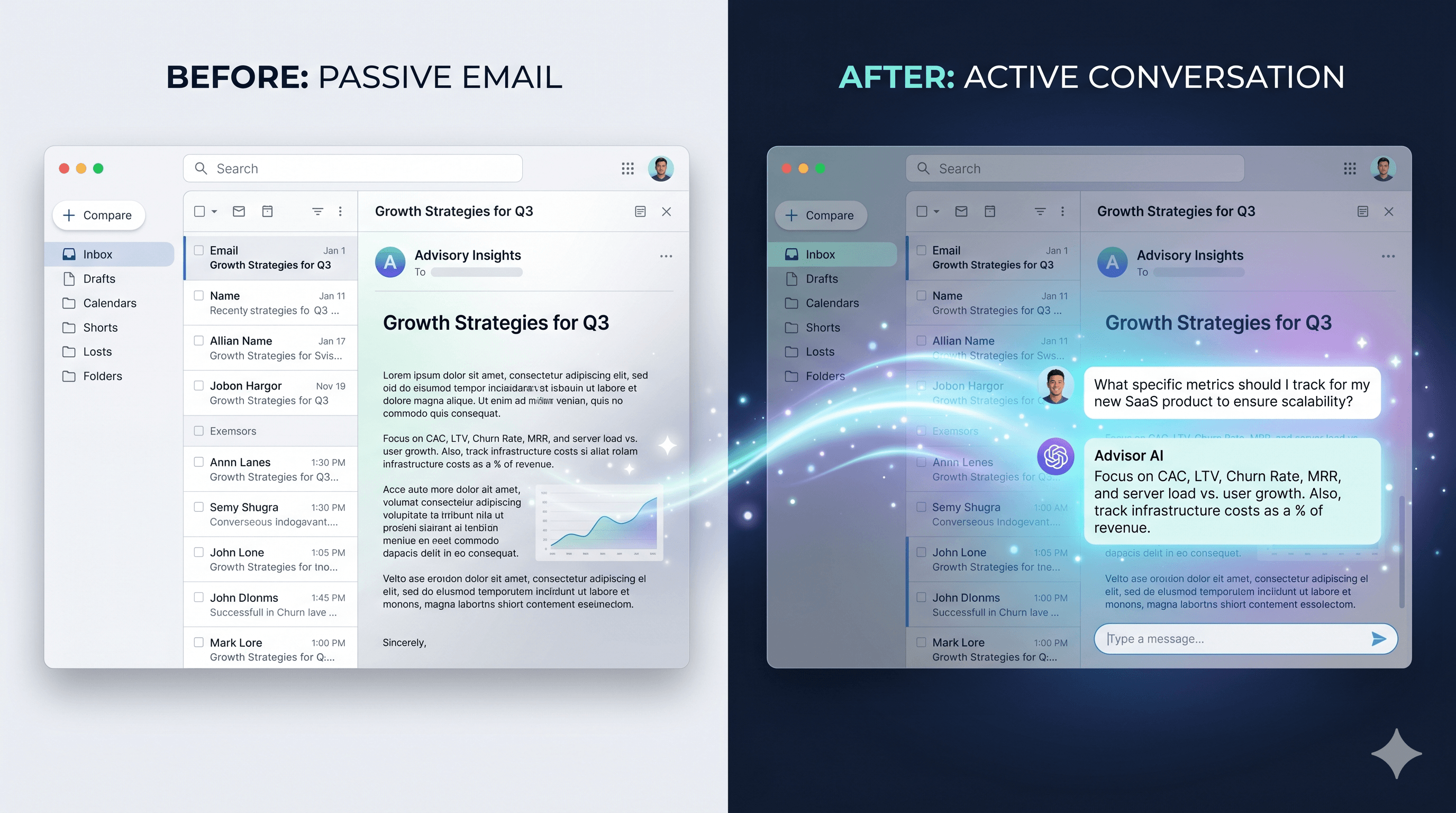
Imagine every newsletter you subscribe to was written by someone sitting on your advisory board. Imagine you could ask that board, collectively, a specific question ("what's your take on pricing strategy for a SaaS product that's losing mid-tier customers?") and get back a synthesized answer that draws on what each of them has written on the topic.
That's not science fiction. That's what an AI advisory board built from your subscriptions actually does.
You're not replacing the newsletters. You're not stopping the reading habit (though maybe some of the guilt about not reading enough can ease up). You're adding an interaction layer. Instead of passively receiving information, you're querying it.
The newsletters you already subscribe to are already a curated group of advisors. You chose them because you trust their thinking. The only thing missing is the ability to talk to them (collectively, in context, on demand) when you actually have a question.
The practical version.
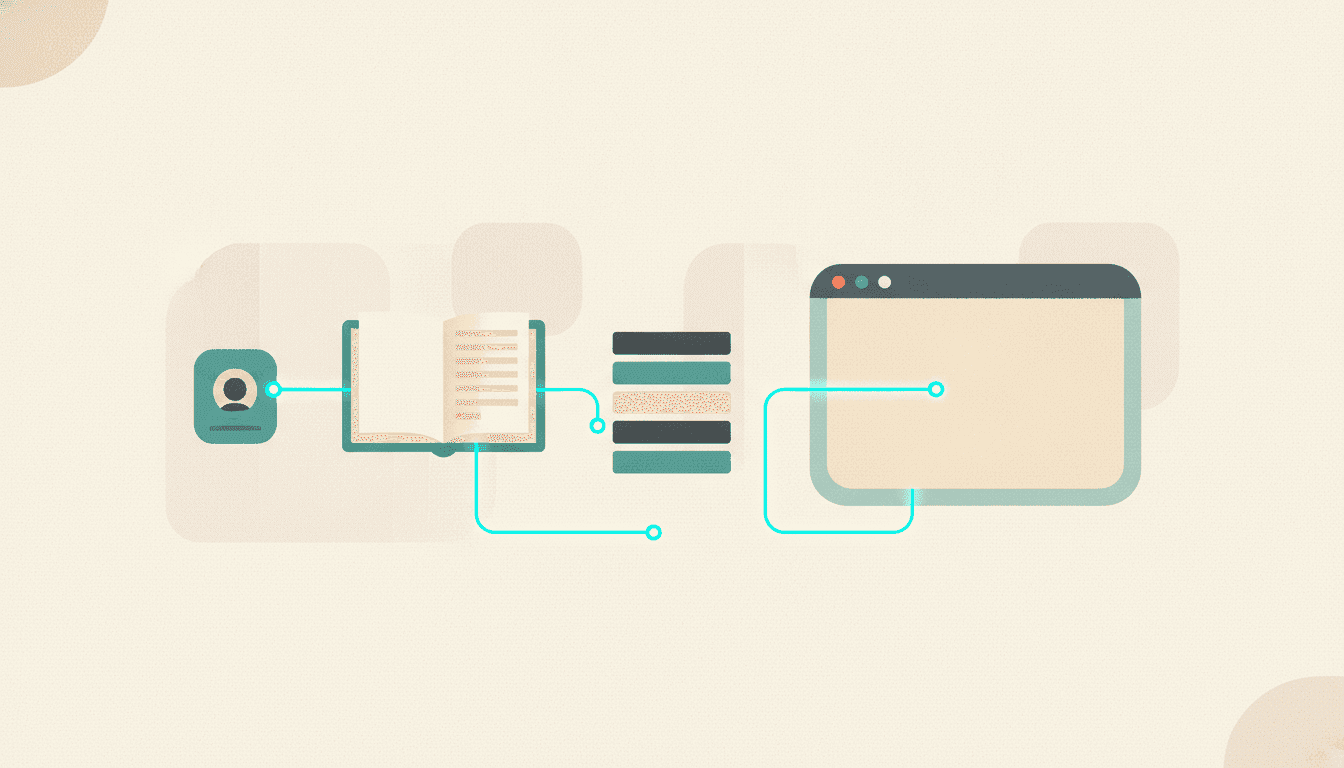
Connect your Gmail. Add the newsletters you actually care about. Upload a short brief about your business. Now when you have a question, you ask your board, which is just your newsletter subscriptions, activated.
The 35% of newsletters you're reading? They're now indexed and queryable. The 65% you're not reading? Also indexed and queryable, which is maybe better than reading them and forgetting them anyway.
The information you've been subscribing to and not fully using is now working for you rather than sitting in an archive.
Keep Reading:
- The Information Overload Problem: why subscribing to genius isn't enough
- 8 Best Ways to Organize Your Newsletter Subscriptions with AI: practical newsletter management strategies
- How to Set Up Your First Adviserry panel in 5 Minutes: activate your subscriptions today